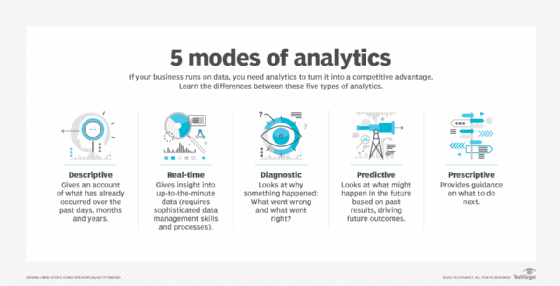
In the swiftly evolving world of business intelligence, predictive analytics tools have become indispensable assets, offering companies the power to forecast future trends by analyzing past and current data patterns. As we look toward 2025, these tools are not only more powerful but also more accessible, catering to both data science experts and conventional business users.
Revolutionizing Business Intelligence
Predictive analytics has undergone a significant transformation. Once the domain of specialized data scientists, advancements in AI have democratized these tools, making them user-friendly even for those without technical expertise. As TechTarget reports, this shift is driven by a need to simplify complex analytics processes and integrate machine learning models into business workflows.
Top Tools for 2025
In its recent feature, TechTarget profiles eight leading predictive analytics tools that are setting the stage for 2025:
Altair AI Studio: Known for its data mining capabilities, it simplifies data extraction and modeling workflows.
Alteryx AI Platform: Offers automated data preparation and integration with other ML platforms.
Dataiku: Provides a platform for both technical and non-technical users to generate insights.
H2O Driverless AI: Focuses on automation in AI development, making it accessible to all.
IBM Watson Studio: Integrates predictive analytics with a broad range of functions, enhancing collaboration.
Microsoft Azure Machine Learning: Complements its core tools with lifecycle management for predictive analytics.
SAP Analytics Cloud: Combines BI, planning, and predictive analytics into a unified suite.
SAS: Continues its legacy with modernized data science and machine learning workflows.
The Democratization of Analytics
Carlie Idoine of Gartner highlights the growing accessibility of these tools, noting that automation has reduced the need for deep technical expertise. This democratization is further evidenced by platforms like Tableau’s integration with Einstein Discovery, which empowers business users with AI-driven insights.
Looking Ahead
As businesses prepare for the future, the integration of predictive analytics tools into everyday operations is crucial. The insights from TechTarget underscore the importance of selecting the right tools to meet diverse business needs, from lead scoring to fraud reduction.
In conclusion, the landscape of predictive analytics is poised for continued growth and innovation. By leveraging these tools, businesses can not only gain a competitive edge but also drive informed decision-making processes across all levels.
More Articles
Getting licensed or staying ahead in your career can be a journey—but it doesn’t have to be overwhelming. Grab your favorite coffee or tea, take a moment to relax, and browse through our articles. Whether you’re just starting out or renewing your expertise, we’ve got tips, insights, and advice to keep you moving forward. Here’s to your success—one sip and one step at a time!
The Florida Treasure Coast started the new year with a surge of 1,905 new home listings—up 22 percent from last January—signaling one of the strongest inventory jumps in years. While Martin County saw its median home price drop by nearly $100,000, nearby St. Lucie and Indian River counties continued to rise, creating a uniquely mixed market. With sales climbing and inventory levels shifting toward a more buyer-friendly landscape, 2026 is shaping up to be an active and opportunity-rich year for both seasoned agents and those entering the real estate field.
A unanimously passed House bill, HB 767, aims to require insurers to publicly disclose rate and premium data—giving Floridians long‑awaited clarity on rising costs. If approved by the Senate, the measure could significantly impact homeowners, real estate agents, mortgage professionals, and insurance specialists by increasing consumer trust and revealing how insurers calculate premiums.
U.S. mortgage rates have dipped to 5.98 percent, breaking below the 6 percent mark for the first time since 2022 and giving the spring home-buying season a fresh boost. With rates falling for the third straight week and buyer interest rising, experts say this shift could encourage more market activity—though many homeowners with ultra‑low pandemic-era rates may still hesitate to sell.
Artificial intelligence is rapidly transforming real estate, from listing creation to MLS infrastructure, forcing the industry to rethink how data is used, altered and protected. With AI tools making it easier than ever to modify photos, automate marketing and process sensitive documents, MLSs and state regulators are racing to establish new guardrails that ensure accuracy, privacy and consumer protection without slowing innovation.
Today’s real estate pros juggle nonstop client demands, constant marketing, and mountains of paperwork—but AI is stepping in as the ultimate assistant. From instant lead responses and personalized follow-up messages to predictive pricing tools and automated transaction support, agents are using AI to save hours, boost production, and stay competitive. The future of real estate belongs to professionals who combine their human touch with smart technology, and the shift is already happening.
A landmark US Supreme Court decision striking down the use of emergency powers to impose broad tariffs has upended global trade expectations, lifted equity markets, and sent businesses scrambling to understand what comes next. While GDP slowed and inflation rose, markets reacted positively as the ruling removed a major source of uncertainty for importers, exporters, and investors. With the old tariff framework dismantled and new targeted measures on the horizon, industries from real estate to finance are bracing for shifting economic conditions that could influence everything from consumer spending to investment strategy.