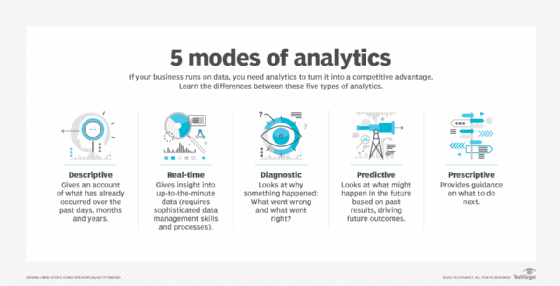
In the swiftly evolving world of business intelligence, predictive analytics tools have become indispensable assets, offering companies the power to forecast future trends by analyzing past and current data patterns. As we look toward 2025, these tools are not only more powerful but also more accessible, catering to both data science experts and conventional business users.
Revolutionizing Business Intelligence
Predictive analytics has undergone a significant transformation. Once the domain of specialized data scientists, advancements in AI have democratized these tools, making them user-friendly even for those without technical expertise. As TechTarget reports, this shift is driven by a need to simplify complex analytics processes and integrate machine learning models into business workflows.
Top Tools for 2025
In its recent feature, TechTarget profiles eight leading predictive analytics tools that are setting the stage for 2025:
Altair AI Studio: Known for its data mining capabilities, it simplifies data extraction and modeling workflows.
Alteryx AI Platform: Offers automated data preparation and integration with other ML platforms.
Dataiku: Provides a platform for both technical and non-technical users to generate insights.
H2O Driverless AI: Focuses on automation in AI development, making it accessible to all.
IBM Watson Studio: Integrates predictive analytics with a broad range of functions, enhancing collaboration.
Microsoft Azure Machine Learning: Complements its core tools with lifecycle management for predictive analytics.
SAP Analytics Cloud: Combines BI, planning, and predictive analytics into a unified suite.
SAS: Continues its legacy with modernized data science and machine learning workflows.
The Democratization of Analytics
Carlie Idoine of Gartner highlights the growing accessibility of these tools, noting that automation has reduced the need for deep technical expertise. This democratization is further evidenced by platforms like Tableau’s integration with Einstein Discovery, which empowers business users with AI-driven insights.
Looking Ahead
As businesses prepare for the future, the integration of predictive analytics tools into everyday operations is crucial. The insights from TechTarget underscore the importance of selecting the right tools to meet diverse business needs, from lead scoring to fraud reduction.
In conclusion, the landscape of predictive analytics is poised for continued growth and innovation. By leveraging these tools, businesses can not only gain a competitive edge but also drive informed decision-making processes across all levels.
More Articles
Getting licensed or staying ahead in your career can be a journey—but it doesn’t have to be overwhelming. Grab your favorite coffee or tea, take a moment to relax, and browse through our articles. Whether you’re just starting out or renewing your expertise, we’ve got tips, insights, and advice to keep you moving forward. Here’s to your success—one sip and one step at a time!
AI's integration is set to usher in personalized treatment plans tailored to individual genetic profiles and lifestyles. Virtual health assistants will soon provide real-time, accurate medical advice, managing over 85% of customer interactions by 2025.
In the ever-evolving world of science, the potential to edit fetal genomes is no longer a distant dream but an emerging reality. Yet, as the boundaries of genomic medicine expand, the ethical discussions surrounding these advancements remain in their infancy.
While urban hospitals attract rural patients, rural healthcare providers see a decline in patient numbers leading to rising rural hospital bankruptcies. This dynamic affects rural hospital revenues and influences insurance reimbursement strategies, calling for urgent policy reforms to ensure rural hospitals benefit from the telemedicine boom.
As the clock ticks down to December 31, 2024, the future of telehealth services in the United States hangs in the balance. The looming deadline has healthcare providers, hospitals, and stakeholders on high alert.
Greece is witnessing a surge in digital health technologies, with telemedicine, wearable devices, and AI-powered tools leading the charge. These innovations are not only reshaping healthcare delivery but are also projected to boost the digital health market to a staggering $454.70 million by 2027.