In the ever-evolving landscape of business technology, predictive analytics tools are emerging as indispensable assets for companies aiming to stay ahead of the curve. As we look towards 2025, these tools are not only becoming more sophisticated but also increasingly accessible to both IT professionals and business users alike.
In a recent article by TechTarget, eight leading predictive analytics tools were profiled, each offering unique capabilities that cater to diverse business needs. These tools are paving the way for more intuitive and efficient data analysis, empowering users to make informed decisions with greater ease.
Revolutionizing Predictive Analytics
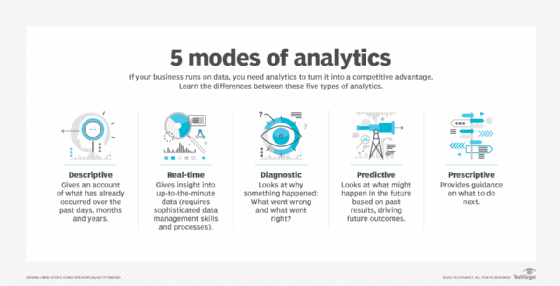
The traditional realm of analytics focused on understanding past events through descriptive analytics and diagnostic analytics. However, predictive analytics shifts the focus towards forecasting future outcomes by examining patterns and trends in data. This transformation has been accelerated by advancements in automated machine learning (AutoML), which simplifies the predictive modeling process.
According to Carlie Idoine, a vice president analyst at Gartner, the barriers to entry for using these tools have significantly lowered. “You don’t have to be an expert to go in and use these tools anymore,” she noted. The automation of complex tasks now allows users to achieve in minutes what once took weeks of coding.
Top Predictive Analytics Tools for 2025
Altair AI Studio: Known for its strengths in data mining and text mining, Altair AI Studio offers a comprehensive suite of tools for both data scientists and non-coding experts.
Alteryx AI Platform: This platform excels in automated data preparation and offers robust visual tools for predictive modeling.
Dataiku: With both visual and code-based interfaces, Dataiku caters to a wide range of users, facilitating data preparation, machine learning, and deployment.
H2O Driverless AI: This tool simplifies AI development with automated capabilities for feature engineering, model selection, and more.
IBM Watson Studio: Building on the legacy of SPSS, IBM Watson Studio offers a consolidated platform for various analytics functions.
Microsoft Azure Machine Learning: Complementing tools like Power BI and Excel, Azure Machine Learning manages the complete predictive analytics lifecycle.
SAP Analytics Cloud: Integrating BI, planning, and predictive analytics, this tool is ideal for enterprises with extensive SAP deployments.
SAS: As a pioneer in statistical analytics, SAS continues to innovate with modern data science and machine learning workflows.
Choosing the Right Tool
When selecting a predictive analytics tool, it’s crucial to align the tool’s capabilities with the specific needs of your organization. Some platforms offer generic solutions applicable across industries, while others provide industry-specific functionalities. Understanding the difference between traditional regression-based tools and machine learning-based tools is also essential for making an informed choice.
Ultimately, the right tool should empower users to collaborate effectively, whether they are seasoned data scientists or business professionals with domain expertise. As businesses continue to integrate AI and machine learning into their workflows, predictive analytics tools will play a pivotal role in driving innovation and success.
More Articles
Getting licensed or staying ahead in your career can be a journey—but it doesn’t have to be overwhelming. Grab your favorite coffee or tea, take a moment to relax, and browse through our articles. Whether you’re just starting out or renewing your expertise, we’ve got tips, insights, and advice to keep you moving forward. Here’s to your success—one sip and one step at a time!
The commercial real estate industry is finally confronting years of delayed financial reality as banks begin calling in billions in troubled loans, pushing office loan delinquencies to record highs. With more than 12 percent of office loans now delinquent and nearly a trillion dollars in commercial and multifamily debt maturing this year, lenders are tightening standards and forcing borrowers to present real data, stronger strategies, and actionable plans. Regional banks face the most risk, while real estate professionals who master data literacy and investment analysis will be best positioned to thrive in this new era.
CFP professionals are in higher demand than ever, and new data from SmartAsset and the CFP Board shows that some states are becoming hotspots for this booming field. California leads the nation, now home to nearly one in every ten Certified Financial Planners. As Americans seek deeper financial guidance, states with strong economies and growing populations are seeing the fastest rise in licensed advisors—signaling major opportunity for both new and seasoned professionals.
After years of market disruption, commercial real estate is finally showing strong signs of a comeback, with major investment firms projecting 2026 as the year the sector fully stabilizes. New reports from Hines, CBRE, and Colliers point to rising leasing activity, renewed buyer appetite, and a rebound toward pre‑pandemic investment levels. Manhattan is leading the recovery, premium office spaces are dominating demand, and suburban markets are gaining traction—setting the stage for significant opportunities for real estate professionals, investors, and brokers preparing for the next market cycle.
The 2026 labor market is entering a “low‑hire, low‑fire” freeze—job openings remain above pre‑pandemic levels, yet companies are delaying hiring decisions as they navigate economic uncertainty, tariffs, and shifting immigration policies. Despite the slowdown, major pockets of growth remain, especially in healthcare, construction, civil engineering, and Sunbelt regions. AI is reshaping some industries but replacing very few jobs, with less than 1% of skills at high risk of automation. For professionals willing to adapt, upskill, or shift industries, 2026 offers strategic opportunities—particularly in licensed fields like real estate, mortgage, insurance, and finance, where education and credentials can unlock stability and upward mobility.
Mortgage rates slipped to 6.09% this week, marking their lowest point in three years and surprising analysts after strong job numbers. The drop improves affordability for many families and signals a pivotal moment for buyers, investors, and real estate professionals as market conditions cool and stabilization continues into 2026.
Artificial intelligence is now the driving force behind the fastest‑growing proptech companies, with AI-native startups claiming the majority of the $16.7 billion invested in real estate technology last year. From tenant communication automation to self‑navigating construction vehicles and AI-powered investor management systems, four new unicorns—EliseAI, Bedrock Robotics, Juniper Square, and Vantaca—are leading a sweeping shift across commercial real estate. Their rise signals a new era where professionals must embrace automation, data skills, and continuous education to stay competitive in an industry evolving at record speed.