In the ever-evolving landscape of business technology, predictive analytics tools are emerging as indispensable assets for companies aiming to stay ahead of the curve. As we look towards 2025, these tools are not only becoming more sophisticated but also increasingly accessible to both IT professionals and business users alike.
In a recent article by TechTarget, eight leading predictive analytics tools were profiled, each offering unique capabilities that cater to diverse business needs. These tools are paving the way for more intuitive and efficient data analysis, empowering users to make informed decisions with greater ease.
Revolutionizing Predictive Analytics
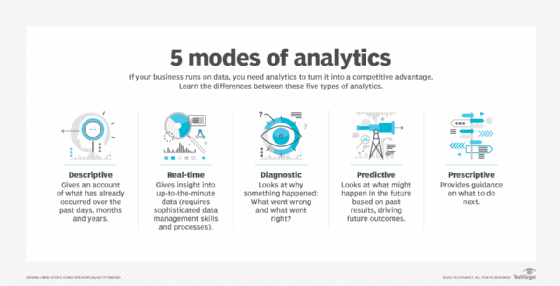
The traditional realm of analytics focused on understanding past events through descriptive analytics and diagnostic analytics. However, predictive analytics shifts the focus towards forecasting future outcomes by examining patterns and trends in data. This transformation has been accelerated by advancements in automated machine learning (AutoML), which simplifies the predictive modeling process.
According to Carlie Idoine, a vice president analyst at Gartner, the barriers to entry for using these tools have significantly lowered. “You don’t have to be an expert to go in and use these tools anymore,” she noted. The automation of complex tasks now allows users to achieve in minutes what once took weeks of coding.
Top Predictive Analytics Tools for 2025
Altair AI Studio: Known for its strengths in data mining and text mining, Altair AI Studio offers a comprehensive suite of tools for both data scientists and non-coding experts.
Alteryx AI Platform: This platform excels in automated data preparation and offers robust visual tools for predictive modeling.
Dataiku: With both visual and code-based interfaces, Dataiku caters to a wide range of users, facilitating data preparation, machine learning, and deployment.
H2O Driverless AI: This tool simplifies AI development with automated capabilities for feature engineering, model selection, and more.
IBM Watson Studio: Building on the legacy of SPSS, IBM Watson Studio offers a consolidated platform for various analytics functions.
Microsoft Azure Machine Learning: Complementing tools like Power BI and Excel, Azure Machine Learning manages the complete predictive analytics lifecycle.
SAP Analytics Cloud: Integrating BI, planning, and predictive analytics, this tool is ideal for enterprises with extensive SAP deployments.
SAS: As a pioneer in statistical analytics, SAS continues to innovate with modern data science and machine learning workflows.
Choosing the Right Tool
When selecting a predictive analytics tool, it’s crucial to align the tool’s capabilities with the specific needs of your organization. Some platforms offer generic solutions applicable across industries, while others provide industry-specific functionalities. Understanding the difference between traditional regression-based tools and machine learning-based tools is also essential for making an informed choice.
Ultimately, the right tool should empower users to collaborate effectively, whether they are seasoned data scientists or business professionals with domain expertise. As businesses continue to integrate AI and machine learning into their workflows, predictive analytics tools will play a pivotal role in driving innovation and success.
More Articles
Getting licensed or staying ahead in your career can be a journey—but it doesn’t have to be overwhelming. Grab your favorite coffee or tea, take a moment to relax, and browse through our articles. Whether you’re just starting out or renewing your expertise, we’ve got tips, insights, and advice to keep you moving forward. Here’s to your success—one sip and one step at a time!
Four of the largest Multiple Listing Services (MLSs) in the Southeast have recently formed an alliance, establishing a data sharing network aimed at increasing referral business among real estate agents. The Charleston Regional MLS in South Carolina, Canopy MLS in North Carolina, Georgia MLS, and Realtracs, the largest MLS in Alabama, Kentucky, and Tennessee, have come together to create the Southeast MLS Alliance. This strategic partnership will enable members of these four MLSs to access over 85,000 listings across Alabama, Georgia, Kentucky, North Carolina, Tennessee, and South Carolina, providing real estate agents with valuable data and expanding their referral opportunities throughout the Southeast.
The current state of the mortgage market has presented prospective homebuyers with a significant challenge – surging mortgage rates. These rates have reached a 20-year high, hovering around 7.7%, making it increasingly difficult for borrowers to secure affordable loans. As a result, borrowers are actively seeking support from their family members to overcome this hurdle. To combat the impact of surging mortgage rates, borrowers are turning to their parents for financial assistance. This can take the form of gifted funds or by having parents become non-occupant co-borrowers. By involving family members in the mortgage process, borrowers can increase their chances of securing loans and achieving their homeownership goals.
In a surprising turn of events, Inga Dow, a prominent Keller Williams franchisee and CEO of multiple Texas-based Keller Williams offices, has withdrawn her sexual misconduct lawsuit against the real estate giant. While Dow's claims against Keller Williams and its co-founder, Gary Keller, have been dropped, the lawsuit against former CEO John Davis remains ongoing. The outcome of this legal battle is still uncertain, and further details may emerge as the case progresses. Stay informed with Cameron Academy's online courses tailored to your needs and goals in the real estate industry.
The recent approval of Remote Online Notarization (RON) legislation in California is a significant development that Cameron Academy is thrilled to discuss. This progressive bill, signed into law by Governor Gavin Newsom, enables individuals to notarize their documents remotely using advanced audiovisual technology. The introduction of RON legislation in California brings about numerous advantages that revolutionize the notarization process. By embracing digital advancements, California is empowering individuals and businesses with enhanced convenience and accessibility, significant time and cost savings, improved security, and streamlined workflow.
"Even though mortgage origination volumes are down, we’re experiencing a highly competitive purchase market. That means a number of businesses, seeking to grow their revenue, will likely look to expand their reach to the default and REO space. However, venturing into this industry without proper knowledge and preparation can lead to serious consequences. By understanding the lessons learned from the past foreclosure wave and staying current with the changing environment, businesses can navigate the challenges and seize the opportunities presented by the default and REO market."
In the ongoing legal battle involving the National Association of Realtors (NAR), Keller Williams, and HomeServices of America, a recent development has emerged. The plaintiffs in the lawsuit, known as the Sitzer/Burnett plaintiffs, have filed a notice to withdraw three named plaintiffs. This move is seen by the defendants as an attempt to avoid cross-examination. The lawsuit, initially filed in April 2019, challenges NAR's Participation Rule, which requires listing agents to offer compensation to buyers' agents in order to list a property on a Realtor-affiliated multiple listing service (MLS). The plaintiffs argue that this commission sharing inflates costs for consumers, in violation of the Sherman Antitrust Act. With the trial scheduled to start on October 16, the potential damages in this suit are estimated to be up to $4 billion.