In the ever-evolving landscape of business technology, predictive analytics tools are emerging as indispensable assets for companies aiming to stay ahead of the curve. As we look towards 2025, these tools are not only becoming more sophisticated but also increasingly accessible to both IT professionals and business users alike.
In a recent article by TechTarget, eight leading predictive analytics tools were profiled, each offering unique capabilities that cater to diverse business needs. These tools are paving the way for more intuitive and efficient data analysis, empowering users to make informed decisions with greater ease.
Revolutionizing Predictive Analytics
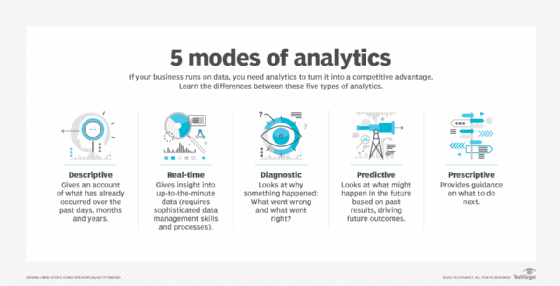
The traditional realm of analytics focused on understanding past events through descriptive analytics and diagnostic analytics. However, predictive analytics shifts the focus towards forecasting future outcomes by examining patterns and trends in data. This transformation has been accelerated by advancements in automated machine learning (AutoML), which simplifies the predictive modeling process.
According to Carlie Idoine, a vice president analyst at Gartner, the barriers to entry for using these tools have significantly lowered. “You don’t have to be an expert to go in and use these tools anymore,” she noted. The automation of complex tasks now allows users to achieve in minutes what once took weeks of coding.
Top Predictive Analytics Tools for 2025
Altair AI Studio: Known for its strengths in data mining and text mining, Altair AI Studio offers a comprehensive suite of tools for both data scientists and non-coding experts.
Alteryx AI Platform: This platform excels in automated data preparation and offers robust visual tools for predictive modeling.
Dataiku: With both visual and code-based interfaces, Dataiku caters to a wide range of users, facilitating data preparation, machine learning, and deployment.
H2O Driverless AI: This tool simplifies AI development with automated capabilities for feature engineering, model selection, and more.
IBM Watson Studio: Building on the legacy of SPSS, IBM Watson Studio offers a consolidated platform for various analytics functions.
Microsoft Azure Machine Learning: Complementing tools like Power BI and Excel, Azure Machine Learning manages the complete predictive analytics lifecycle.
SAP Analytics Cloud: Integrating BI, planning, and predictive analytics, this tool is ideal for enterprises with extensive SAP deployments.
SAS: As a pioneer in statistical analytics, SAS continues to innovate with modern data science and machine learning workflows.
Choosing the Right Tool
When selecting a predictive analytics tool, it’s crucial to align the tool’s capabilities with the specific needs of your organization. Some platforms offer generic solutions applicable across industries, while others provide industry-specific functionalities. Understanding the difference between traditional regression-based tools and machine learning-based tools is also essential for making an informed choice.
Ultimately, the right tool should empower users to collaborate effectively, whether they are seasoned data scientists or business professionals with domain expertise. As businesses continue to integrate AI and machine learning into their workflows, predictive analytics tools will play a pivotal role in driving innovation and success.
More Articles
Getting licensed or staying ahead in your career can be a journey—but it doesn’t have to be overwhelming. Grab your favorite coffee or tea, take a moment to relax, and browse through our articles. Whether you’re just starting out or renewing your expertise, we’ve got tips, insights, and advice to keep you moving forward. Here’s to your success—one sip and one step at a time!
PropTech investment surged nearly 68% in 2025, hitting a massive $16.7 billion and surpassing pre-pandemic highs. Investors are shifting toward practical, AI-powered tools that streamline operations, improve efficiency, and deliver immediate results. With 2026 shaping up to be a year of selective but strong growth, real estate professionals who stay ahead of tech trends will gain a major competitive edge.
Florida homeowners are finally seeing real relief as Citizens Property Insurance Corp. unveils an average 8.7% rate decrease for 2026—its largest cut in over a decade. Sparked by recent legislative reforms, a calm hurricane season, and renewed competition from insurers reentering the state, the drop is poised to significantly impact homeowners, real estate professionals, and industry trainees across Florida.
Tampa’s commercial real estate market is still growing, but investors are shifting from rapid dealmaking to highly selective, detail‑driven decisions. Population growth, steady office demand, stabilizing industrial activity, and a rebound in retail are keeping the market strong, while health‑care properties are emerging as a major sector for 2026. The region’s next chapter is defined by precision, disciplined underwriting, and long‑term strategy rather than speed.
Homesage.ai has released a new AI-powered comps engine that cuts property valuation time from hours to seconds by analyzing hundreds of data points across listings, public records, and proprietary datasets. Designed for agents, investors, and lenders, the tool delivers highly accurate comparable properties and real-time market insights, giving professionals a competitive edge in today’s rapidly shifting housing landscape.
A panel of federal judges is closely examining whether the National Association of Realtors’ billion‑dollar antitrust settlements—and similar deals struck by major brokerages—are genuinely fair to the millions of buyers and sellers affected. With plaintiffs arguing that homebuyers’ rights were improperly dismissed and compensation falls far short of true losses, the court’s upcoming decision could reshape commission practices and spark one of the most significant structural shifts in modern real estate.
The SEC is proposing a dramatic shift in how it defines a “small” registered investment adviser — raising the threshold from under 25 million in assets to under 1 billion. The change would instantly reclassify about 96 percent of RIAs and could create ripple effects across mergers and acquisitions, integration planning, and breakaway adviser activity. While the move aims to reduce administrative burden, it may also introduce new complexities for firms scaling past the billion‑dollar mark.