President Trump’s Return: A Flurry of Executive Orders

President Donald J. Trump, inaugurated as the nation’s 47th president on January 20, 2025, wasted no time in fulfilling his campaign promises. On his first day in office, he issued a series of executive orders targeting crucial sectors such as immigration, trade, energy, and federal workforce policies.
Our Public Policy & Regulation Group at Holland & Knight is closely monitoring these developments. This bipartisan team, composed of experienced lawyers and lobbyists, is dedicated to analyzing the implications of these orders. We invite you to learn more about our approach to addressing the issues that matter most.

Key Executive Orders

Among the significant actions taken by President Trump is an Executive Order aimed at advancing Artificial Intelligence education for American youth, signed on April 23, 2025. This move underscores the administration’s commitment to preparing the next generation for a technology-driven future.
Another notable order focuses on reforming accreditation to bolster higher education, also signed on April 23, 2025. This aims to ensure that educational institutions meet rigorous standards, enhancing the quality of education nationwide.
In the energy sector, President Trump has taken steps to strengthen the reliability and security of the U.S. electric grid, as seen in an order from April 14, 2025. This initiative reflects a strategic focus on securing the nation’s critical infrastructure.

Public Policy Implications

These executive orders represent a decisive shift in policy direction, aligning with President Trump’s “America First” agenda. By targeting key areas such as education and energy, the administration seeks to reinforce national security and economic prosperity.
For a comprehensive overview of these executive orders, you can access the Executive Order Summaries Chart provided by Holland & Knight. This resource offers detailed insights into each order’s scope and anticipated impact.
As these policies unfold, Holland & Knight remains committed to providing expert analysis and guidance. For more information and updates, visit the original article on Trump’s 2025 Executive Orders: Updates and Summaries.

More Articles

Getting licensed or staying ahead in your career can be a journey—but it doesn’t have to be overwhelming. Grab your favorite coffee or tea, take a moment to relax, and browse through our articles. Whether you’re just starting out or renewing your expertise, we’ve got tips, insights, and advice to keep you moving forward. Here’s to your success—one sip and one step at a time!

The PropTech Revolution: Transforming Real Estate with Innovation

"The challenges faced by the PropTech industry are vast, ranging from data security and regulatory compliance to the implementation of sustainable practices. Yet, technologies such as Artificial Intelligence (AI), Virtual Reality (VR), Internet of Things (IoT), and Blockchain are pivotal in addressing these hurdles."

By |February 9, 2025|Categories: Article, Real Estate, Technology|Tags: , |0 Comments

Emerging Neighbourhoods: The UK’s Next Property Hotspots

This shift is reshaping the landscape of the British property market, uncovering hidden gems that promise significant returns.

By |February 9, 2025|Categories: Article, Investment, Real Estate|Tags: , |0 Comments

2025 Commercial Real Estate Outlook: Navigating a New Era

The commercial real estate sector is poised to emerge from recent tumultuous years, armed with insights and strategies to better position itself for the future. According to a detailed analysis by Deloitte, the 2025 outlook offers a roadmap for industry leaders to navigate the evolving landscape.

By |February 8, 2025|Categories: Article, Economic Outlook, Real Estate|Tags: |0 Comments

Navigating the New IRS 1099-K Reporting Rules: What Freelancers and Small Business Owners Need to Know

The IRS is ushering in a new era of tax reporting that will significantly affect freelancers, small business owners, and anyone who earns income through third-party payment apps like Venmo or PayPal. These changes are embodied in the form of adjusted thresholds for the Form 1099-K, a tax document used to report income from such platforms. Previously, this form was only required for those earning at least $20,000 annually through these services. However, new phased-in rules will reduce this threshold to $600 by 2026, starting with earnings over $5,000 in 2024.

By |February 8, 2025|Categories: Article, Finance, Taxation|Tags: |0 Comments

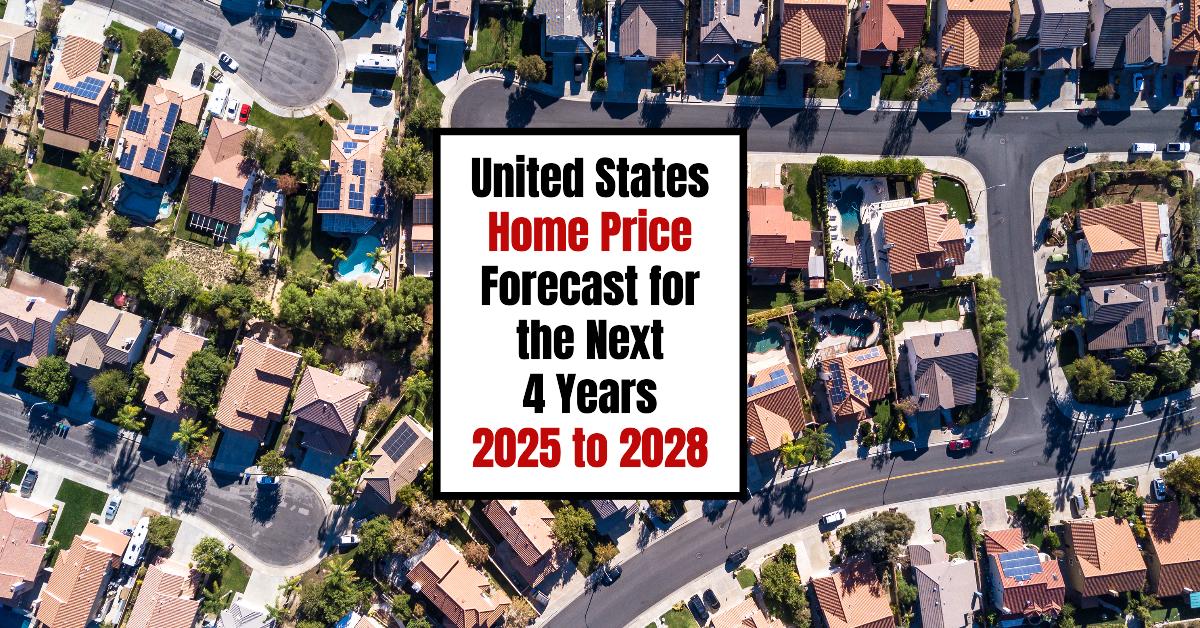
Forecasting the Future: Housing Market Insights for 2025 to 2028

As we look to the horizon of the U.S. housing market, Fannie Mae's Home Price Expectations Survey offers a crucial glimpse into the coming years. Compiled from the insights of over 100 housing experts, this survey predicts notable changes in home prices from 2025 to 2028. The analysis, originally detailed by Norada Real Estate Investments, suggests a shift in market dynamics that could impact homeowners and investors alike.

By |February 8, 2025|Categories: Article, Market Analysis, Real Estate|Tags: , |0 Comments

The AI Revolution in Real Estate: A New Era of Market and Property Insights

The real estate industry, long perceived as conservative and slow to adapt, is now on the cusp of a technological revolution.