In the heart of California’s housing debate lies Proposition 33, a measure that could redefine how cities across the Golden State approach rent control. Currently, a 1995 state law, known as the Costa–Hawkins Rental Housing Act, restricts local governments from imposing certain types of rent control. Proposition 33 seeks to repeal this law, granting cities the authority to implement stricter rent regulations.
The Proposition’s Impact Proposition 33 has sparked a heated debate. Proponents argue that repealing Costa–Hawkins would allow cities to tailor rent control measures to their unique needs, potentially easing the financial burdens on renters. Tenant advocates highlight the urgent need for such flexibility, especially as housing costs continue to soar. According to the Harvard Joint Center for Housing Studies, over half of renters in the Los Angeles area are burdened by housing costs, with many spending more than 30% of their income on rent.
Opponents, however, caution against potential negative economic impacts. They argue that expanding rent control could decrease property values and discourage investment in housing. Landlord groups and realtors are particularly vocal, emphasizing that similar measures were rejected in 2018 and 2020.
Understanding Costa–Hawkins
The Costa–Hawkins Act currently prevents rent control on single-family homes, condos, and units built after certain dates. It also allows “vacancy decontrol,” enabling landlords to set new market rates once a unit is vacated. Repealing this act through Proposition 33 would remove these restrictions, giving cities the latitude to enact their own rent control measures without state-imposed limitations.
Financial Implications
The California Legislative Analyst’s Office warns that the proposition could lead to a reduction in local property tax revenues, potentially impacting community services. Yet, supporters believe the benefits of local control and potentially more affordable housing options outweigh these concerns.
Historical Context
The push for stronger rent controls is not new in California. The original LAist article notes that similar propositions have appeared on ballots twice before, only to be defeated. This time, advocates hope that growing concerns over housing affordability will sway voters.
Conclusion
As California prepares to vote on Proposition 33, the debate encapsulates broader discussions about housing, affordability, and local governance. Whether this measure will succeed where others have failed remains to be seen, but the conversation it has sparked is undeniably crucial for the future of California’s housing landscape.
More Articles
Getting licensed or staying ahead in your career can be a journey—but it doesn’t have to be overwhelming. Grab your favorite coffee or tea, take a moment to relax, and browse through our articles. Whether you’re just starting out or renewing your expertise, we’ve got tips, insights, and advice to keep you moving forward. Here’s to your success—one sip and one step at a time!
The financial landscape in South Korea is poised for a seismic shift as KBank, a major digital bank, grapples with a legislative curveball. The bank, which is heavily reliant on deposits from Upbit, Korea’s dominant cryptocurrency exchange, is facing a potential profit squeeze. The new Virtual Asset User Protection Act, set to take effect on July 19, 2024, mandates that banks must pay interest on crypto exchange deposits, a move that could severely impact KBank's bottom line.
AI's ability to analyze vast amounts of data is paving the way for a profound change in medical diagnostics. Khosla predicted that AI could take over up to 80% of standard medical tasks, reducing errors and biases in human diagnosis. This is particularly evident in fields like radiology and pathology, where AI's proficiency in analyzing medical imaging allows for the early detection of diseases such as cancer, significantly improving treatment outcomes.
The COVID-19 pandemic has dramatically reshaped the housing market landscape, resulting in an unprecedented surge in home prices throughout the United States.
In a world where technology is rapidly evolving, artificial intelligence (AI) is proving to be a game-changer in the healthcare sector. AI-powered tools are improving patient outcomes, enhancing operational efficiency, and reducing costs, reshaping the very fabric of healthcare delivery.
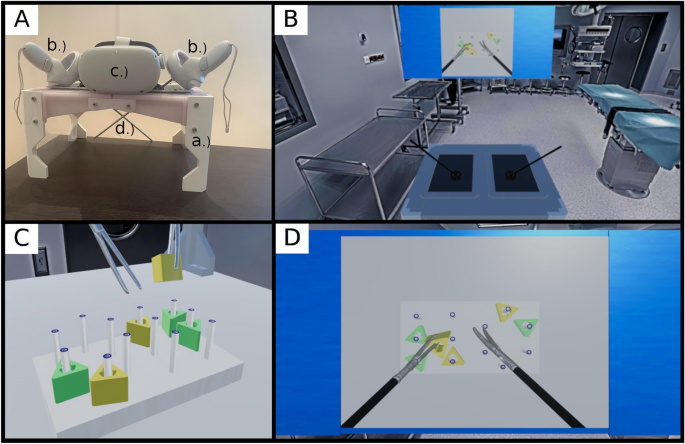
In a groundbreaking study published by Nature, researchers have unveiled a novel approach to surgical training using a low-fidelity virtual reality (VR) simulator enhanced with artificial intelligence (AI) for objective assessment. This pioneering method is poised to transform how medical students acquire laparoscopic skills, offering a cost-effective and efficient alternative to traditional training models.
AI in healthcare is projected to grow into a $188 billion industry worldwide by 2030, promising to revolutionize the field. From drug development to improved diagnostics, AI is already making significant strides, transforming medical practices and enhancing patient care efficiency.