In the heart of California’s housing debate lies Proposition 33, a measure that could redefine how cities across the Golden State approach rent control. Currently, a 1995 state law, known as the Costa–Hawkins Rental Housing Act, restricts local governments from imposing certain types of rent control. Proposition 33 seeks to repeal this law, granting cities the authority to implement stricter rent regulations.
The Proposition’s Impact Proposition 33 has sparked a heated debate. Proponents argue that repealing Costa–Hawkins would allow cities to tailor rent control measures to their unique needs, potentially easing the financial burdens on renters. Tenant advocates highlight the urgent need for such flexibility, especially as housing costs continue to soar. According to the Harvard Joint Center for Housing Studies, over half of renters in the Los Angeles area are burdened by housing costs, with many spending more than 30% of their income on rent.
Opponents, however, caution against potential negative economic impacts. They argue that expanding rent control could decrease property values and discourage investment in housing. Landlord groups and realtors are particularly vocal, emphasizing that similar measures were rejected in 2018 and 2020.
Understanding Costa–Hawkins
The Costa–Hawkins Act currently prevents rent control on single-family homes, condos, and units built after certain dates. It also allows “vacancy decontrol,” enabling landlords to set new market rates once a unit is vacated. Repealing this act through Proposition 33 would remove these restrictions, giving cities the latitude to enact their own rent control measures without state-imposed limitations.
Financial Implications
The California Legislative Analyst’s Office warns that the proposition could lead to a reduction in local property tax revenues, potentially impacting community services. Yet, supporters believe the benefits of local control and potentially more affordable housing options outweigh these concerns.
Historical Context
The push for stronger rent controls is not new in California. The original LAist article notes that similar propositions have appeared on ballots twice before, only to be defeated. This time, advocates hope that growing concerns over housing affordability will sway voters.
Conclusion
As California prepares to vote on Proposition 33, the debate encapsulates broader discussions about housing, affordability, and local governance. Whether this measure will succeed where others have failed remains to be seen, but the conversation it has sparked is undeniably crucial for the future of California’s housing landscape.
More Articles
Getting licensed or staying ahead in your career can be a journey—but it doesn’t have to be overwhelming. Grab your favorite coffee or tea, take a moment to relax, and browse through our articles. Whether you’re just starting out or renewing your expertise, we’ve got tips, insights, and advice to keep you moving forward. Here’s to your success—one sip and one step at a time!
"AI and machine learning are emerging as powerful technologies to address this issue, improving the accuracy of medical diagnosis and revolutionizing healthcare with their myriad applications."
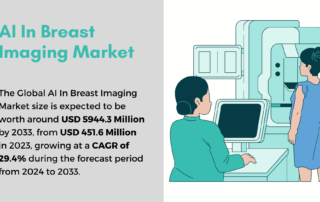
The global AI in breast imaging market is on a remarkable growth trajectory, projected to swell from USD 451.6 million in 2023 to an impressive USD 5944.3 million by 2033. This represents a compound annual growth rate (CAGR) of 29.4%, primarily driven by cutting-edge advancements in AI technologies that significantly enhance diagnostic accuracy, facilitate early detection, and boost healthcare efficiency.
Virtual real estate in metaverses is becoming a focal point for investors worldwide, with digital plots of land mirroring traditional real estate value based on location, size, and platform popularity.
Artificial intelligence (AI) and machine learning are at the forefront of revolutionizing in-vitro diagnostic (IVD) tools, redefining diagnostics and enhancing healthcare outcomes on multiple fronts.
As we edge closer to 2030, the life sciences industry stands on the threshold of transformative changes. With a global valuation exceeding $2 trillion, the sector is poised for significant growth, driven by technological advancements and an aging population.
The advent of telehealth has revolutionized the way patients, particularly those in rural areas, access health care. By offering remote consultations and follow-up care, telehealth provides a convenient alternative to traveling long distances to urban hospitals. However, this technological advancement brings with it a set of challenges that could reshape the rural health care landscape.