In a recent report from Realtor.com, down payments have shown a slight decline in the third quarter of 2024, yet they remain near the historic highs seen earlier this year. This shift comes after a peak in the second quarter, a trend influenced by a mix of seasonal forces and economic factors, including fluctuating mortgage rates and market dynamics.
Down Payments Ease but Remain High
The average down payment fell to 14.5% in Q3 2024 from the historical peak of 14.9% in Q2. This represents a modest decrease but still ranks as the third-highest percentage in recent history. The median down payment amount also dropped slightly to $30,300 from $32,700, reflecting the easing competition in the housing market.
Regional Disparities in Down Payment Trends
Regional differences are evident, with the Northeast states experiencing the most significant increases in down payments, while Southern states are witnessing declines. High-priced metros continue to demand larger down payments, but more affordable regions are seeing the most growth. This disparity highlights the ongoing impact of economic dynamics and buyer behavior across the nation.
The Role of Pandemic-Era Savings
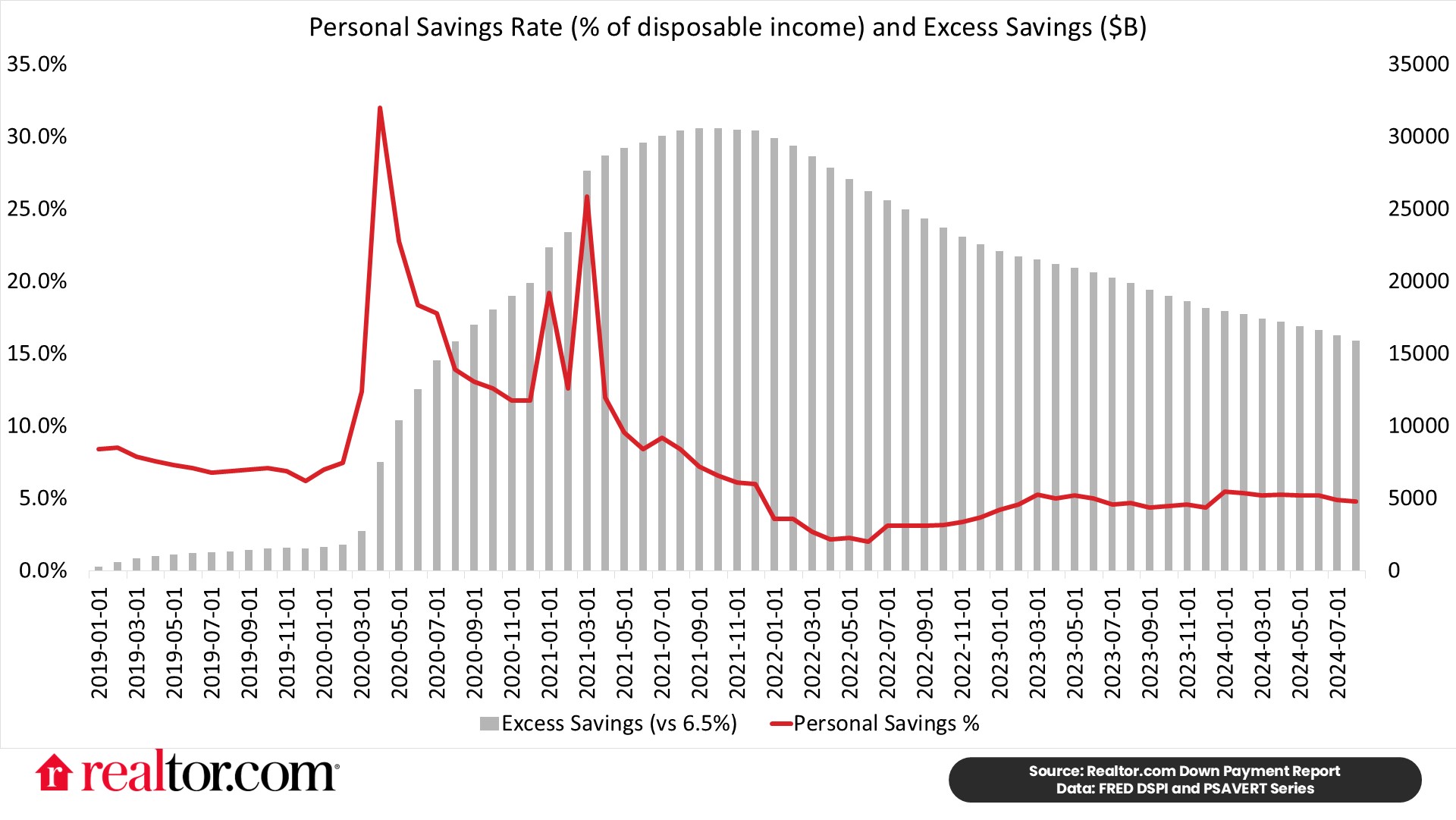
The influence of pandemic-era savings is still felt in the market. During the pandemic, personal savings rates surged, allowing many buyers to afford larger down payments. Although savings rates have since fallen, the accumulated savings continue to support consumer spending and home buying.
Impact of Falling Mortgage Rates
The recent drop in mortgage rates, which began in May and stayed below 7% from June, is expected to further impact down payment trends. As rates continue to fall, potential buyers might hold off in anticipation of even lower rates, or conversely, increased buyer competition could drive down payments upward again.
Primary Residences vs. Investment Properties
Primary residences typically see lower down payments compared to second homes and investment properties, which have down payments nearly double the typical share of primary residences. In dollar terms, down payments for investment and second homes were significantly larger than those for primary residences in Q3 2024.
Future Outlook
As we look ahead, the question remains whether this easing trend will continue or if down payments will climb again due to market conditions. The interplay of mortgage rates, personal savings, and housing market dynamics will continue to shape these trends.
Getting licensed or staying ahead in your career can be a journey—but it doesn’t have to be overwhelming. Grab your favorite coffee or tea, take a moment to relax, and browse through our articles. Whether you’re just starting out or renewing your expertise, we’ve got tips, insights, and advice to keep you moving forward. Here’s to your success—one sip and one step at a time!
"Mortgage applications decrease" amid rise in fixed-rate mortgages, detailed in a report by the Mortgage Bankers Association. The report also explores ARM's role, refinance and purchase applications, and increases in Federal Housing Administration loans for a comprehensive industry view.
"Exploring the potential of AI and Web3 technologies in real estate at Cameron Academy, we provide courses equipped to simplify complex transactions and streamline real estate operations. By leveraging AI, agents can handle increasing complexities, optimizing productivity for the future of real estate."
One of the major driving forces is the job market recovery in these states. As the pandemic impact gradually subsides, these states have not merely recovered the jobs lost during the crisis but have seen a substantial 5% increase in employment opportunities.
"Achieving financial freedom often requires unconventional actions, including making seemingly suboptimal portfolio decisions. At Cameron Academy, we provide courses that guide you through such bold decisions, focusing on creating reliable income and not just wealth accumulation."
Discover the "Fannie Mae’s new prefund QC requirements" and understand the importance of quality control strategies in loan lending. Navigate loan repurchase requests from Fannie Mae effectively with our varied courses at Cameron Academy. Explore the potential of third-party QC firms for prefund requirements.
One of the key characteristics that sets early education property investment apart is the prevalence of long-term leases. These leases provide security for both the tenant and the landlord, substantially reducing the risk of vacancy.