Real Estate Agents Want Better AI Tools — And Much Better Training
Artificial intelligence has officially moved into the daily workflow of real estate professionals — but confidence in the technology still lags behind usage. A new survey from Realtors Property Resource reveals that while agents are embracing AI at record levels, many remain unsure about trusting those tools with higher‑stakes responsibilities.
Key Takeaways
The vast majority of agents use AI for everyday tasks like crafting listing descriptions, emails and social media posts.
Two‑thirds report saving at least one hour weekly, and a third save four hours or more.
Concerns around accuracy, compliance and data interpretation remain major roadblocks.
Agents want improved tools — and much stronger training.
AI Brings Time Savings, Efficiency and Faster Communication
The survey found that 82% of agents actively use AI in their business, and 92% either use it or plan to. For many, AI has become a behind‑the‑scenes assistant that helps streamline communication, refine marketing, and simplify content creation.
Of those surveyed, 71% said AI saves them valuable time, while 63% reported improved communication with clients and prospects. When every second counts in real estate, these small boosts translate into faster response times, more consistent messaging and increased capacity to generate leads.
More than two‑thirds of agents reported saving at least one hour per week thanks to AI — and 34% said they save four or more.
As one respondent put it: “AI helps me get to the point.”
The Trust Factor: Agents Still Wary of High‑Stakes AI Tasks
Even with widespread use, many agents remain hesitant to fully trust AI‑generated content — especially when legal, financial or compliance risks are involved. According to the survey, 52% feel only somewhat confident or not confident at all when using AI for client‑facing materials or complex decision‑making.
The top concerns include:
Accuracy of outputs — 63%
Compliance and legal risks — 49%
Misinterpretation of market data — 47%
Fair housing risks — 28%
These concerns make sense. Pricing strategies, CMAs, contract‑advising and market interpretation carry enormous responsibility. Agents may trust AI with an Instagram post — but a high‑stakes client report? Not yet.
What Agents Want Next: Better Tools and Better Training
The survey highlights a major opportunity: the real estate industry is entering a new era of AI adoption — but the tools and training must catch up. Agents are asking for:
Cleaner, more accurate comparative market analyses
Better pricing explanations and narratives
Client‑ready reports with stronger market interpretation
Hyper‑local insights that truly reflect each community
Just as importantly, real estate professionals want hands‑on training. Video walkthroughs, real‑world case studies and clearer guidelines for responsible AI use all ranked high on their list of needs.
Brokerages that implement AI standards and structured training systems will likely enjoy stronger productivity, lower liability and higher retention.
Where Cameron Academy Fits In
As agents navigate this AI revolution, continuing education becomes the key to staying competitive. Cameron Academy — a trusted leader in Florida real estate licensing and professional training nationwide — is ideally positioned to help agents sharpen skills, stay compliant and embrace AI with confidence.
Whether it’s mastering emerging technologies, understanding updated regulations or keeping pace with market evolution, professional education is transforming from optional to essential.
For today’s agents, the right training matters just as much as the right technology.
Getting licensed or staying ahead in your career can be a journey—but it doesn’t have to be overwhelming. Grab your favorite coffee or tea, take a moment to relax, and browse through our articles. Whether you’re just starting out or renewing your expertise, we’ve got tips, insights, and advice to keep you moving forward. Here’s to your success—one sip and one step at a time!
A growing share of American homeowners now carry mortgage rates above 5%—a dramatic shift that’s reshaping refinancing, inventory, and buyer behavior nationwide. With more than 30% of borrowers locked into rates over 5% and 20% above 6%, the market is split between owners holding on to low pandemic‑era loans and new buyers taking on higher‑rate mortgages. Federal efforts to push rates down could unlock millions of refinancing opportunities, while buyers see only modest monthly savings. For real estate professionals, understanding these rate dynamics is crucial as they increasingly drive inventory levels, affordability, and market activity.
New Moody’s data shows commercial real estate deal volume slipped 20% in December, marking a second monthly decline. Yet the full year tells a different story: 2025 ended with a 17% gain, signaling a quiet but resilient recovery. The biggest surprise came from the office sector, which posted a 21% jump in activity as return‑to‑office trends and AI‑driven job growth boosted demand. Multifamily, retail, and alternative assets like data centers also saw strong momentum, giving real estate professionals a market full of fresh opportunities heading into 2026.
Florida drivers and industry professionals are heading into 2026 with good news: auto insurance rates are dropping across the state as the market shows strong signs of stabilization. USAA leads the latest wave with a 7% average rate decrease expected in May 2026, saving members more than $125 million annually. They join several major insurers — including State Farm, Progressive, AAA, Allstate, and Florida Farm Bureau — all approving significant reductions. Officials credit recent legislative reforms, especially tort reform, for the improved loss ratios and renewed insurer confidence. With both auto and home insurance markets strengthening, Florida’s real estate, mortgage, and insurance professionals can expect more consumer confidence, smoother transactions, and expanding career opportunities.
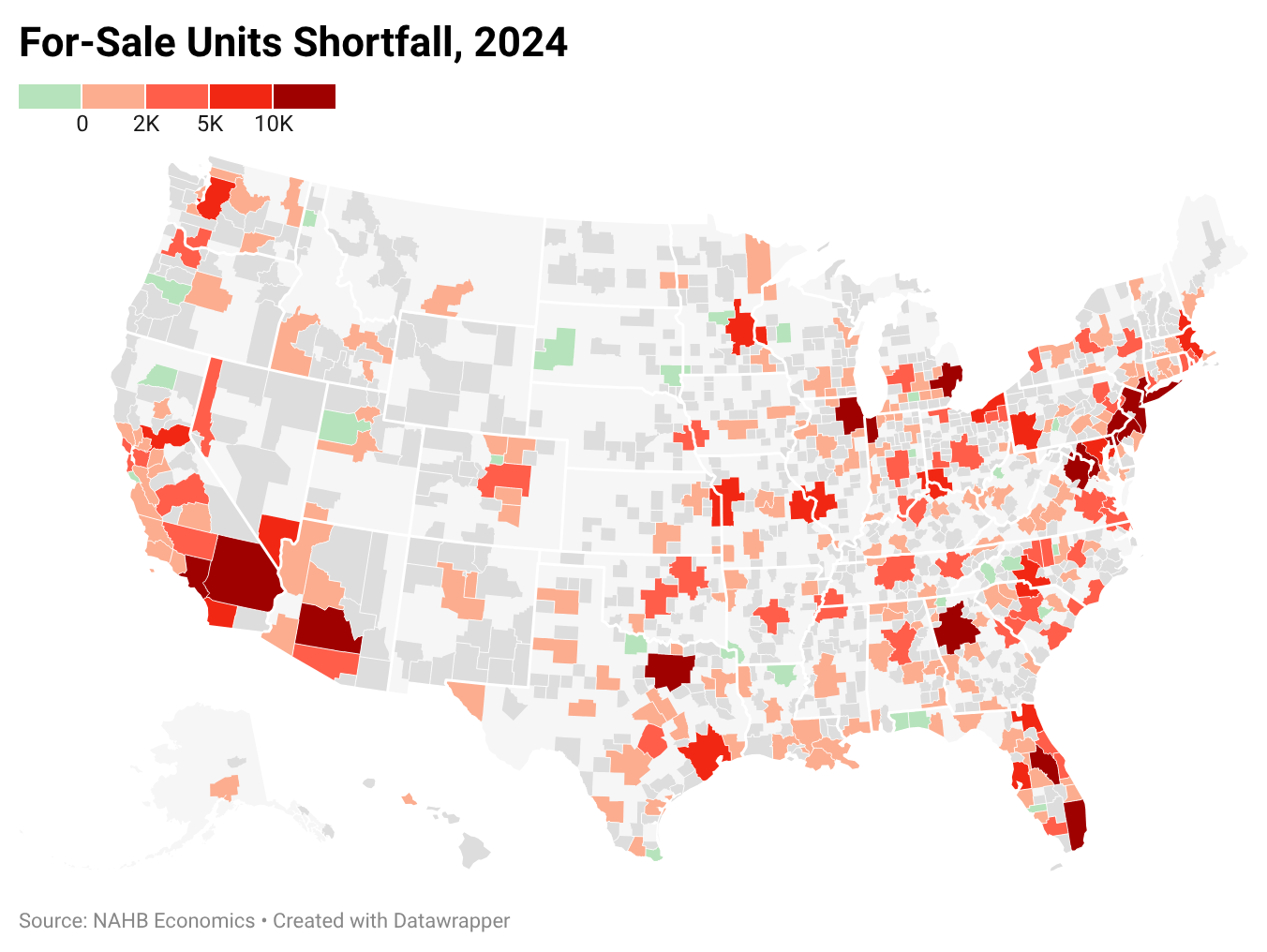
New data from Eye On Housing and the NAHB shows the U.S. remains short more than 1.2 million housing units, keeping pressure on both rents and home prices. Record‑low vacancy rates, slow single‑family construction, and restrictive zoning continue to fuel intense competition in 2024. Major metros like Chicago, New York, and Atlanta face some of the deepest deficits, and the true nationwide shortfall may be even higher when accounting for overcrowding and aging homes. For real estate professionals, the ongoing shortage means sustained demand, tighter inventory, and major opportunities for those who understand the evolving market.
Top real estate coach Jason Pantana says the divide between agents today isn’t about who has “tried” AI — it’s about who is immersed in it. In a new HousingWire interview, he explains why AI isn’t a gimmick but a full business system that amplifies output, improves authenticity, and reshapes how clients search for agents. From prompt mastery to AI‑driven visibility on Google, Pantana reveals how agents who commit even 15 minutes a day to learning AI are already outperforming those who hesitate.
Dallas–Fort Worth’s commercial real estate market closed 2025 with a split personality. Industrial dominated with massive new deliveries and soaring leasing demand, retail held steady with some of the market’s strongest fundamentals in years, and office continued to falter under remote‑work pressures. High vacancies, weak absorption, and rising demand for top‑tier space show the sector’s ongoing reset. Meanwhile, industrial and retail strength position the Metroplex for another powerhouse year heading into 2026.