Reverse Mortgage Innovation Set to Drive Strong Growth Into 2026
The reverse mortgage industry is preparing for a transformational year in 2026, powered by fresh product innovation, smarter qualification strategies, and a rapidly evolving rate environment. Industry leaders agree: the next wave of growth will be built on creativity and proactive borrower engagement.
A Shift in Mindset: Originators Prepare for High Rates
John Lunde, founder and president of Reverse Market Insight, noted that 2025 reshaped the expectations of originators nationwide. Many have accepted that pre‑pandemic rates may not return anytime soon, pushing professionals to rethink how they reach and assist borrowers.
“The rates might stay high for longer than originators can wait, so more proactive growth strategies are picking up steam,” Lunde said. Tools like the Reverse Qualifier are empowering originators to widen access and create new distribution pipelines—momentum poised to accelerate through 2026.
Improved pricing on Home Equity Conversion Mortgages (HECMs) throughout 2025 has further supported borrowers by reducing interest accrual and increasing available cash.
Proprietary Products Take Center Stage
While HECMs remain foundational, Chris Mayer, CEO of Longbridge Financial, emphasized that proprietary products are now the real drivers of growth thanks to their flexibility and broader borrower appeal.
“HECMs go up when the 10‑year rate goes down, and HECMs go down when the 10‑year rate goes up,” Mayer explained. “We may see some HECM growth in 2026, but the bulk will continue to come from proprietary offerings.”
Higher LTV/PLF ratios, expanded property eligibility, and more flexible credit structures are drawing in new and previously underserved borrower segments.
Private‑Label Momentum and Investor Appetite
Steve Irwin, president of NRMLA, pointed out that consumer demand remained strong in 2025, especially among seniors leveraging home equity. However, high rates and steep FHA premiums suppressed HECM activity.
Private‑label products stepped in to meet demand—and in 2026, continued proprietary expansion coupled with robust investor appetite signals a year of creativity and production strength.
New Approaches: HELOCs for Seniors and Borrower Education
Emerging options like the HELOC for Seniors from Longbridge are opening new doors for homeowners unfamiliar with reverse mortgage programs, making the space feel more approachable and less intimidating.
Education will be a major accelerator in 2026. Forward mortgage customers who never completed a loan may now be ideal candidates for reverse-mortgage solutions—a significant untapped opportunity.
Big Capital Enters the Space
A year-end highlight: Blue Owl Capital’s $2.5 billion liquidity investment and $50 million equity commitment to Finance of America aimed at expanding reverse mortgage initiatives.
Mayer called the move a powerful validation of the reverse mortgage market—and a sign that top-tier capital is recognizing its long-term value.
What Could Unlock Even More Growth?
A major catalyst could come from one policy shift: lowering the upfront IMIP fee on HECM loans. Lunde stressed that this could substantially reduce confusion and financial burden for borrowers.
If enacted, lenders expect an influx of applicants who were previously sidelined by high closing costs.
The Bottom Line for 2026
The reverse mortgage industry is entering 2026 with high momentum, expanding consumer awareness, proprietary product evolution, strong investor confidence, and an industry adapting to elevated rates.
For professionals eager to stay competitive in this evolving space, ongoing education will be essential. Cameron Academy proudly supports mortgage, real estate, insurance, and finance professionals nationwide through accessible, accredited licensing programs and continuing education designed for modern careers.
Getting licensed or staying ahead in your career can be a journey—but it doesn’t have to be overwhelming. Grab your favorite coffee or tea, take a moment to relax, and browse through our articles. Whether you’re just starting out or renewing your expertise, we’ve got tips, insights, and advice to keep you moving forward. Here’s to your success—one sip and one step at a time!
In 2026, financial advisors are no longer just experimenting with AI — they’re relying on it. Once confined to back-office duties, AI now supports meeting prep, portfolio analysis, and even early-stage financial planning. Advisors say the tech is strengthening client relationships by freeing them from administrative overload, though entry-level roles like paraplanners may feel the squeeze as automation accelerates.
Cybercriminals are weaponizing AI to launch highly convincing email scams and system breaches across the mortgage industry, overwhelming lenders and servicers whose cybersecurity measures can’t keep up. With major companies already hit and regulation lagging behind, experts warn the sector—now considered critical infrastructure—must rapidly upgrade protections, collaborate on threat intelligence, and improve AI governance before the risks escalate further.
Escrow payments are quietly surging across the country as property taxes and insurance premiums spike—pushing many homeowners toward delinquencies and even foreclosure. New data from Cotality shows the sharpest increases hitting the South and Midwest, with Florida among the hardest‑hit states. Even with fixed mortgage rates, rising escrow requirements are driving monthly payments higher and threatening affordability heading into 2026.
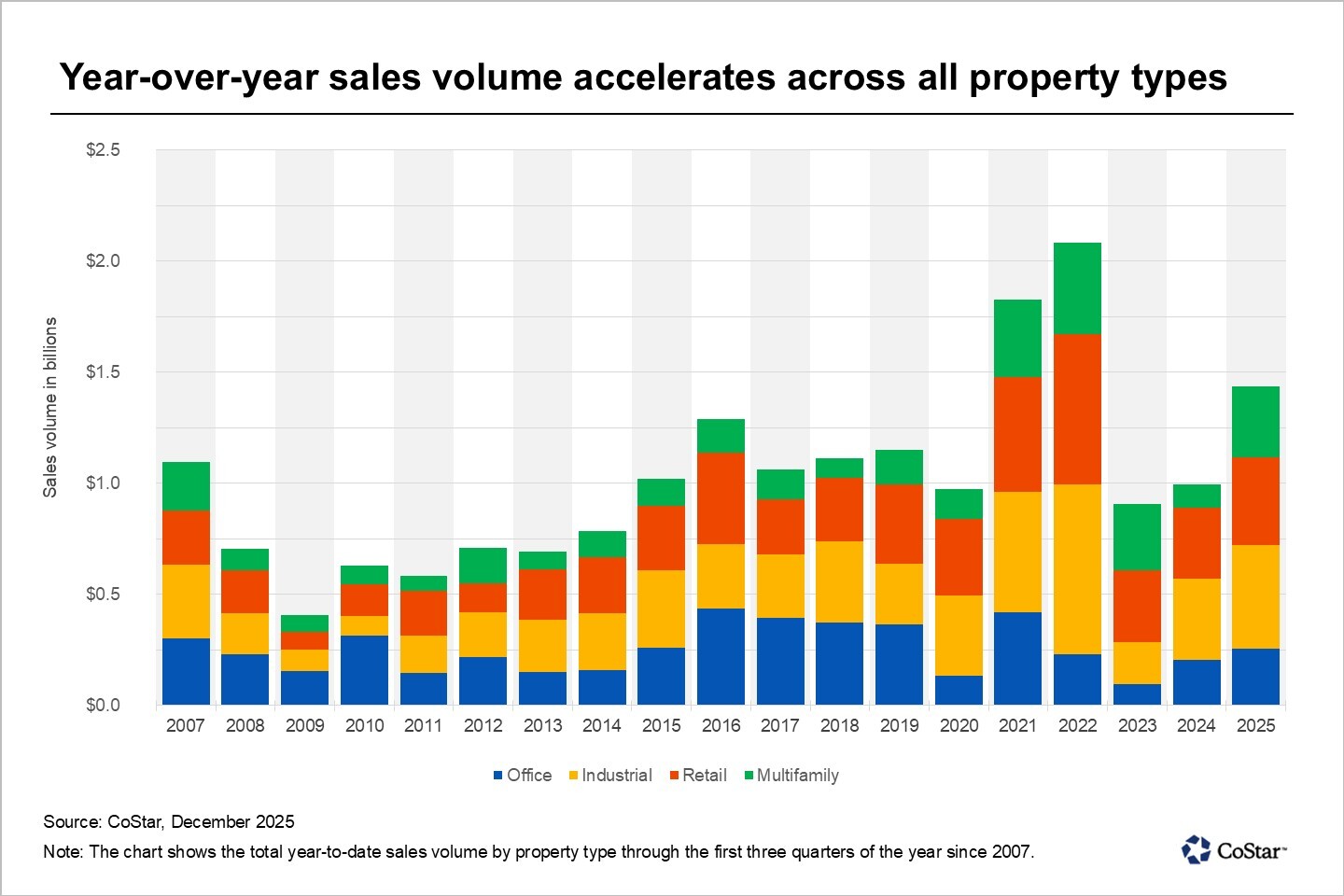
Milwaukee entered 2025 with renewed momentum, posting its strongest commercial real estate sales volume in three years. After a period of uncertainty and high capital costs, investors are returning with a sharper focus on quality assets, realistic pricing, and reliable cash flow. Activity is increasing across industrial, office, multifamily, and retail sectors, signaling a broad-based recovery fueled by stabilizing interest rates and improved market confidence.
As 2026 approaches, the title insurance industry is navigating a complex mix of market recovery, rising fraud threats, and sweeping regulatory changes. Industry leaders say the path forward centers on smarter technology, leaner operations, and stronger support for title agents. With AI-driven workflows, enhanced fraud prevention, and new compliance demands—including FinCEN’s expanded Geographic Targeting Orders—companies like Stewart and First American are reshaping how title work gets done. For real estate and mortgage professionals, the year ahead promises more automation, heightened standards, and major opportunities for those who stay ahead of the curve.
The real estate industry is undergoing a major transformation in 2025 as advancements in AI, proptech, blockchain, and data intelligence redefine how properties are marketed, valued, financed, and experienced. From instant digital valuations and immersive virtual tours to tokenized investments and predictive analytics, technology is reshaping every stage of the real estate lifecycle. Professionals who embrace these innovations—while maintaining the human expertise clients still rely on—will lead the next era of the industry.