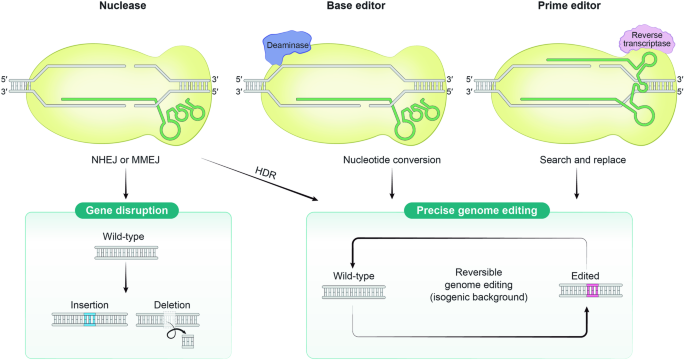
In the ever-evolving world of genetic research, the spotlight is now firmly on the groundbreaking capabilities of CRISPR-Cas technology. As highlighted in a recent Nature article, the integration of CRISPR-based genome editing with high-throughput sequencing technologies is revolutionizing our understanding of disease-associated genetic variants.

Unlocking the Secrets of Genetic Variants

For years, scientists have grappled with the challenge of deciphering the role of genetic mutations, particularly those classified as variants of unknown significance (VUSs). These mutations, often linked to human diseases, have remained elusive due to limited knowledge about their impact on cellular phenotypes. However, the advent of CRISPR-Cas technology is changing the game.

CRISPR-Cas, a precise genome editing tool, allows researchers to manipulate specific DNA sequences with unprecedented accuracy. As noted by Wang and Doudna, this technology is not just a tool but a gateway to understanding the genetic influences on diseases. By facilitating the study of both protein-coding and noncoding regions of the genome, CRISPR-Cas offers a comprehensive approach to unraveling the genetic underpinnings of various conditions.

The Power of High-Throughput Sequencing

The marriage of CRISPR technology with high-throughput sequencing has opened new avenues for functional genomics research. Techniques like Illumina and Oxford Nanopore Technology (ONT) are enabling the detailed analysis of genetic mutations on a massive scale. This integration allows scientists to conduct high-throughput screens, analyzing the functions of numerous genetic mutations simultaneously.

Moreover, advancements in single-cell sequencing are enhancing the granularity of genetic studies. By examining individual cells, researchers can gain deeper insights into the specific effects of genetic knockouts and the global changes in gene expression they induce.

Crispr-cas toolkits

CRISPR’s Role in Precision Medicine

The implications of these advancements are profound, particularly in the realm of precision medicine. By providing a detailed understanding of genetic variants, CRISPR-Cas technology holds the potential to transform diagnostic and therapeutic approaches. Researchers are now able to create isogenic disease models, facilitating the accurate analysis of phenotypic changes resulting from specific genetic mutations.

Furthermore, the ability to study noncoding regions and regulatory elements expands the scope of genetic research, offering new possibilities for therapeutic interventions targeting genetic disorders at their root.

Challenges and Future Directions

Despite its promise, CRISPR technology is not without challenges. The efficiency of gene editing varies, and the risk of unintended genomic alterations remains a concern. However, ongoing research and technological advancements continue to address these limitations, paving the way for broader applications in various fields.

As the scientific community delves deeper into the world of CRISPR-based functional genomics, the potential for groundbreaking discoveries is immense. With each new development, we move closer to a future where precision medicine is not just a possibility but a reality.

More Articles

Getting licensed or staying ahead in your career can be a journey—but it doesn’t have to be overwhelming. Grab your favorite coffee or tea, take a moment to relax, and browse through our articles. Whether you’re just starting out or renewing your expertise, we’ve got tips, insights, and advice to keep you moving forward. Here’s to your success—one sip and one step at a time!

Investopedia’s Guide to Choosing the Best Online Real Estate Schools

Through meticulous research and evaluation, Investopedia offers a comprehensive guide to finding the best online real estate schools.

By |July 5, 2025|Categories: Article, Education, Real Estate|Tags: , |0 Comments

California Bar Exam Faces AI Controversy

The State Bar of California has recently come under fire after disclosing that artificial intelligence was used to develop some of the multiple-choice questions in their February bar exam, stirring up a storm of controversy.

Streamlining Professional Licensing in Pennsylvania: A New Comprehensive Guide

In the heart of Pennsylvania, the Department of State has introduced a comprehensive Licensure Processing Guide aimed at streamlining the application process for various professional licenses. This initiative is designed to provide transparency and efficiency, ensuring that applicants are well-informed about the expected timelines and steps involved in obtaining their licenses.

Navigating Executive Orders: Littler Mendelson’s Tracker

Littler Mendelson P.C. has emerged as a crucial resource for businesses navigating the complexities of executive orders. Their comprehensive Executive Order Tracker offers an insightful analysis of the Trump administration's executive orders, focusing specifically on those impacting labor and employment directives during the First 100 Days.

By |July 5, 2025|Categories: Article, Business, Politics|Tags: , |0 Comments

Turning the Corner on Commercial Real Estate: A Generational Opportunity for Strategic Growth

In a world grappling with high inflation, fluctuating interest rates, and the looming impacts of climate change, the commercial real estate sector stands at a crossroads. According to the 2025 Commercial Real Estate Outlook by Deloitte, this industry is poised for a transformation, offering a generational opportunity for strategic growth.

Controversy Surrounds Chicago Board of Education’s Search for Interim CEO

The Chicago Board of Education has recently narrowed its search for an interim CEO to three candidates, amidst a backdrop of controversy and scrutiny. Macquline King, Alfonso Carmona, and Nicole Milberg are under consideration, with King facing allegations of negligence from her time as a principal.