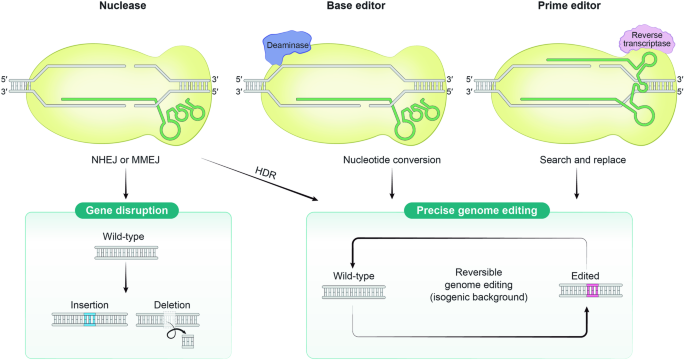
In the ever-evolving world of genetic research, the spotlight is now firmly on the groundbreaking capabilities of CRISPR-Cas technology. As highlighted in a recent Nature article, the integration of CRISPR-based genome editing with high-throughput sequencing technologies is revolutionizing our understanding of disease-associated genetic variants.
Unlocking the Secrets of Genetic Variants
For years, scientists have grappled with the challenge of deciphering the role of genetic mutations, particularly those classified as variants of unknown significance (VUSs). These mutations, often linked to human diseases, have remained elusive due to limited knowledge about their impact on cellular phenotypes. However, the advent of CRISPR-Cas technology is changing the game.
CRISPR-Cas, a precise genome editing tool, allows researchers to manipulate specific DNA sequences with unprecedented accuracy. As noted by Wang and Doudna, this technology is not just a tool but a gateway to understanding the genetic influences on diseases. By facilitating the study of both protein-coding and noncoding regions of the genome, CRISPR-Cas offers a comprehensive approach to unraveling the genetic underpinnings of various conditions.
The Power of High-Throughput Sequencing
The marriage of CRISPR technology with high-throughput sequencing has opened new avenues for functional genomics research. Techniques like Illumina and Oxford Nanopore Technology (ONT) are enabling the detailed analysis of genetic mutations on a massive scale. This integration allows scientists to conduct high-throughput screens, analyzing the functions of numerous genetic mutations simultaneously.
Moreover, advancements in single-cell sequencing are enhancing the granularity of genetic studies. By examining individual cells, researchers can gain deeper insights into the specific effects of genetic knockouts and the global changes in gene expression they induce.
CRISPR’s Role in Precision Medicine
The implications of these advancements are profound, particularly in the realm of precision medicine. By providing a detailed understanding of genetic variants, CRISPR-Cas technology holds the potential to transform diagnostic and therapeutic approaches. Researchers are now able to create isogenic disease models, facilitating the accurate analysis of phenotypic changes resulting from specific genetic mutations.
Furthermore, the ability to study noncoding regions and regulatory elements expands the scope of genetic research, offering new possibilities for therapeutic interventions targeting genetic disorders at their root.
Challenges and Future Directions
Despite its promise, CRISPR technology is not without challenges. The efficiency of gene editing varies, and the risk of unintended genomic alterations remains a concern. However, ongoing research and technological advancements continue to address these limitations, paving the way for broader applications in various fields.
As the scientific community delves deeper into the world of CRISPR-based functional genomics, the potential for groundbreaking discoveries is immense. With each new development, we move closer to a future where precision medicine is not just a possibility but a reality.
More Articles
Getting licensed or staying ahead in your career can be a journey—but it doesn’t have to be overwhelming. Grab your favorite coffee or tea, take a moment to relax, and browse through our articles. Whether you’re just starting out or renewing your expertise, we’ve got tips, insights, and advice to keep you moving forward. Here’s to your success—one sip and one step at a time!
Data from 2023 forecasts a potential "Multifamily Real Estate Decline 2024" due to rising cap rates and slowed NOI. However, resources from Cameron Academy help real estate professionals navigate "Investment Risks in Multifamily Properties" through real-time, accurate insights.
Investing in real estate can be rewarding but finding the right financing can be challenging. One popular option is the BRRRR (Buy, Rehab, Rent, Refinance, Repeat) method, which involves purchasing distressed properties, renovating them, renting them out, and then refinancing to repeat the process. Traditional banks, private money lenders, portfolio lenders, and online lending platforms are all potential sources for BRRRR loans. Another financing option to consider is the DSCR (Debt Service Coverage Ratio) loan, which assesses the property's cash flow rather than just the borrower's income. DSCR loans are commonly used in commercial real estate investments and offer advantages like better cash flow assessment and flexibility for investors. However, they also come with drawbacks such as higher interest rates and stricter qualification requirements. Choosing the right financing option depends on investment strategy, financial considerations, qualification requirements, risk profile, and expert advice. By understanding the available options and considering individual circumstances, investors can select the financing option that aligns with their goals.
In this blog excerpt, we discuss the forecast for catastrophic declines in the multifamily market by the end of 2024. Factors such as market saturation, economic uncertainty, and changing lifestyle preferences among renters contribute to this forecast. Potential risks for investors include oversupply, economic volatility, and shifts in tenant demand. Thorough research, analysis, and seeking advice from professionals are crucial for navigating the multifamily market. Being knowledgeable and making informed decisions are key to successful investments in real estate. To get started in the industry, visit CameronAcademy.com for licensing in Real Estate, Mortgage, Insurance, or Finance.
In the world of mortgages, the debate between fixed rate and adjustable rate mortgages (FRM and ARM) rages on. FRMs provide consistency and protection against rising rates, while ARMs offer lower initial rates and flexibility. When choosing between the two, factors such as financial goals, economic conditions, time horizon, and risk tolerance must be considered. Ultimately, homeowners must weigh the pros and cons and seek professional advice before making a decision. After all, the right mortgage choice can have a lasting impact on one's financial well-being.
Navigating the complexities of the current housing market can be a daunting task for buyers and sellers alike. Affordability concerns, limited inventory, credit tightening, rising interest rates, and firming home prices are all factors contributing to the challenges in today's market. However, by conducting thorough research, partnering with knowledgeable real estate agents, planning for your budget and mortgage, seeking out alternative financing options, and being patient and flexible, you can overcome these obstacles. With perseverance, informed decision-making, and adaptability, success in real estate transactions can be achieved in any market environment.