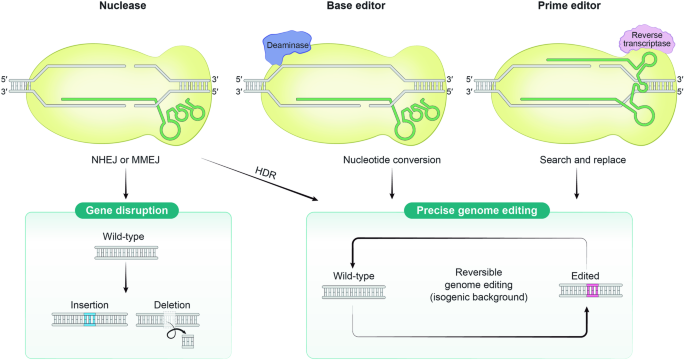
In the ever-evolving world of genetic research, the spotlight is now firmly on the groundbreaking capabilities of CRISPR-Cas technology. As highlighted in a recent Nature article, the integration of CRISPR-based genome editing with high-throughput sequencing technologies is revolutionizing our understanding of disease-associated genetic variants.
Unlocking the Secrets of Genetic Variants
For years, scientists have grappled with the challenge of deciphering the role of genetic mutations, particularly those classified as variants of unknown significance (VUSs). These mutations, often linked to human diseases, have remained elusive due to limited knowledge about their impact on cellular phenotypes. However, the advent of CRISPR-Cas technology is changing the game.
CRISPR-Cas, a precise genome editing tool, allows researchers to manipulate specific DNA sequences with unprecedented accuracy. As noted by Wang and Doudna, this technology is not just a tool but a gateway to understanding the genetic influences on diseases. By facilitating the study of both protein-coding and noncoding regions of the genome, CRISPR-Cas offers a comprehensive approach to unraveling the genetic underpinnings of various conditions.
The Power of High-Throughput Sequencing
The marriage of CRISPR technology with high-throughput sequencing has opened new avenues for functional genomics research. Techniques like Illumina and Oxford Nanopore Technology (ONT) are enabling the detailed analysis of genetic mutations on a massive scale. This integration allows scientists to conduct high-throughput screens, analyzing the functions of numerous genetic mutations simultaneously.
Moreover, advancements in single-cell sequencing are enhancing the granularity of genetic studies. By examining individual cells, researchers can gain deeper insights into the specific effects of genetic knockouts and the global changes in gene expression they induce.
CRISPR’s Role in Precision Medicine
The implications of these advancements are profound, particularly in the realm of precision medicine. By providing a detailed understanding of genetic variants, CRISPR-Cas technology holds the potential to transform diagnostic and therapeutic approaches. Researchers are now able to create isogenic disease models, facilitating the accurate analysis of phenotypic changes resulting from specific genetic mutations.
Furthermore, the ability to study noncoding regions and regulatory elements expands the scope of genetic research, offering new possibilities for therapeutic interventions targeting genetic disorders at their root.
Challenges and Future Directions
Despite its promise, CRISPR technology is not without challenges. The efficiency of gene editing varies, and the risk of unintended genomic alterations remains a concern. However, ongoing research and technological advancements continue to address these limitations, paving the way for broader applications in various fields.
As the scientific community delves deeper into the world of CRISPR-based functional genomics, the potential for groundbreaking discoveries is immense. With each new development, we move closer to a future where precision medicine is not just a possibility but a reality.
More Articles
Getting licensed or staying ahead in your career can be a journey—but it doesn’t have to be overwhelming. Grab your favorite coffee or tea, take a moment to relax, and browse through our articles. Whether you’re just starting out or renewing your expertise, we’ve got tips, insights, and advice to keep you moving forward. Here’s to your success—one sip and one step at a time!
Commercial real estate deal activity dipped in October for the first time since early 2024, signaling a widening disconnect between buyer and seller pricing expectations in a high‑rate environment. While overall sales remain strong—and even above 2024 levels—the sharp slowdown in momentum highlights rising caution across sectors. Multifamily saw a steep 27% drop in volume, hospitality was the lone sector to grow, and institutional buyers are increasingly targeting discounted office assets. With mortgage originations rebounding but lenders staying selective, 2026 will hinge on how quickly the market aligns on pricing and capital costs.
New Vanguard research reveals that the real impact of financial advisors goes far beyond market performance. Investors say the greatest value comes from peace of mind, personalized planning, emotional reassurance, and the time saved by having a trusted expert manage their financial life. The study highlights a major shift in what clients truly want: confidence, clarity, and guidance that aligns with their personal definition of financial success.
U.S. self‑storage deals surged nearly $1.6 billion in Q3 2025, marking a 62% year‑over‑year jump and the sector’s strongest resurgence in years. REITs paid steep premiums to lock down top‑tier, land‑restricted markets, while states like Florida, California, and Georgia led all sales. New York City dominated with record‑high pricing of $526 per square foot, underscoring the asset class’s resilience and the renewed appetite for specialty commercial investments heading into 2026.
Nearly half a million Florida homeowners are finally seeing relief as Citizens Insurance plans to reduce premiums by up to 11%. After years of rising costs and limited coverage options, the insurer’s shrinking policy load and reduced risk are allowing meaningful savings—averaging about $400 per year for most customers. With several private carriers also lowering rates, experts say this could mark the beginning of a long‑needed stabilization in Florida’s insurance and real estate markets.
Colorado heads into 2026 with steady economic strength despite slowing population growth. The latest forecast from the Leeds School of Business projects 17,500 new jobs, rising incomes, and GDP growth outpacing the national average. Most major industries will expand, even as migration slows and labor shortages persist.
Layoffs across tech, energy, retail, aviation, and education are redefining the 2025 workforce as companies cut costs and accelerate their adoption of AI. Major employers like Amazon, Meta, UPS, and Chevron are restructuring thousands of roles, signaling one of the most significant employment shifts in years. But while traditional positions shrink, demand is rising in fields tied to AI, data, cybersecurity, compliance, and licensed professions. For workers willing to reskill or pivot—especially into areas like real estate, insurance, finance, or other certification‑based careers—new opportunities continue to grow despite the turbulence.