In the rapidly evolving world of healthcare, artificial intelligence (AI) stands as a beacon of innovation, promising to reshape patient care and health management. As reported by Mayo Clinic Press, AI is not just a futuristic concept but a present-day reality with the potential to revolutionize the healthcare landscape.
AI’s Role in Healthcare
AI technology offers a multitude of benefits, from enhancing patient outcomes to reducing healthcare costs and improving population health. Its application ranges from preventive screenings to complex diagnostic procedures, marking a new era in medical care.
Preventive Care and Diagnosis
In the realm of preventive care, AI is making significant strides. For instance, cancer screenings utilizing radiology, such as mammograms, can leverage AI to deliver faster and more accurate results. The Mayo Clinic has demonstrated AI’s prowess in automating labor-intensive tasks, like analyzing kidney images for polycystic kidney disease, reducing the time from 45 minutes to mere seconds.
Risk Assessment and Chronic Disease Management
AI’s capabilities extend to risk assessment, particularly in cardiology. A study by Mayo Clinic revealed AI’s success in identifying individuals at risk of left ventricular dysfunction, a condition often without symptoms. This highlights AI’s potential in predicting diseases and guiding early interventions.
AI’s Impact on Efficiency and Accuracy
AI is not only about speed but also accuracy. In some cases, AI has outperformed traditional methods in predicting outcomes, such as survival rates in malignant mesothelioma cases. It also plays a crucial role in identifying colon polyps, enhancing the accuracy of colonoscopies.
Supporting Healthcare Professionals
While AI offers remarkable efficiency, it complements rather than replaces healthcare professionals. The American Medical Association emphasizes “augmented intelligence,” where AI assists in routine tasks, allowing practitioners to focus on more critical aspects of patient care.
Challenges and Future Directions
Despite its promising potential, AI in healthcare is not without challenges. Issues like bias and misinformation necessitate effective regulation. The Health AI Partnership aims to address these concerns, ensuring AI’s equitable and safe integration into healthcare.
Looking ahead, AI could transform medical practices by selecting patients for clinical trials, developing remote health-monitoring devices, and predicting disease risks years in advance. As Mayo Clinic continues to explore AI’s capabilities, the future of healthcare looks promisingly intelligent.
More Articles
Getting licensed or staying ahead in your career can be a journey—but it doesn’t have to be overwhelming. Grab your favorite coffee or tea, take a moment to relax, and browse through our articles. Whether you’re just starting out or renewing your expertise, we’ve got tips, insights, and advice to keep you moving forward. Here’s to your success—one sip and one step at a time!
With increasing governmental and private investments, the demand for precision medicine is expected to rise steadily. The commitment to addressing chronic conditions, coupled with strategic industry collaborations and advanced diagnostic tools, will sustain market growth.
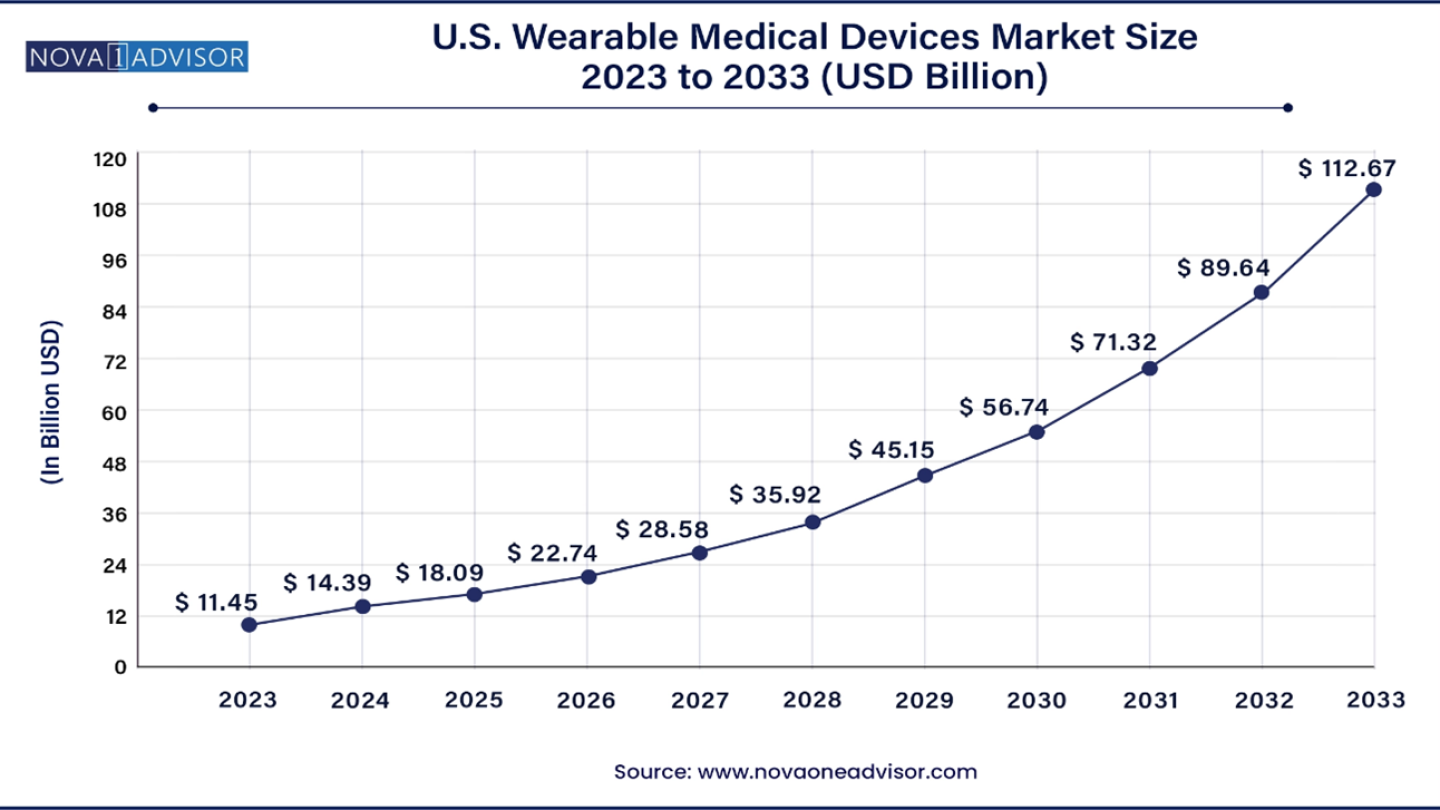
The U.S. wearable medical devices market, currently valued at an estimated $11.45 billion in 2023, is set to experience an astronomical rise to approximately $112.67 billion by 2033.
The real estate market is on the brink of transformation, captivating the attention of buyers, sellers, investors, and industry professionals. As we look toward the end of 2024, experts predict a shift in the landscape, particularly with home prices expected to decline due to increased inventory levels.
According to the World Health Organization (WHO), nearly two billion people in rural and remote areas worldwide lack access to essential healthcare solutions. This staggering statistic highlights a critical issue: the digital divide that limits telehealth services, primarily due to inadequate broadband access.
As AI becomes a staple in medical practice, it carries the risk of reinforcing existing biases entrenched in historical data. These biases can lead to skewed outcomes, particularly affecting marginalized communities such as the LGBTQIA+ and certain ethnic groups.
A groundbreaking study published in Volume 15 of Oncotarget on October 11, 2024, titled 'Relationship between the expressions of DLL3, ASC1, TTF-1 and Ki-67: First steps of precision medicine at SCLC' showcases pivotal advancements in the fight against small cell lung cancer (SCLC).