Revolutionizing Healthcare: The Rise of Wearable Technologies
In a world where technology continues to redefine the boundaries of healthcare, wearable health technologies are making waves, offering patients the ability to monitor their health from the comfort of their homes. According to a recent Forbes article, these innovations are enhancing patient monitoring and providing real-time data, leading to improved health outcomes for both patients and providers.
The Power of Continuous Monitoring
One of the most significant advancements in wearable technology is the continuous vital sign collection. Devices equipped with advanced sensors are now capable of providing real-time data on patients’ health, ensuring timely intervention and personalized care. As highlighted by Frank Chan from Medtronic, this constant monitoring minimizes gaps in observation, empowering clinicians to offer proactive support.
Microfluidic Patches: A Breakthrough in Remote Care
Microfluidic patches, as noted by Amitkumar Shrivastava of Fujitsu, are small adhesive patches that provide real-time analysis of bodily biomarkers. This innovation reduces the need for invasive tests, enhances diagnostic accuracy, and improves patient engagement, setting a new standard in remote healthcare.
Wearable ECGs and Smartwatches
Wearable ECG devices, including smartwatches, have transformed cardiac care by enabling remote monitoring of heart activity. Konstantin Klyagin of Redwerk explains how these devices, paired with apps, allow physicians to review data remotely, promoting proactive health management and early detection of stroke risks.
AI and Wearables: A Perfect Partnership
The integration of AI in wearable devices is driving incredible progress in patient monitoring. Jeff Wong from EY emphasizes that AI processes vast amounts of biometric data rapidly, resulting in prescriptive, preventive care and reducing costs for healthcare providers.
Hyper-Personalized Health Technology
Hyper-personalization, powered by AI and machine learning, is transforming user experiences in wearable health technology. Deepak Gupta of Cars24 Financial Services highlights how these systems offer tailored recommendations, motivating users to make healthier choices and achieve superior health outcomes.
As we continue to navigate the future of healthcare, these wearable technologies are not just innovations; they are a revolution in how we perceive and manage health. For more insights, visit the Forbes Technology Council.
More Articles
Getting licensed or staying ahead in your career can be a journey—but it doesn’t have to be overwhelming. Grab your favorite coffee or tea, take a moment to relax, and browse through our articles. Whether you’re just starting out or renewing your expertise, we’ve got tips, insights, and advice to keep you moving forward. Here’s to your success—one sip and one step at a time!
The real estate industry is on the brink of a transformation, driven by the integration of the Internet of Things (IoT). This technological advancement is reshaping how buildings operate and enhancing tenant experiences across the globe.
"This framework postulates New Orleans as already living in the future," said Patterson during the exhibition's opening. Lash added, "We want to show New Orleans as a gift and as a scout." The exhibition, featuring 51 artists across 21 venues, highlights how contemporary art can serve as an engine of coping, rather than mere recovery.
As the dust settles on the recent Republican victory in the U.S. presidential election, the tax landscape is poised for significant changes with President-elect Donald Trump set to return to the White House.
As we step into 2025, the multifamily housing sector is projected to experience modest growth. Yardi Matrix anticipates a 1.5% increase in rents, driven by positive economic conditions and stable industry fundamentals, particularly in the Northeast and Midwest regions. However, the rent growth forecasts vary across different markets.
Recent surveys have shed light on the preferences and priorities of renters in 2024, emphasizing the dominance of digital marketing and the importance of community inclusiveness.
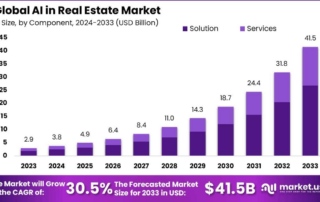
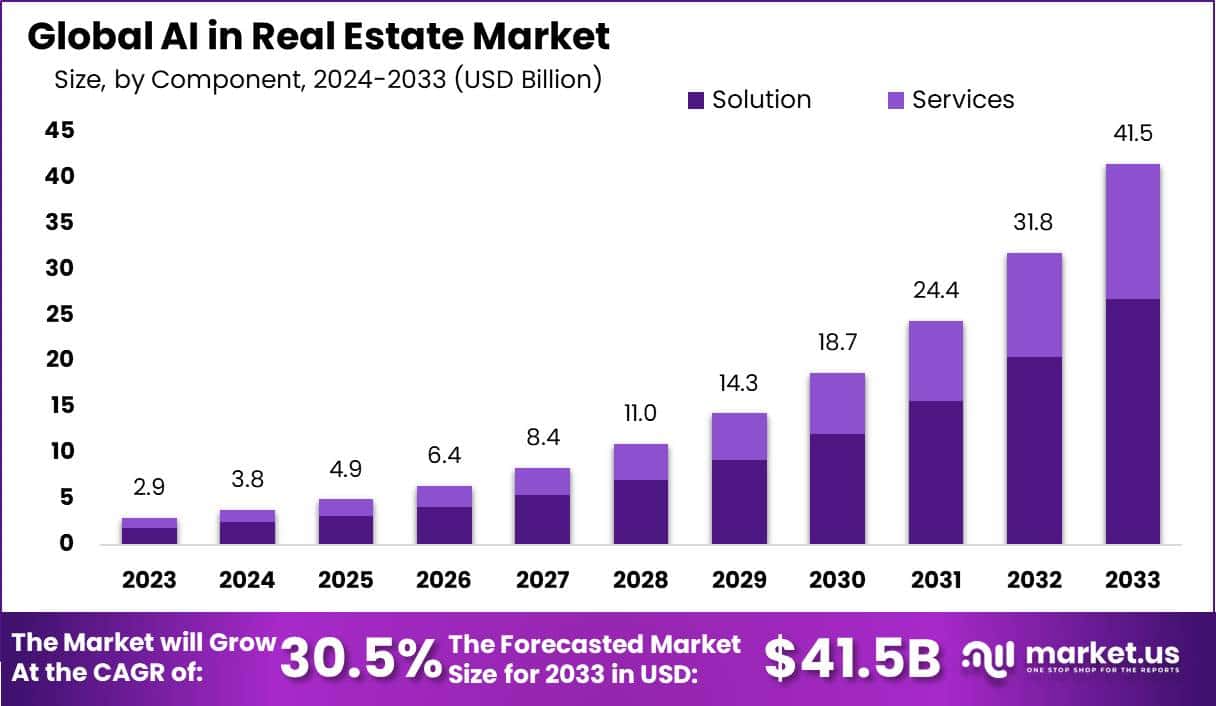
The real estate industry is on the brink of a technological transformation, with Artificial Intelligence (AI) playing a pivotal role. According to a recent report by Market.us, the AI in real estate market is projected to surge from USD 2.9 Billion in 2023 to a staggering USD 41.5 Billion by 2033, growing at an impressive CAGR of 30.5%.

 In a world where technology continues to redefine the boundaries of healthcare, wearable health technologies are making waves, offering patients the ability to monitor their health from the comfort of their homes. According to a recent