
“`html

Revolutionizing Surgical Training with VR and AI

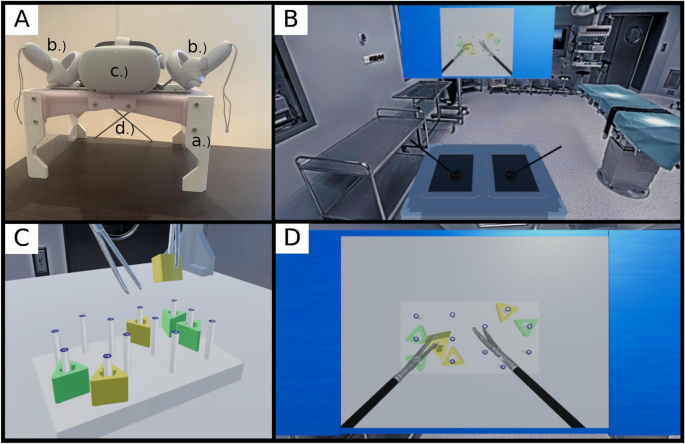
In a groundbreaking study published by Nature, researchers have unveiled a novel approach to surgical training using a low-fidelity virtual reality (VR) simulator enhanced with artificial intelligence (AI) for objective assessment. This pioneering method is poised to transform how medical students acquire laparoscopic skills, offering a cost-effective and efficient alternative to traditional training models.

The Evolution of Medical Education

For decades, medical education has relied on high-fidelity simulators, which, while effective, are often expensive and inaccessible to many training centers. The study, led by experts from the University of Pécs, aims to bridge this gap by developing a VR simulator that not only mimics the physical aspects of laparoscopic training but also incorporates AI to provide an objective evaluation of surgical skills.

Objective Assessment: A Game Changer

The integration of AI into the VR simulator allows for a more precise and unbiased assessment of students’ performance. By utilizing AI algorithms, the system can detect errors and evaluate the efficiency of surgical tasks, providing detailed feedback that was previously only possible through subjective human evaluation. This advancement addresses a long-standing challenge in simulation-based education, as noted in previous studies by Theodoulou et al. (2018) and Evgeniou & Loizou (2013).

Validation and Results

The study involved a cohort of medical students who were randomly assigned to train using either the traditional Fundamentals of Laparoscopic Surgery (FLS) box trainer or the newly developed VR simulator. Results showed no significant difference in the improvement of surgical skills between the two groups, highlighting the VR simulator’s effectiveness. Furthermore, the AI-based assessment proved to be as reliable as human evaluators, significantly reducing the time required for evaluations.

Implications for the Future

The successful validation of this VR and AI approach opens the door for wider adoption in medical schools worldwide. It offers a scalable solution that can enhance the accessibility and quality of surgical training, particularly in resource-limited settings. As the demand for distance learning and personalized education grows, this innovative tool could play a crucial role in shaping the future of medical education.
Vr simulator image

Conclusion

This study highlights the potential of combining VR and AI to revolutionize surgical training. As the medical field continues to evolve, embracing such innovative technologies will be essential in preparing the next generation of surgeons. For more detailed insights, the full study can be accessed at Nature’s website. “`

More Articles

Getting licensed or staying ahead in your career can be a journey—but it doesn’t have to be overwhelming. Grab your favorite coffee or tea, take a moment to relax, and browse through our articles. Whether you’re just starting out or renewing your expertise, we’ve got tips, insights, and advice to keep you moving forward. Here’s to your success—one sip and one step at a time!

Berlin-based Aignostics Secures €31.4 Million Series B Funding

In a significant stride for precision medicine, Aignostics, a pioneering artificial intelligence company, has announced the successful closure of a €31.4 million Series B funding round.

AI in Health Care: Opportunities and Challenges Ahead

In a world where technology is rapidly reshaping industries, the intersection of artificial intelligence (AI) and health care stands as a beacon of transformative potential. The Bipartisan Policy Center (BPC), a nonprofit organization dedicated to fostering bipartisan solutions, has recently addressed this critical synergy, emphasizing both the opportunities and challenges that lie ahead.

By |November 3, 2024|Categories: Article, Artificial Intelligence (AI), Health Care|Tags: , |0 Comments

Top 7 Construction Industry Trends in 2024

As we step into 2024, the construction industry is navigating a complex landscape marked by both challenges and opportunities. Labor shortages and supply chain disruptions continue to pose significant hurdles. Yet, there are bright spots on the horizon, with environmentally responsible projects and AI-driven innovations leading the charge.

AI in Healthcare: Pioneering Precision Health at Northeastern University

"If AI is working the way that we envision it, you actually won’t notice a lot of direct impact," says Sam Scarpino, the AI+Life Sciences director at Northeastern University. The vision is for AI to operate quietly in the background, much like a well-oiled engine, enhancing the efficiency of medical processes and enabling earlier detection of diseases, such as cancer.

U.S. Department of Transportation Unveils Roadmap for V2X Technology

The U.S. Department of Transportation has released a comprehensive plan to accelerate the rollout of this transformative technology across American roads. V2X technology allows cars and trucks to exchange critical information such as speed, position, and road conditions with each other and with road infrastructure. This system is designed to prevent collisions and reduce the impact of crashes, potentially saving thousands of lives annually.

Unveiling the Genetic Secrets: Groundbreaking Study on Rare Diseases in Germany

In a groundbreaking effort to unravel the mysteries of rare diseases, a recent Germany-wide study has leveraged cutting-edge genetic diagnostics to make significant strides in understanding these elusive conditions.


By |November 2, 2024|Categories: Article, Health, Technology|Tags: , |0 Comments