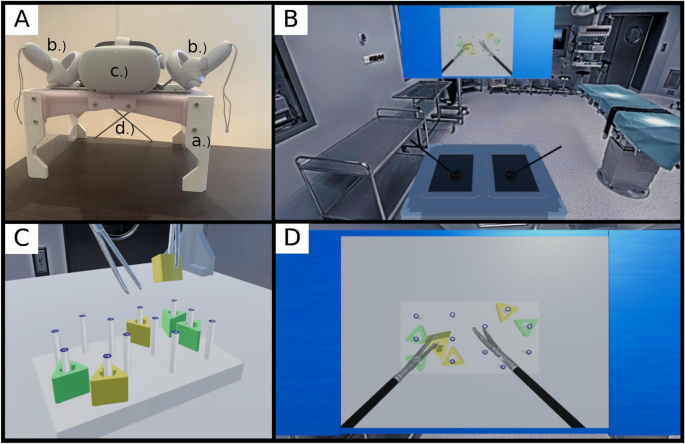
In a groundbreaking study published by Nature, researchers have unveiled a novel approach to surgical training using a low-fidelity virtual reality (VR) simulator enhanced with artificial intelligence (AI) for objective assessment. This pioneering method is poised to transform how medical students acquire laparoscopic skills, offering a cost-effective and efficient alternative to traditional training models.
The Evolution of Medical Education
For decades, medical education has relied on high-fidelity simulators, which, while effective, are often expensive and inaccessible to many training centers. The study, led by experts from the University of Pécs, aims to bridge this gap by developing a VR simulator that not only mimics the physical aspects of laparoscopic training but also incorporates AI to provide an objective evaluation of surgical skills.
Objective Assessment: A Game Changer
The integration of AI into the VR simulator allows for a more precise and unbiased assessment of students’ performance. By utilizing AI algorithms, the system can detect errors and evaluate the efficiency of surgical tasks, providing detailed feedback that was previously only possible through subjective human evaluation. This advancement addresses a long-standing challenge in simulation-based education, as noted in previous studies by Theodoulou et al. (2018) and Evgeniou & Loizou (2013).
Validation and Results
The study involved a cohort of medical students who were randomly assigned to train using either the traditional Fundamentals of Laparoscopic Surgery (FLS) box trainer or the newly developed VR simulator. Results showed no significant difference in the improvement of surgical skills between the two groups, highlighting the VR simulator’s effectiveness. Furthermore, the AI-based assessment proved to be as reliable as human evaluators, significantly reducing the time required for evaluations.
Implications for the Future
The successful validation of this VR and AI approach opens the door for wider adoption in medical schools worldwide. It offers a scalable solution that can enhance the accessibility and quality of surgical training, particularly in resource-limited settings. As the demand for distance learning and personalized education grows, this innovative tool could play a crucial role in shaping the future of medical education.
Conclusion
This study highlights the potential of combining VR and AI to revolutionize surgical training. As the medical field continues to evolve, embracing such innovative technologies will be essential in preparing the next generation of surgeons. For more detailed insights, the full study can be accessed at Nature’s website.
“`
More Articles
Getting licensed or staying ahead in your career can be a journey—but it doesn’t have to be overwhelming. Grab your favorite coffee or tea, take a moment to relax, and browse through our articles. Whether you’re just starting out or renewing your expertise, we’ve got tips, insights, and advice to keep you moving forward. Here’s to your success—one sip and one step at a time!
Despite billions poured into proptech and a decade of flashy digital upgrades, the real estate experience remains largely unchanged. Apps made processes smoother, but not more transparent — because the industry’s core structures, data control and power dynamics stayed the same. True disruption will come from platforms that shift information and control to consumers, not just digitize outdated systems.
Early 2026 is delivering a clear message: commercial real estate is entering a recalibration phase. Construction is softening, pending home sales just saw a sharp drop, consumer sentiment is inching upward but remains fragile, and capital markets are tightening as major CRE sectors face rising distress. From data centers powering ahead to CMBS foreclosures climbing and office-to-residential conversions gaining momentum, professionals across real estate, mortgage, insurance, and finance need to stay sharp as the industry shifts.
Discover the real estate roles earning the biggest paychecks in 2026. From investment consultants to commercial leasing managers, this breakdown highlights the salaries, responsibilities, and career paths offering the strongest financial potential in today’s evolving market—perfect for newcomers and seasoned professionals mapping their next big move.
Montana is taking major steps to remove outdated licensing barriers and strengthen its workforce. Governor Greg Gianforte has created a new Licensing Reform Task Force aimed at modernizing regulations, speeding up approvals, and helping more professionals enter high‑demand fields like construction and healthcare. With licensing numbers doubling over the past decade and rural communities facing critical shortages, the state is pushing for faster, more efficient pathways to work. The task force begins meeting in February and will deliver its full reform report by September 2026 — a move that could influence licensing modernization efforts nationwide.
Artificial intelligence has officially moved from novelty to necessity in the real estate world. According to new industry data, 97% of brokerage leaders say their agents now rely on AI tools for everything from listing descriptions to full-scale marketing campaigns. As adoption skyrockets, so do concerns over training, accuracy, and compliance — especially among smaller firms. The message is clear: for today’s real estate professionals, AI literacy isn’t optional anymore.
Commercial real estate roared back to life in 2025, with more than $255B pouring into multifamily, industrial, office and retail assets. Major investors moved fast on falling interest rates, improving bond yields and rising confidence across sectors. Multifamily dominated with over $115B in deals, industrial surged under private equity leadership, office saw renewed activity from owner-users and retail proved surprisingly resilient. For today’s real estate and finance professionals, the message is clear: opportunity favors those who stay informed and ready to act.