Rocket Mortgage Hit with Class Action After Ignoring Opt-Out Requests

Legal gavel on documents

Rocket Mortgage is facing fresh legal trouble as a new lawsuit accuses the lender of continuing telemarketing outreach even after confirming that a consumer had successfully opted out. Filed November 12 in federal court in Florida, the complaint alleges violations of both federal and state telemarketing laws—and marks the 56th TCPA-related case brought against the company.

Key Claim: Rocket allegedly called a consumer twelve times after confirming she had been removed from future communications.

The Consumer’s Experience

Hillary Wissart of Kissimmee, Florida, says she visited RocketMortgage.com on October 9 to check mortgage rates. Just hours later, she received a voicemail from a representative identifying himself as Miguel Rodriguez, followed by a text message welcoming her to her “home financing journey” and offering an opt‑out option by replying “STOP.”

Wissart sent the STOP request immediately. Rocket responded with a confirmation: “You have successfully been unsubscribed. You will not receive any more messages from this number.”

But the calls allegedly continued.

Timeline of Events

  • Oct 9: Initial call and text from Rocket representative.
  • Oct 9 (3:51 PM): Wissart sends STOP request; receives confirmation.
  • Oct 10–29: Multiple calls from the same number, including Oct 14, 15, 16, 17, 21, 22, 23, 24, 27, 28, and 29.
  • Oct 23: Second voicemail left by the representative.

Compliance Concerns

Federal telemarketing regulations require companies to honor do‑not‑call requests within ten business days. The lawsuit claims Rocket failed to maintain proper internal procedures for honoring consumer opt‑outs, as all calls and messages allegedly originated from the same number—indicating the STOP request likely never propagated through their system.

Wissart is not a Rocket customer and uses her phone strictly for personal communication. Her filing also notes that Rocket has been sued 55 prior times for alleged TCPA violations, raising continued questions about the company’s compliance infrastructure.

The Class Action Scope

Wissart seeks to represent two groups:

  • Nationwide consumers who sent an opt‑out text but received more than one subsequent call.
  • Florida residents who received any calls after opting out.

The complaint estimates that more than 10,000 people may qualify.

Potential Penalties

The case invokes both the federal Telephone Consumer Protection Act and Florida’s Telephone Solicitation Act. These laws carry statutory penalties of $500 per unlawful call—and up to $1,500 if the violations are deemed willful.

Industry Takeaway

For mortgage lenders and other lead‑driven industries, the lawsuit highlights ongoing challenges with managing suppression lists and maintaining compliant outreach workflows across call, text, and digital channels. As marketing automation expands, clean data hygiene and synchronized opt‑out systems remain essential.

Rocket Mortgage has not yet filed a response, and no court has made any determination regarding the allegations.

More Articles

Getting licensed or staying ahead in your career can be a journey—but it doesn’t have to be overwhelming. Grab your favorite coffee or tea, take a moment to relax, and browse through our articles. Whether you’re just starting out or renewing your expertise, we’ve got tips, insights, and advice to keep you moving forward. Here’s to your success—one sip and one step at a time!

The Mortgage Industry’s AI Transformation: Automation Reshapes Lending From Application to Approval

Artificial intelligence is rapidly reshaping the mortgage industry, boosting productivity, reducing manual work, and accelerating loan closings. From automated document data extraction to AI‑generated underwriting narratives and predictive analytics, lenders are using new tools that improve accuracy and drastically speed up processing times. With chatbots, next‑gen point‑of‑sale systems, and end‑to‑end automation, preapprovals that once took days now take minutes. For mortgage and real estate professionals, mastering AI is becoming a major competitive advantage—one that defines who will thrive in the future of lending.

Why Your Insurance Bill Is Rising Even as Florida Rates Go Down

Florida’s property insurance rates are finally starting to drop, but many homeowners are still seeing higher monthly bills. The reason isn’t insurer price hikes—it’s soaring replacement costs driven by construction inflation, labor shortages, and rising home values. Nearly 75 percent of recent premium increases came from higher property values alone. Understanding this gap between “rates” and “premiums” helps homeowners—and real estate and insurance professionals—navigate the shifting Florida market and make smarter coverage decisions.

Milwaukee’s Commercial Real Estate Market Turns a Corner

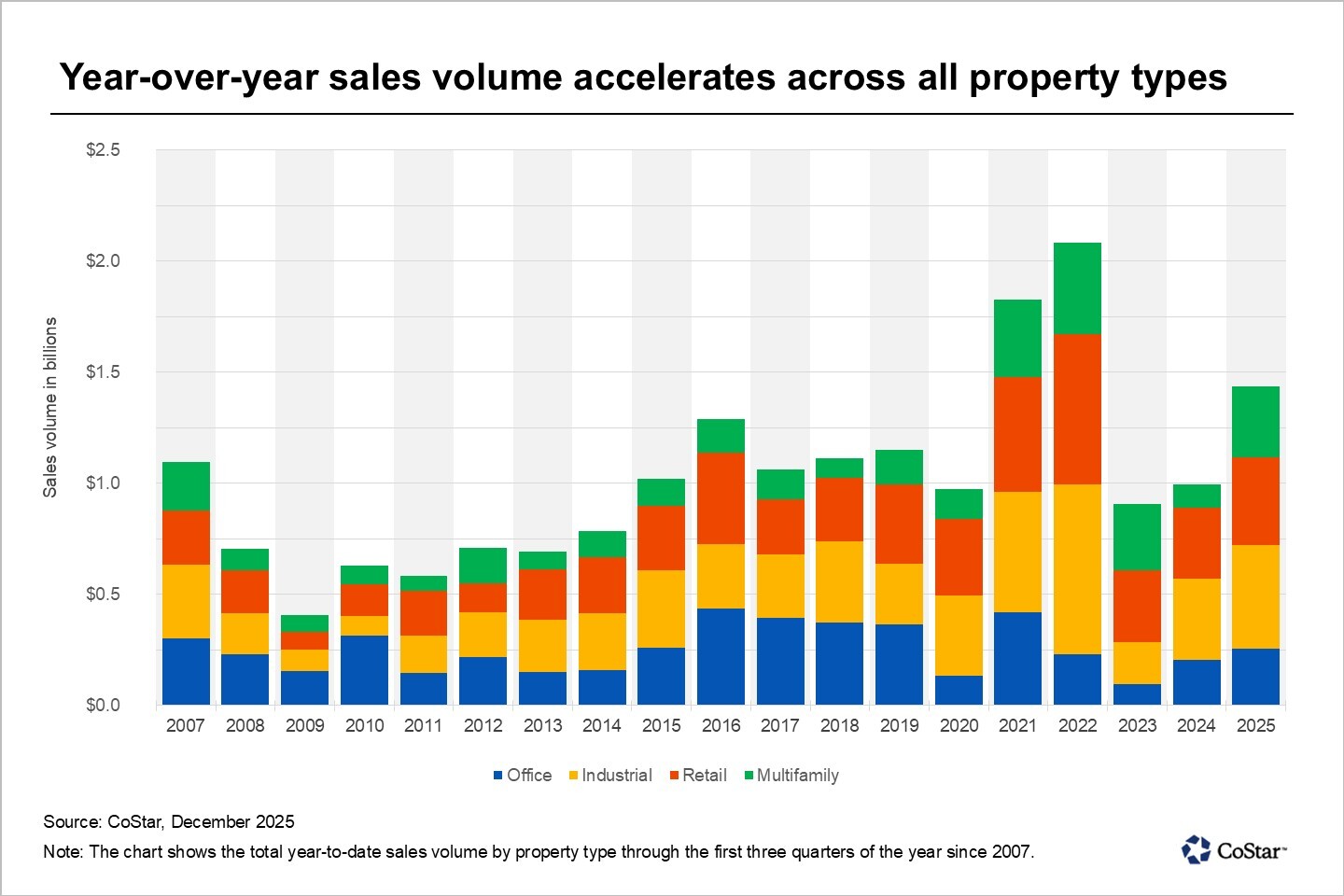
Milwaukee’s commercial real estate market is finally showing real signs of recovery, with 2025 sales volume hitting a three‑year high and investor confidence steadily returning. Driven by selective, fundamentals‑focused buying—favoring strong cash flow, quality assets, and strategic pricing—the city is moving from a period of correction into a healthier, opportunity‑rich phase. For real estate professionals nationwide, Milwaukee’s momentum reflects broader CRE market stabilization and the growing importance of disciplined underwriting and market expertise.

Reverse Mortgage Market Poised for Breakout Growth in 2026

Industry leaders project a major surge in reverse mortgage activity heading into 2026, fueled by rising proprietary products, lender innovation, and strong investor interest. As high interest rates push originators to adopt new strategies, flexible private‑label options, senior‑focused HELOCs, and a wave of big‑capital investment are reshaping the market. With education and policy shifts poised to unlock even more demand, reverse mortgages are entering their most transformative era yet.

The 2026 Housing Market Outlook: Is Better Inventory Finally on the Horizon?

Experts forecast that 2026 may bring long‑awaited relief to homebuyers, with both existing and new home inventory expected to rise. NAR predicts a boost in home sales, a slight drop in mortgage rates, and a modest 4% increase in prices—conditions that could motivate more homeowners to list while builders add over a million new homes to the market. For first‑time buyers, higher loan limits and easing qualification standards may make entering the market more achievable than in recent years.

Lower Interest Rates Signal a Brighter 2026 for South Florida Real Estate

South Florida enters 2026 with renewed optimism as falling mortgage rates, improving buyer confidence, and a strong job market help stabilize a housing landscape that struggled in 2025—especially in the condo sector. While single-family homes remained resilient last year, condos faced price drops, rising fees, and hesitation tied to new safety regulations. With rates projected to fall to around 5.8% by year’s end, buying power is increasing, inventory may loosen, and activity is expected to pick up. Still, affordability challenges persist, Miami’s rental market remains intensely competitive, and the condo sector’s recovery will take time.