Should You Form an LLC for Your Rental Property in 2025?
If you have spent any time in the real estate world, you have probably heard one piece of advice repeated often: smart landlords protect their assets. That is why more rental property owners are choosing to create a limited liability company, or LLC. It offers tax advantages, liability protection, and a more professional approach to handling rental operations.
To help you decide whether forming an LLC is the right move for your investment goals, we pulled insights from Avail. You can explore their full resource at
https://www.avail.co/education/articles/should-you-create-an-llc-for-your-rental-property.
Below is a streamlined, real-world look at what landlords and real estate professionals should know for 2025.
What an LLC Actually Does for Landlords
An LLC separates your personal assets from your rental business. If a legal dispute arises, your home, savings, and personal property stay protected. Many landlords use an LLC to formalize operations, manage expenses more cleanly, and elevate their professionalism.
Why Landlords Choose LLCs
Creating an LLC can help you:
Separate business and personal finances
Qualify for more tax deductions
Protect personal assets in a lawsuit
Improve management and operations
How Rental Income Is Taxed in an LLC
LLCs operate as pass-through entities. Instead of the company paying taxes, rental income passes through to your personal return. In most cases, it is not subject to self-employment taxes. Owners can also deduct expenses such as mortgage interest, property taxes, maintenance, and depreciation.
Popular Tax Strategies for LLC Owners
A 1031 exchange to defer capital gains taxes
Qualified business income deductions up to 20 percent
Expanded write-offs for repairs, upgrades, and operations
Always check with a tax professional for personalized guidance, as regulations can vary by state.
Top Benefits of Using an LLC for Your Rental Property
Limits liability and protects personal assets
Keeps each rental property separate if you own multiple buildings
Supports pass-through taxation and reduces paperwork
Makes bookkeeping and expense tracking cleaner
Improves estate planning and ownership transitions
Allows faster depreciation through cost segregation studies
Best Practices for Managing Your Rental Property LLC
Expand Best Practices
Maintain clear financial records
Review and update your operating agreement annually
Carry landlord-specific insurance policies
Stay compliant with local codes and rental regulations
Work with a CPA who specializes in real estate
Use management software to streamline workflow
Who Should Consider Creating an LLC?
Any landlord seeking stronger protection and simplified tax handling can benefit from an LLC. It is especially useful for co-owners and investors planning to grow their portfolio.
When to Form an LLC
It is ideal to form your LLC before buying a property. Creating the LLC after purchase may require notifying your lender, filing additional documents, and possibly refinancing. Forming early helps you avoid unnecessary fees and administrative steps.
How to Set Up Your Rental Property LLC
Contact your lender if you have an existing mortgage
Choose a unique, compliant business name
File Articles of Organization with your state
Apply for an EIN through the IRS
Open a business banking account
Draft an operating agreement
Publish a notice of intent if your state requires it
Obtain local rental licenses and permits
Title Transfers and Financing Considerations
If you already own a rental property, you will need a quitclaim deed to transfer ownership into the LLC. This can impact your financing if the mortgage is in your personal name. Always check with your lender before transferring ownership.
Costs to Expect When Forming an LLC
State filing fees: 50 to 630 dollars depending on location
Notice of intent: around 40 dollars
Operating agreement: 0 to 1000 dollars
Transfer taxes vary by state
BOI Reporting Requirements for LLC Owners
Beginning in 2024, most LLCs must report beneficial owner information under FinCEN. This includes any individual who owns or controls 25 percent or more of the company. Missing deadlines may result in fines.
Umbrella Policies vs LLC Protection
Umbrella insurance can expand coverage beyond a standard policy, but it does not replace the legal protection offered by an LLC. The strongest protection comes from combining both tools.
What This Means for Real Estate Students and Professionals
Understanding LLC structures gives real estate professionals a competitive edge. Investors rely on agents and property managers for accurate guidance. At Cameron Academy, we make sure students learn the real business side of real estate, not only how to pass the exam. Mastering LLC fundamentals helps you better serve clients and expand your own investing confidence.
If you are ready to expand your real estate knowledge, earn your license, or advance your professional credentials, Cameron Academy offers flexible, career-focused programs for real estate, mortgage, insurance, and more across all 50 states.
More Articles
Getting licensed or staying ahead in your career can be a journey—but it doesn’t have to be overwhelming. Grab your favorite coffee or tea, take a moment to relax, and browse through our articles. Whether you’re just starting out or renewing your expertise, we’ve got tips, insights, and advice to keep you moving forward. Here’s to your success—one sip and one step at a time!
In 2026, financial advisors are no longer just experimenting with AI — they’re relying on it. Once confined to back-office duties, AI now supports meeting prep, portfolio analysis, and even early-stage financial planning. Advisors say the tech is strengthening client relationships by freeing them from administrative overload, though entry-level roles like paraplanners may feel the squeeze as automation accelerates.
Cybercriminals are weaponizing AI to launch highly convincing email scams and system breaches across the mortgage industry, overwhelming lenders and servicers whose cybersecurity measures can’t keep up. With major companies already hit and regulation lagging behind, experts warn the sector—now considered critical infrastructure—must rapidly upgrade protections, collaborate on threat intelligence, and improve AI governance before the risks escalate further.
Escrow payments are quietly surging across the country as property taxes and insurance premiums spike—pushing many homeowners toward delinquencies and even foreclosure. New data from Cotality shows the sharpest increases hitting the South and Midwest, with Florida among the hardest‑hit states. Even with fixed mortgage rates, rising escrow requirements are driving monthly payments higher and threatening affordability heading into 2026.
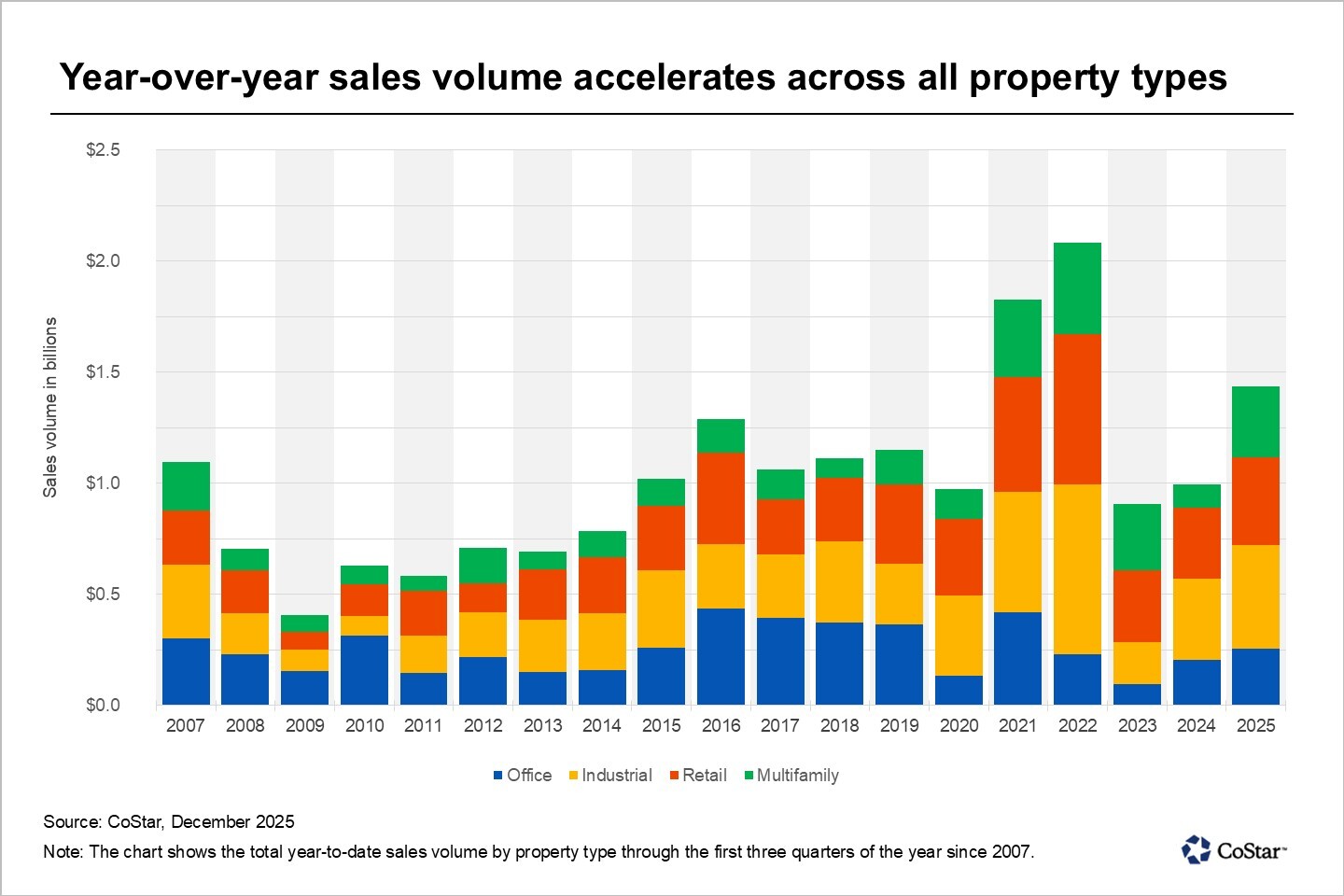
Milwaukee entered 2025 with renewed momentum, posting its strongest commercial real estate sales volume in three years. After a period of uncertainty and high capital costs, investors are returning with a sharper focus on quality assets, realistic pricing, and reliable cash flow. Activity is increasing across industrial, office, multifamily, and retail sectors, signaling a broad-based recovery fueled by stabilizing interest rates and improved market confidence.
As 2026 approaches, the title insurance industry is navigating a complex mix of market recovery, rising fraud threats, and sweeping regulatory changes. Industry leaders say the path forward centers on smarter technology, leaner operations, and stronger support for title agents. With AI-driven workflows, enhanced fraud prevention, and new compliance demands—including FinCEN’s expanded Geographic Targeting Orders—companies like Stewart and First American are reshaping how title work gets done. For real estate and mortgage professionals, the year ahead promises more automation, heightened standards, and major opportunities for those who stay ahead of the curve.
The real estate industry is undergoing a major transformation in 2025 as advancements in AI, proptech, blockchain, and data intelligence redefine how properties are marketed, valued, financed, and experienced. From instant digital valuations and immersive virtual tours to tokenized investments and predictive analytics, technology is reshaping every stage of the real estate lifecycle. Professionals who embrace these innovations—while maintaining the human expertise clients still rely on—will lead the next era of the industry.