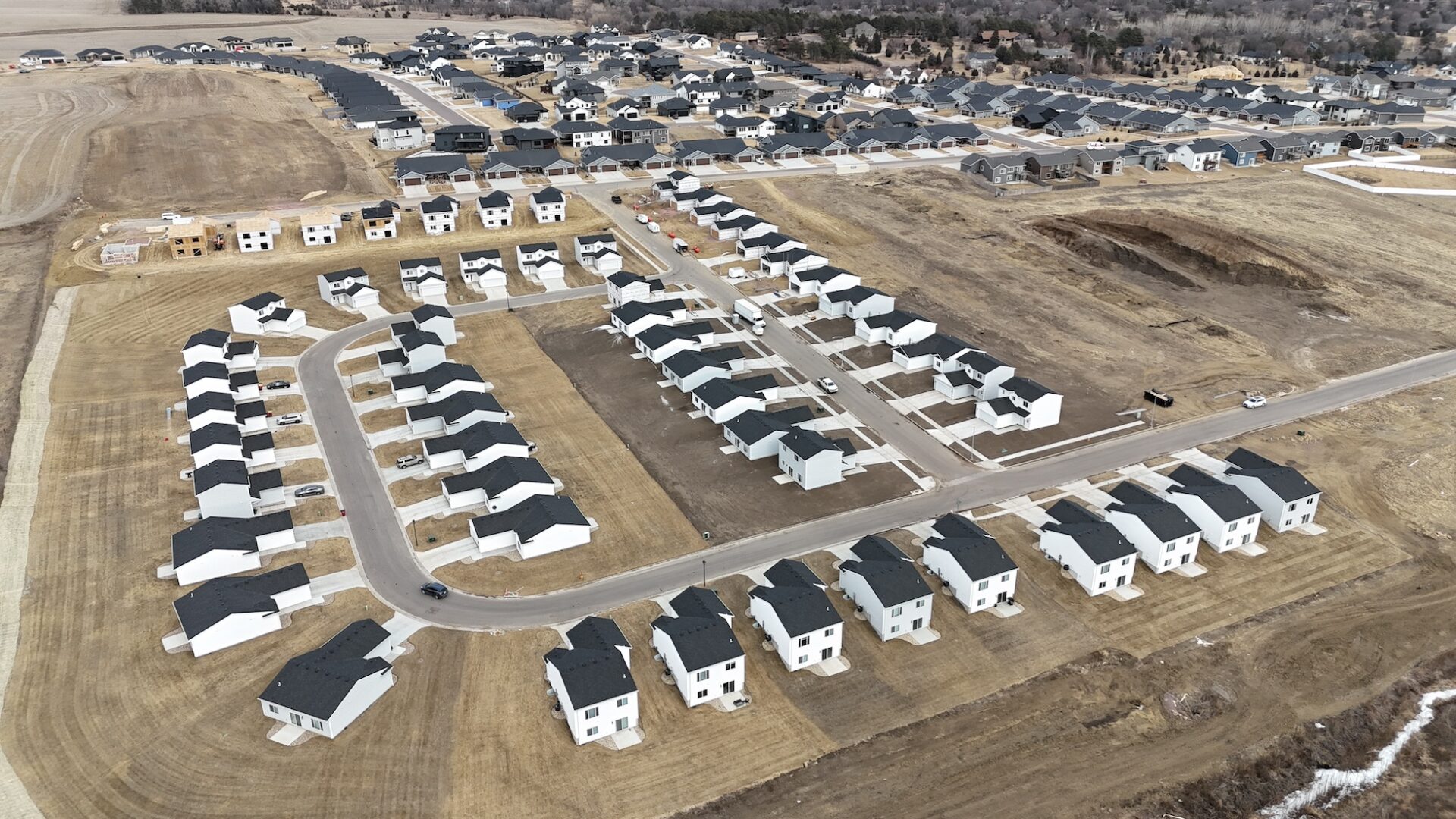
Two pioneering multifamily projects in the eastern part of Sioux Falls are gaining ground, backed by compelling interest and investment from local stakeholders. Spearheaded by the Sioux Falls-based Ernst Capital Group, the city sees a significant influx of new housing options tailored to meet diverse rental needs.
“We’re seeing an exceptional performance in our portfolio, especially highlighting some of the best winter leasing activities on record,” said Chris Daugaard, a partner in Ernst Capital Group. “This enthusiasm encourages us as we progress with these new projects.”
Willowbrook Village
The first project, Willowbrook Village, has already welcomed its initial residents. Situated northeast of Veterans and Arrowhead parkways, this build-to-rent community introduces 57 single-family homes managed by Lloyd Companies. Each residence boasts two- or three-bedroom configurations complete with attached garages. Residents have noted the quality finishes, comparing them to freshly constructed homes intended for sale rather than rentals.
This innovative approach to multifamily living focuses on striking a balance between affordability and quality, making it an appealing option without the overhead of luxury amenities. This move aligns well with the broadly thriving residential market within the area, further fortified by the strategic location chosen for development.
Split Rock Village
Simultaneously, Split Rock Village, another development under Signature Fund VI, is progressing at 26th Street and Six Mile Road. It targets a mix of dwellings with upcoming leases for 100 units across studio, one-, two-, and three-bedroom apartments. The inclusive amenity package planned features a clubhouse, pool, and additional recreational facilities, aligning with the growing expectations of the modern tenant.
Ernst Capital’s ventures reflect years of strategic investment and partnership, marking its 38th collaboration since 2007, with 16 specifically focused on projects like those seen with Signature Companies. Chris Daugaard notes the long-term potential of these locations, tying their development closely to the ever-increasing population and demand.
These developments signify more than just urban expansion; they offer local investors a chance to engage deeply with Sioux Falls’ growth story, emphasizing quality and evolving residential preferences. As Ernst Capital opens doors to new investment opportunities, there’s little doubt these projects will carve out a new definition for Sioux Falls’ multifamily housing landscape.
For further information or to get involved with Ernst Capital Group, visit their official website here.
For the full story, refer to the original article on SiouxFalls.Business.
More Articles
Getting licensed or staying ahead in your career can be a journey—but it doesn’t have to be overwhelming. Grab your favorite coffee or tea, take a moment to relax, and browse through our articles. Whether you’re just starting out or renewing your expertise, we’ve got tips, insights, and advice to keep you moving forward. Here’s to your success—one sip and one step at a time!
Florida’s insurance market is under intense pressure as millions of residents and trillions in property wealth cluster along hurricane‑vulnerable coastlines. This article breaks down how decades of growth in high‑risk zones created today’s crisis, why traditional pricing models can’t keep up, and what real estate and insurance professionals must do to stay ahead. It offers actionable insights on underwriting, risk communication, policy partnerships, and resilience planning—critical knowledge for anyone advising Florida homeowners or navigating the state’s evolving insurance landscape.
Florida’s homeowners insurance market may have stabilized, but not in the way residents hoped. After years of runaway increases, premiums have stopped spiking—but they’re holding at painfully high levels. Coastal properties remain the hardest hit, with some policies topping $15,000 a year, while insurers continue demanding costly upgrades and resisting calls for transparency. For real estate professionals, understanding these pricing pressures is becoming essential as insurance costs increasingly shape buyer decisions across the state.
Florida homeowners face soaring premiums, shrinking insurer options, and storms that grow stronger each year. This article breaks down what hurricane insurance actually covers, how deductibles really work, why flood insurance is essential, and what professionals in real estate, mortgage, and insurance must understand to protect clients and properties before the next major storm hits.
Teresa King Kinney, one of the most influential executives in modern real estate, is retiring after 33 years as CEO of the MIAMI Association of Realtors. Under her leadership, the organization grew from 5,000 members to 60,000, became a global real estate powerhouse, and built the nation’s largest association‑owned MLS. As she transitions into CEO Emeritus, MIAMI prepares for a new era shaped by the foundation she spent decades building.
Miami’s commercial property market is heating up again, posting an 11% jump in investment volume for 2025. The surge is driven largely by a revitalized retail sector fueled by population growth, strong tourism, and new mixed‑use development. While office and industrial activity remains steady but softer, investor confidence is returning as Miami’s CRE landscape matures and buyers re‑enter the market with renewed interest in high‑traffic retail opportunities.
The Federal Reserve is preparing major changes to mortgage regulations in an effort to pull more mortgage activity back into the banking sector. With banks losing significant market share to nonbank lenders over the past decade, Fed Vice Chair for Supervision Michelle Bowman says new proposals may ease capital requirements and make mortgage servicing more attractive for banks. These shifts could have wide‑ranging effects on real estate professionals, lenders, and borrowers as the balance of power in the mortgage market begins to shift once again.