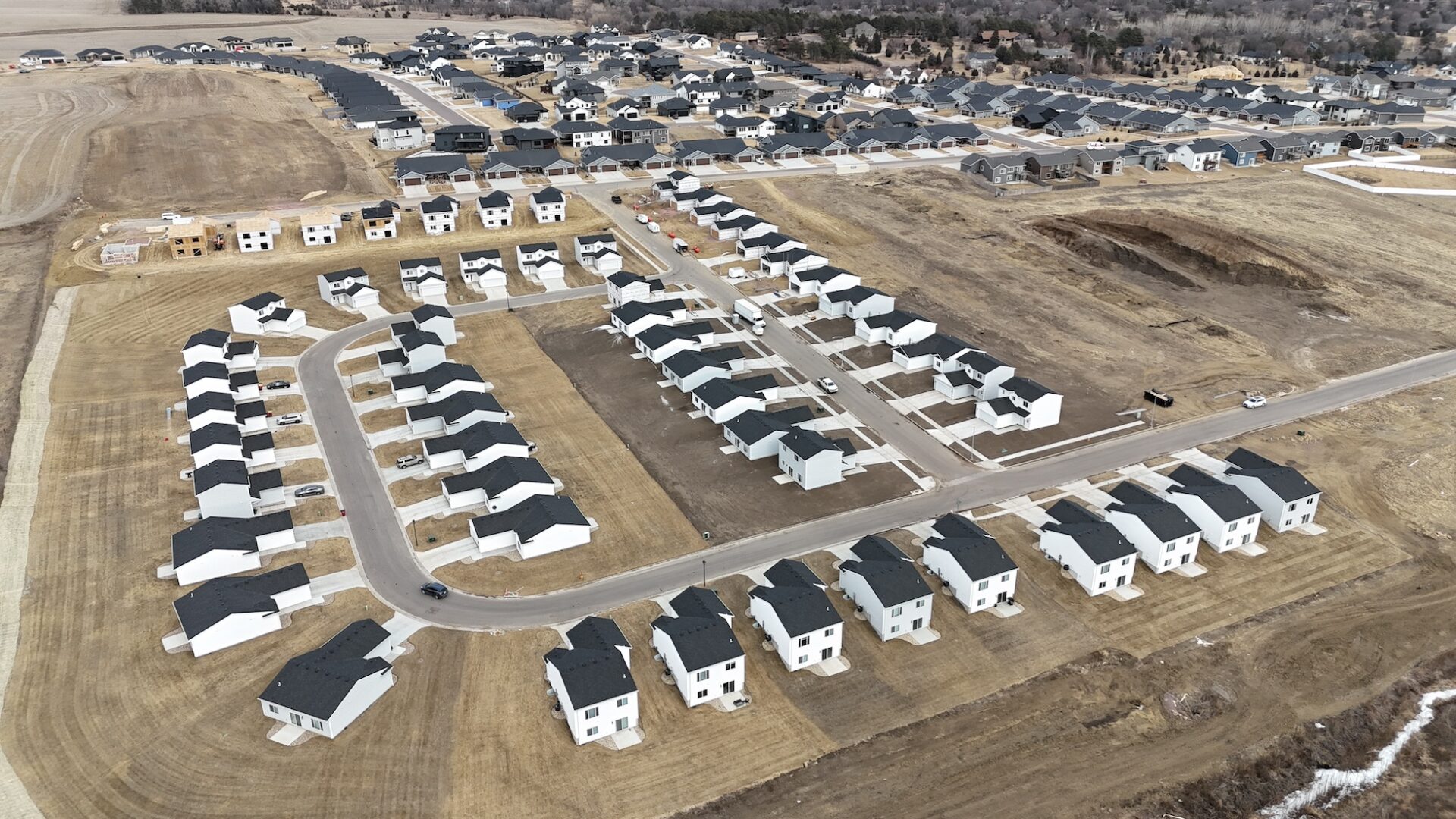
Two pioneering multifamily projects in the eastern part of Sioux Falls are gaining ground, backed by compelling interest and investment from local stakeholders. Spearheaded by the Sioux Falls-based Ernst Capital Group, the city sees a significant influx of new housing options tailored to meet diverse rental needs.
“We’re seeing an exceptional performance in our portfolio, especially highlighting some of the best winter leasing activities on record,” said Chris Daugaard, a partner in Ernst Capital Group. “This enthusiasm encourages us as we progress with these new projects.”
Willowbrook Village
The first project, Willowbrook Village, has already welcomed its initial residents. Situated northeast of Veterans and Arrowhead parkways, this build-to-rent community introduces 57 single-family homes managed by Lloyd Companies. Each residence boasts two- or three-bedroom configurations complete with attached garages. Residents have noted the quality finishes, comparing them to freshly constructed homes intended for sale rather than rentals.
This innovative approach to multifamily living focuses on striking a balance between affordability and quality, making it an appealing option without the overhead of luxury amenities. This move aligns well with the broadly thriving residential market within the area, further fortified by the strategic location chosen for development.
Split Rock Village
Simultaneously, Split Rock Village, another development under Signature Fund VI, is progressing at 26th Street and Six Mile Road. It targets a mix of dwellings with upcoming leases for 100 units across studio, one-, two-, and three-bedroom apartments. The inclusive amenity package planned features a clubhouse, pool, and additional recreational facilities, aligning with the growing expectations of the modern tenant.
Ernst Capital’s ventures reflect years of strategic investment and partnership, marking its 38th collaboration since 2007, with 16 specifically focused on projects like those seen with Signature Companies. Chris Daugaard notes the long-term potential of these locations, tying their development closely to the ever-increasing population and demand.
These developments signify more than just urban expansion; they offer local investors a chance to engage deeply with Sioux Falls’ growth story, emphasizing quality and evolving residential preferences. As Ernst Capital opens doors to new investment opportunities, there’s little doubt these projects will carve out a new definition for Sioux Falls’ multifamily housing landscape.
For further information or to get involved with Ernst Capital Group, visit their official website here.
For the full story, refer to the original article on SiouxFalls.Business.
More Articles
Getting licensed or staying ahead in your career can be a journey—but it doesn’t have to be overwhelming. Grab your favorite coffee or tea, take a moment to relax, and browse through our articles. Whether you’re just starting out or renewing your expertise, we’ve got tips, insights, and advice to keep you moving forward. Here’s to your success—one sip and one step at a time!
PropTech investment surged nearly 68% in 2025, hitting a massive $16.7 billion and surpassing pre-pandemic highs. Investors are shifting toward practical, AI-powered tools that streamline operations, improve efficiency, and deliver immediate results. With 2026 shaping up to be a year of selective but strong growth, real estate professionals who stay ahead of tech trends will gain a major competitive edge.
Florida homeowners are finally seeing real relief as Citizens Property Insurance Corp. unveils an average 8.7% rate decrease for 2026—its largest cut in over a decade. Sparked by recent legislative reforms, a calm hurricane season, and renewed competition from insurers reentering the state, the drop is poised to significantly impact homeowners, real estate professionals, and industry trainees across Florida.
Tampa’s commercial real estate market is still growing, but investors are shifting from rapid dealmaking to highly selective, detail‑driven decisions. Population growth, steady office demand, stabilizing industrial activity, and a rebound in retail are keeping the market strong, while health‑care properties are emerging as a major sector for 2026. The region’s next chapter is defined by precision, disciplined underwriting, and long‑term strategy rather than speed.
Homesage.ai has released a new AI-powered comps engine that cuts property valuation time from hours to seconds by analyzing hundreds of data points across listings, public records, and proprietary datasets. Designed for agents, investors, and lenders, the tool delivers highly accurate comparable properties and real-time market insights, giving professionals a competitive edge in today’s rapidly shifting housing landscape.
A panel of federal judges is closely examining whether the National Association of Realtors’ billion‑dollar antitrust settlements—and similar deals struck by major brokerages—are genuinely fair to the millions of buyers and sellers affected. With plaintiffs arguing that homebuyers’ rights were improperly dismissed and compensation falls far short of true losses, the court’s upcoming decision could reshape commission practices and spark one of the most significant structural shifts in modern real estate.
The SEC is proposing a dramatic shift in how it defines a “small” registered investment adviser — raising the threshold from under 25 million in assets to under 1 billion. The change would instantly reclassify about 96 percent of RIAs and could create ripple effects across mergers and acquisitions, integration planning, and breakaway adviser activity. While the move aims to reduce administrative burden, it may also introduce new complexities for firms scaling past the billion‑dollar mark.