Smart Home Energy Management Devices: A Market Poised for Growth
The Global Smart Home Energy Management Device Market is on the brink of a significant transformation, driven by escalating demands for energy-efficient solutions and the increasing adoption of smart home technologies. As consumers become more conscious of the importance of energy conservation, fueled by environmental concerns and rising energy costs, the market is set for a promising trajectory.
Government initiatives play a crucial role in promoting sustainable practices and integrating renewable energy sources, further accelerating the market’s expansion. Technological advancements, particularly in artificial intelligence and IoT connectivity, have enhanced these devices’ capabilities, making them more intuitive and user-friendly.
North America: Leading the Charge
North America has emerged as the dominant region in the Global Smart Home Energy Management Device Market, a position it is expected to maintain. This strong market presence is attributed to high consumer awareness about energy conservation, widespread adoption of smart home technologies, and supportive government initiatives. The region’s well-established IoT infrastructure and prevalent home automation systems have significantly contributed to the widespread adoption of these devices.
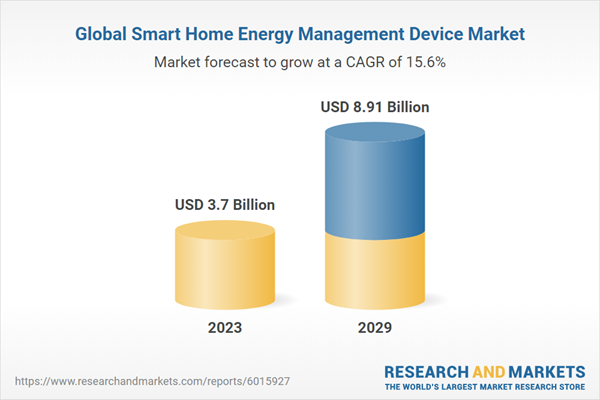
Despite the promising growth, challenges such as integration complexities, data security concerns, and high initial costs persist. However, the future looks bright as innovations continue to shape the industry. According to a report, the market value is expected to rise from $3.7 billion in 2023 to $8.91 billion by 2029, marking a compound annual growth rate of 15.6%.
Key Market Drivers and Challenges
Drivers: Increasing consumer awareness, advancements in IoT technology, government initiatives, and the integration of renewable energy sources.
Challenges: Interoperability and integration complexity, data security and privacy concerns, limited consumer awareness, and high initial costs.
Looking Ahead
As the market continues to evolve with innovative product offerings and increasing consumer demand, North America is expected to maintain its leadership position. This growth will drive the Global Smart Home Energy Management Device Market in the coming years, contributing significantly to the global shift towards sustainable living.
For more information, visit the original report.
More Articles
Getting licensed or staying ahead in your career can be a journey—but it doesn’t have to be overwhelming. Grab your favorite coffee or tea, take a moment to relax, and browse through our articles. Whether you’re just starting out or renewing your expertise, we’ve got tips, insights, and advice to keep you moving forward. Here’s to your success—one sip and one step at a time!
Chat‑driven AI tools now let real estate professionals edit listing photos instantly—removing clutter, brightening rooms, updating décor, and even virtually staging a space using simple text prompts. This speed and flexibility help agents create stronger first impressions, accelerate turnover, and present properties more honestly and attractively. With interactive tools becoming common on property sites and transparent editing standards emerging, AI photo enhancement is quickly becoming an essential part of modern real estate marketing.
The commercial real estate landscape is heading into 2026 with powerful momentum and a fresh set of challenges. PwC’s latest Emerging Trends report places Jersey City and North Jersey among the top U.S. markets to watch, driven by redevelopment energy, tech‑driven infrastructure needs, and the surge of mixed‑use communities. But developers also face rising construction costs, high interest rates, and municipal fatigue that’s stalling projects statewide. From booming demand for data centers to the transformation of retail corridors and the rise of community‑based health care facilities, the year ahead is set to redefine how—and where—growth happens.
The Federal Reserve has lowered rates to their lowest level since 2022, marking the third cut in four months and setting the stage for gradual downward pressure on mortgage rates in 2026. While mortgage rates don’t drop automatically when the Fed cuts, easing inflation and a softening 10‑year Treasury yield suggest improved affordability, renewed refinancing opportunities and a more active market ahead for real estate and mortgage professionals.
New research reveals that a growing share of Gen Z no longer believes homeownership is within reach, leading to major behavioral changes. With first-time buyer age nearing 40 and affordability hitting new lows, young adults are saving less, working less, and taking on riskier investments. Studies from Northwestern and the University of Chicago show that when the dream of owning a home feels impossible, motivation declines—and financial priorities shift dramatically.
The FTC has issued warning letters to 13 rental software companies over concerns that their systems may hide mandatory fees and prevent landlords from displaying accurate rental prices. While not formal allegations, the move signals rising federal scrutiny following major enforcement actions against Greystar, RealPage, and Invitation Homes. For real estate professionals, this development highlights the growing importance of transparent pricing, ethical advertising, and staying ahead of regulatory shifts in today’s tech‑driven rental market.
A New York man employed only as a driver for a hedge fund founder allegedly reinvented himself as a seasoned investment professional, convincing three investors to trust him with their money. According to the SEC’s complaint, he created a deceptive LLC, used firm marketing materials to appear legitimate, and conducted risky, unauthorized trades that wiped out accounts. The scheme left the victims with more than $1 million in combined losses, prompting the SEC to pursue fraud charges and a permanent industry ban.