Smart Technology Meets Sustainability at 171 Garden Heights

In an ambitious stride towards sustainable urban living, Jad Global Real Estate Development has unveiled its latest venture, 171 Garden Heights, nestled in the vibrant heart of Jumeirah Garden City. With a mammoth investment of $68 million (AED 250 million), this development is not just a luxury residential project—it’s a beacon of modern, eco-conscious living.

Revolutionary Smart Technology

171 Garden Heights is at the forefront of integrating smart home systems designed to enhance both convenience and energy efficiency. Residents can effortlessly control lighting, temperature, and security systems remotely through smartphones or voice-activated devices. This level of automation allows for optimized energy usage tailored to daily routines.
The building’s infrastructure is equipped with smart energy management systems that employ sensors to monitor and regulate consumption, ensuring lights and air conditioning are used judiciously. Such innovation is pivotal in reducing overall power usage and minimizing waste.
Smart security systems further elevate the living experience. With remote access to cameras, smart locks, and alarms, residents can maintain vigilance over home security, even when miles away.

Sustainable Features for a Greener Future

Aligned with Dubai’s commitment to sustainable urban development, 171 Garden Heights incorporates a host of sustainability-focused features:
  • Energy Efficiency: The building employs LED lighting, energy-efficient appliances, and high-performance insulation, significantly reducing electricity usage. Learn more about energy-saving initiatives like the DIPS LED Lights Retrofit Project.
  • Water Conservation: Features such as low-flow faucets and irrigation systems are installed to minimize water consumption, contributing to Dubai’s water conservation goals.
  • Sustainable Materials: Construction utilizes eco-friendly materials, including low-emission finishes and sustainably sourced resources, reducing the environmental impact.
  • EV Charging Stations: Catering to the global shift towards green transportation, the development includes EV charging stations, supporting sustainable mobility in Dubai. More on this can be found in the Partnership to Enhance Dubai’s Housing Ecosystem.

Amenities and Connectivity

171 Garden Heights offers a suite of premium amenities, including an infinity pool, a modern fitness center, a spacious clubhouse, and covered parking facilities. These amenities are designed to ensure a high standard of living while promoting sustainability.
Located in the coveted Jumeirah Garden City, the development offers proximity to several of Dubai’s major landmarks, including Sheikh Zayed Road, DIFC, and City Walk. A planned metro station nearby will further enhance connectivity, providing efficient transportation options and reducing reliance on private vehicles.

Dubai’s Green Building Movement

Dubai has been a frontrunner in promoting eco-friendly developments. As of 2023, approximately 72,000 buildings in the city adhere to green building specifications, constituting about 58% of all buildings. The city’s commitment is further highlighted by over 1,100 LEED-certified structures.
Notable eco-friendly developments in Dubai include The Sustainable City, the UAE’s first zero-energy development, and Expo 2020 Dubai, which showcased 121 LEED-certified buildings, reflecting sustainable practices in construction and design.
For more insights and details, the original article can be accessed through Environment+Energy Leader.

More Articles

Getting licensed or staying ahead in your career can be a journey—but it doesn’t have to be overwhelming. Grab your favorite coffee or tea, take a moment to relax, and browse through our articles. Whether you’re just starting out or renewing your expertise, we’ve got tips, insights, and advice to keep you moving forward. Here’s to your success—one sip and one step at a time!

How AI Is Transforming Financial Advisors’ Daily Routines in 2026

In 2026, financial advisors are no longer just experimenting with AI — they’re relying on it. Once confined to back-office duties, AI now supports meeting prep, portfolio analysis, and even early-stage financial planning. Advisors say the tech is strengthening client relationships by freeing them from administrative overload, though entry-level roles like paraplanners may feel the squeeze as automation accelerates.

AI Is Outpacing the Mortgage Industry’s Cyber Defenses as Attacks Surge

Cybercriminals are weaponizing AI to launch highly convincing email scams and system breaches across the mortgage industry, overwhelming lenders and servicers whose cybersecurity measures can’t keep up. With major companies already hit and regulation lagging behind, experts warn the sector—now considered critical infrastructure—must rapidly upgrade protections, collaborate on threat intelligence, and improve AI governance before the risks escalate further.

Hidden Housing Costs May Become 2026’s Most Dangerous Budget Buster

Escrow payments are quietly surging across the country as property taxes and insurance premiums spike—pushing many homeowners toward delinquencies and even foreclosure. New data from Cotality shows the sharpest increases hitting the South and Midwest, with Florida among the hardest‑hit states. Even with fixed mortgage rates, rising escrow requirements are driving monthly payments higher and threatening affordability heading into 2026.

Milwaukee’s Commercial Real Estate Market Is Turning the Corner

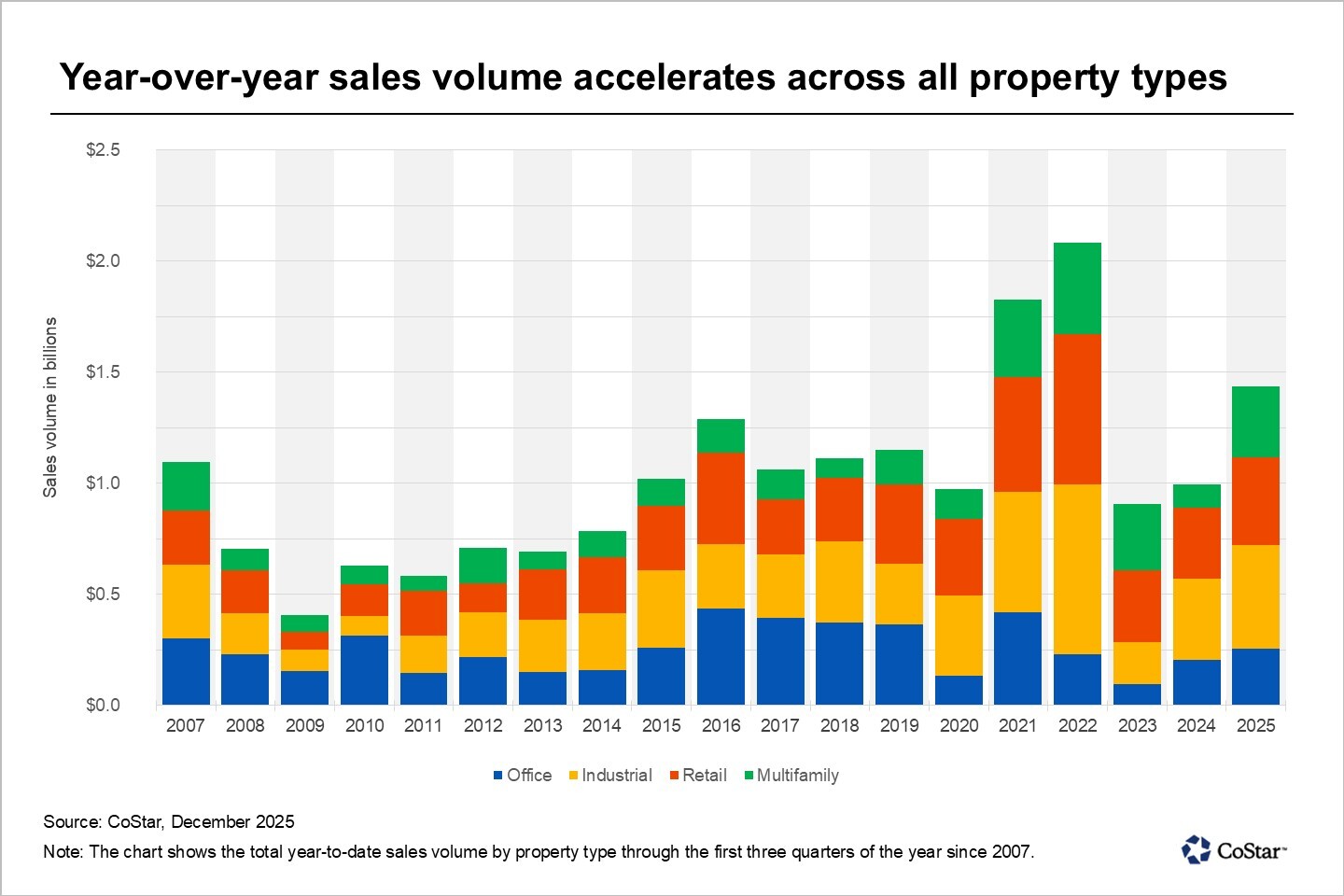
Milwaukee entered 2025 with renewed momentum, posting its strongest commercial real estate sales volume in three years. After a period of uncertainty and high capital costs, investors are returning with a sharper focus on quality assets, realistic pricing, and reliable cash flow. Activity is increasing across industrial, office, multifamily, and retail sectors, signaling a broad-based recovery fueled by stabilizing interest rates and improved market confidence.

Title Insurance Leaders Lean Into Tech, Efficiency, and Resilience for 2026

As 2026 approaches, the title insurance industry is navigating a complex mix of market recovery, rising fraud threats, and sweeping regulatory changes. Industry leaders say the path forward centers on smarter technology, leaner operations, and stronger support for title agents. With AI-driven workflows, enhanced fraud prevention, and new compliance demands—including FinCEN’s expanded Geographic Targeting Orders—companies like Stewart and First American are reshaping how title work gets done. For real estate and mortgage professionals, the year ahead promises more automation, heightened standards, and major opportunities for those who stay ahead of the curve.

Technology and the Future of Real Estate: Innovation Reshaping 2025

The real estate industry is undergoing a major transformation in 2025 as advancements in AI, proptech, blockchain, and data intelligence redefine how properties are marketed, valued, financed, and experienced. From instant digital valuations and immersive virtual tours to tokenized investments and predictive analytics, technology is reshaping every stage of the real estate lifecycle. Professionals who embrace these innovations—while maintaining the human expertise clients still rely on—will lead the next era of the industry.