Stratford Begins 2025 Property Revaluation: What Homeowners Should Know Right Now
Stratford homeowners are opening their mailboxes this week to find something many didn’t expect: their official Notices of Assessment Change for the 2025 Revaluation. This routine-yet-impactful update, required by Connecticut State Law, reflects the dramatic shifts in the real estate market since the town’s last full valuation cycle in 2019.
This announcement, first highlighted by Patch, brings a mixture of clarity and curiosity for local property owners. And while numbers may be rising, officials emphasize that your updated assessment is not your new tax bill.
Why Your Assessment Changed
The Town’s appraisal team analyzes current market conditions to calculate today’s property values. By Connecticut standards, these assessments represent 70% of fair market value, aligning Stratford with statewide valuation guidelines.
Important: Homeowners should avoid using the current mill rate to estimate future taxes. A new mill rate will be established in Spring 2026 once the FY 2026–2027 budget is approved.
Mayor Laura Hoydick encouraged residents to stay engaged, noting that the revaluation process is routine, structured, and designed for fairness. She advises property owners to participate in the informal hearings if they have questions about their updated values.
How to Challenge or Discuss Your New Assessment
Stratford has partnered with Vision Government Solutions to host informal assessment hearings at the Baldwin Center. These sessions are an opportunity to present documentation, compare data, and ask questions about how your property was evaluated.
Appointments run Monday through Friday, 9 a.m. to 4 p.m. (excluding Nov. 26–28). Homeowners should schedule within seven days of receiving their notice via www.vgsi.com/schedules or by calling 1‑888‑844‑4300.
Understanding the Revaluation Process
The Town’s detailed FAQ outlines how data collection, inspections, market research, and property reviews all merge to create a final value. Location, building quality, land type, recent sales, and property characteristics play major roles.
Residents should note that declining a requested interior inspection may lead to estimated factors—which could either benefit or disadvantage the final assessment.
What Happens If You Still Disagree?
After informal hearings conclude, property owners may escalate appeals to the Board of Assessment Appeals between February 1–20, 2026. If necessary, additional appeals can be filed through Superior Court.
Why This Matters for Real Estate & Future Professionals
Revaluations shape the foundation of local real estate markets. Realtors, appraisers, mortgage advisors, and investors rely heavily on accurate municipal valuations to drive decisions, set expectations, and understand the financial future of local communities.
For those forging a career in real estate—or expanding into appraisal, taxation, or property valuation—this is essential knowledge. Institutions like Cameron Academy give rising professionals the tools, certifications, and insights they need to thrive in evolving market landscapes like Stratford’s.
For deeper community coverage, the original reporting from Patch remains an excellent resource.
Whether you’re a homeowner navigating big changes or a professional sharpening your edge, staying informed gives you a decisive advantage in today’s market.
More Articles
Getting licensed or staying ahead in your career can be a journey—but it doesn’t have to be overwhelming. Grab your favorite coffee or tea, take a moment to relax, and browse through our articles. Whether you’re just starting out or renewing your expertise, we’ve got tips, insights, and advice to keep you moving forward. Here’s to your success—one sip and one step at a time!
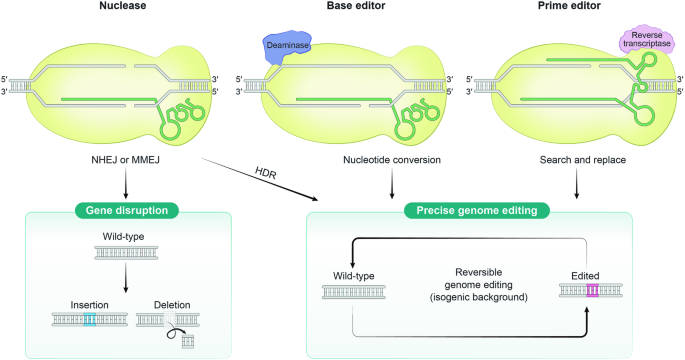
Gene editing technology is swiftly emerging as a transformative force in both healthcare and agriculture, particularly through tools like CRISPR-Cas9, which offer precise methods to modify genes and promise to revolutionize treatment for genetic disorders, cancer, and infectious diseases.
Angela Wong, Chief Marketing and Customer Officer at AXA Hong Kong & Macau, underscores the critical need for comprehensive insurance solutions for gig workers.
The AMA highlights that AI's integration must be guided by the fundamental principles of medical ethics: patient autonomy, beneficence, nonmaleficence, and justice.
AI, which simulates human intelligence, is reshaping various sectors, particularly healthcare. The ability to perform complex tasks, such as diagnostics and personalized healthcare, is no longer confined to human capabilities alone.
A recent study published in Nature on July 25, 2024, unveils a cutting-edge chatbot named Chat Ella, designed to assist in the diagnosis of chronic diseases.