Streamlining Real Estate Success: A Deep Dive into CRM Software for 2024
In the fast-paced world of real estate, efficiency is not just a luxury—it’s a necessity. The Tech Report’s recent analysis, “Best Real Estate CRM Software | Top 10 Reviewed + Compared for 2024,” sheds light on the pivotal role of CRM software in transforming how real estate professionals manage leads, engage with clients, and close deals.
The Importance of CRM Software in Real Estate
Real estate is a sector where relationships are king. A robust CRM system is essential for managing these relationships effectively. The article emphasizes how CRM tools enable agents to efficiently handle lead generation, marketing, and sales processes, ultimately leading to increased deal closure rates. By staying organized and tracking prospects, agents can focus more on building relationships rather than being bogged down by administrative tasks.
Top CRM Solutions for 2024
The article reviews a comprehensive list of CRM solutions, each offering unique features and benefits tailored to different needs and budgets:
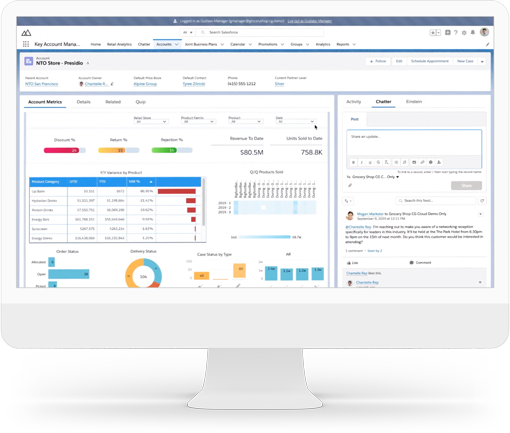
Salesforce: Lauded for its intuitive design and comprehensive features, Salesforce emerges as the top choice for real estate professionals. Its ability to manage contacts, track leads, and streamline communication is unmatched.
Pipedrive: Known for its ease of use in tracking leads and visualizing sales processes.
Zoho CRM: Offers a suite of tools for managing relationships with customers, prospects, and partners.
Monday Sales CRM: Ideal for self-employed professionals looking to streamline communication.
Zendesk Sell: A cloud-based solution focused on selling, perfect for real estate agents.
HubSpot: A free CRM solution that is perfect for small businesses looking to quickly find new leads.
Maximizer CRM: Great for automating daily tasks and improving efficiency.
Less Annoying CRM: A straightforward, no-frills option designed for simplicity and ease of use.
Oracle NetSuite: Provides a comprehensive suite of business applications with end-to-end sales automation capabilities.
Freshsales: An AI-powered system that helps prioritize leads and track activities.
Key Benefits of CRM Systems
The article highlights several benefits of adopting a CRM system in real estate:
Lead Scoring and Follow-Up Automation: CRM systems can prioritize leads and automate follow-up messages, ensuring no opportunity is missed.
Streamlined Sales Process: By automating routine tasks, agents can focus more on closing deals.
Enhanced Customer Service: CRMs provide insights into customer needs, allowing agents to offer personalized service.
Conclusion
In conclusion, the article from The Tech Report underscores Salesforce as the leading CRM for real estate in 2024, thanks to its powerful features and user-friendly interface. However, it also acknowledges other CRM systems that cater to different preferences and budgets, ensuring there’s a solution for every real estate professional.
For those ready to take their real estate business to the next level, exploring these CRM options is a step in the right direction. To read the full article, visit the original source here.
More Articles
Getting licensed or staying ahead in your career can be a journey—but it doesn’t have to be overwhelming. Grab your favorite coffee or tea, take a moment to relax, and browse through our articles. Whether you’re just starting out or renewing your expertise, we’ve got tips, insights, and advice to keep you moving forward. Here’s to your success—one sip and one step at a time!
PropTech investment surged nearly 68% in 2025, hitting a massive $16.7 billion and surpassing pre-pandemic highs. Investors are shifting toward practical, AI-powered tools that streamline operations, improve efficiency, and deliver immediate results. With 2026 shaping up to be a year of selective but strong growth, real estate professionals who stay ahead of tech trends will gain a major competitive edge.
Florida homeowners are finally seeing real relief as Citizens Property Insurance Corp. unveils an average 8.7% rate decrease for 2026—its largest cut in over a decade. Sparked by recent legislative reforms, a calm hurricane season, and renewed competition from insurers reentering the state, the drop is poised to significantly impact homeowners, real estate professionals, and industry trainees across Florida.
Tampa’s commercial real estate market is still growing, but investors are shifting from rapid dealmaking to highly selective, detail‑driven decisions. Population growth, steady office demand, stabilizing industrial activity, and a rebound in retail are keeping the market strong, while health‑care properties are emerging as a major sector for 2026. The region’s next chapter is defined by precision, disciplined underwriting, and long‑term strategy rather than speed.
Homesage.ai has released a new AI-powered comps engine that cuts property valuation time from hours to seconds by analyzing hundreds of data points across listings, public records, and proprietary datasets. Designed for agents, investors, and lenders, the tool delivers highly accurate comparable properties and real-time market insights, giving professionals a competitive edge in today’s rapidly shifting housing landscape.
A panel of federal judges is closely examining whether the National Association of Realtors’ billion‑dollar antitrust settlements—and similar deals struck by major brokerages—are genuinely fair to the millions of buyers and sellers affected. With plaintiffs arguing that homebuyers’ rights were improperly dismissed and compensation falls far short of true losses, the court’s upcoming decision could reshape commission practices and spark one of the most significant structural shifts in modern real estate.
The SEC is proposing a dramatic shift in how it defines a “small” registered investment adviser — raising the threshold from under 25 million in assets to under 1 billion. The change would instantly reclassify about 96 percent of RIAs and could create ripple effects across mergers and acquisitions, integration planning, and breakaway adviser activity. While the move aims to reduce administrative burden, it may also introduce new complexities for firms scaling past the billion‑dollar mark.