How a Supreme Court Decision Just Shook Up the Global Trade Order

Global economic visualization

Every week, Deloitte’s economists sift through the noise to spotlight the global economic trends shaping business and investment. This week delivered a rare trifecta: a groundbreaking US Supreme Court ruling on tariffs, slowing GDP growth, and an unexpected rise in inflation. Under normal conditions, weaker growth and hotter inflation would spark market turbulence—yet equities rose. Why? Because the tariff ruling changed everything.

A Supreme Court Ruling That Reverberates Worldwide

In a major decision, the US Supreme Court struck down the Trump Administration’s use of the International Emergency Economic Powers Act (IEEPA) to impose sweeping tariffs. The initial report from the Financial Times explains how this move invalidates tariffs placed on nearly every major trading partner.

IEEPA was never intended to authorize tariffs—only to regulate economic activity during true national emergencies. The administration argued the long-standing US trade deficit constituted an emergency. The Court firmly rejected this interpretation.

Businesses largely welcomed the ruling, and some hope tariff refunds may follow. Whether these refunds will materialize remains uncertain, and ongoing legal challenges could extend the timeline.

What Tariff Tools Are Left?

While Congress holds primary tariff authority, several older statutes still empower the President to impose targeted measures:

• Section 122 of the Trade Act—related to balance‑of‑payments deficits • Section 338 of the Tariff Act of 1930—retaliation for foreign discrimination • Section 232 of the Trade Expansion Act—national security threats • Section 301 of the Trade Act—addressing unfair trade practices

According to AP News, the administration already plans to revive Section 301 investigations.

Why These Tariffs Mattered More Than Expected

Although IEEPA tariffs didn’t raise prices as dramatically as predicted—many importers absorbed the blow—they created a climate of uncertainty. Businesses hesitated to invest, restructure supply chains, or negotiate contracts amid constant tariff changes.

Data from the Bureau of Economic Analysis confirms that traded‑goods inflation rose unevenly while imports from China, Japan, and the EU declined sharply.

Meanwhile, other nations diversified away from the US. China, in particular, pushed aggressively into non‑US markets with competitive pricing.

Winners, Losers, and What Comes Next

China and Brazil—two nations hit hard by IEEPA tariffs—stand to see the biggest export shifts following the ruling. As the US rewrites its tariff playbook, global trade routes may shift again.

For American consumers, the tariff rollback may bring lower inflation and stronger purchasing power—unless new targeted tariffs quickly replace them.

Markets React Calmly—for Now

According to Trading Economics, markets responded with:

• Modest equity gains • A slight increase in bond yields • A small decline in the US dollar

Investors appear to expect a temporary easing in tariff pressure—not a permanent shift toward lower tariff environments.

Why This Matters to Professionals Across Industries

Shifting tariffs influence everything from consumer purchasing power to mortgage rates, supply chain costs, and real estate investment sentiment. Staying informed empowers professionals to make smarter, faster, more strategic decisions in a volatile economy.

At Cameron Academy, we equip Florida real estate agents, mortgage specialists, insurance producers, and licensed professionals across the nation with the education needed to thrive in fast‑changing economic environments. In a world where policy shifts can reshape entire industries overnight, staying informed is staying competitive.

Want the Full Weekly Report?

Explore the full Deloitte analysis here: Deloitte Weekly Global Economic Update

More Articles

Getting licensed or staying ahead in your career can be a journey—but it doesn’t have to be overwhelming. Grab your favorite coffee or tea, take a moment to relax, and browse through our articles. Whether you’re just starting out or renewing your expertise, we’ve got tips, insights, and advice to keep you moving forward. Here’s to your success—one sip and one step at a time!

Massachusetts Investment Firm Makes Strategic Move Into Connecticut With $3.65M Red Robin-Anchored Purchase

Newman Properties, a Massachusetts-based investment firm, has expanded its footprint into Connecticut with the $3.65 million acquisition of a 6,350‑square‑foot retail building in Enfield. Anchored by national restaurant chain Red Robin, the property offers the type of stable tenancy investors seek when entering new markets. The deal underscores growing confidence in anchored retail assets and provides a valuable real-world example for real estate professionals studying market analysis, investment strategy, and portfolio expansion.

JPMorgan Flags a Sunbelt Slowdown as Florida and Texas See Sharp Home Price Drops

JPMorgan now expects national home prices to flatten in 2026, but the Sunbelt is telling a very different story. Florida home values are down 5.1%, Texas is down 2.4%, and analysts warn that years of rapid building are finally catching up to the region. As demand stabilizes and inventory swells, real estate professionals — especially in Florida — face a market full of challenges, opportunities, and critical timing decisions.

AI Is Reshaping Mortgage Underwriting in 2026 as Industry Pros Brace for Major Change

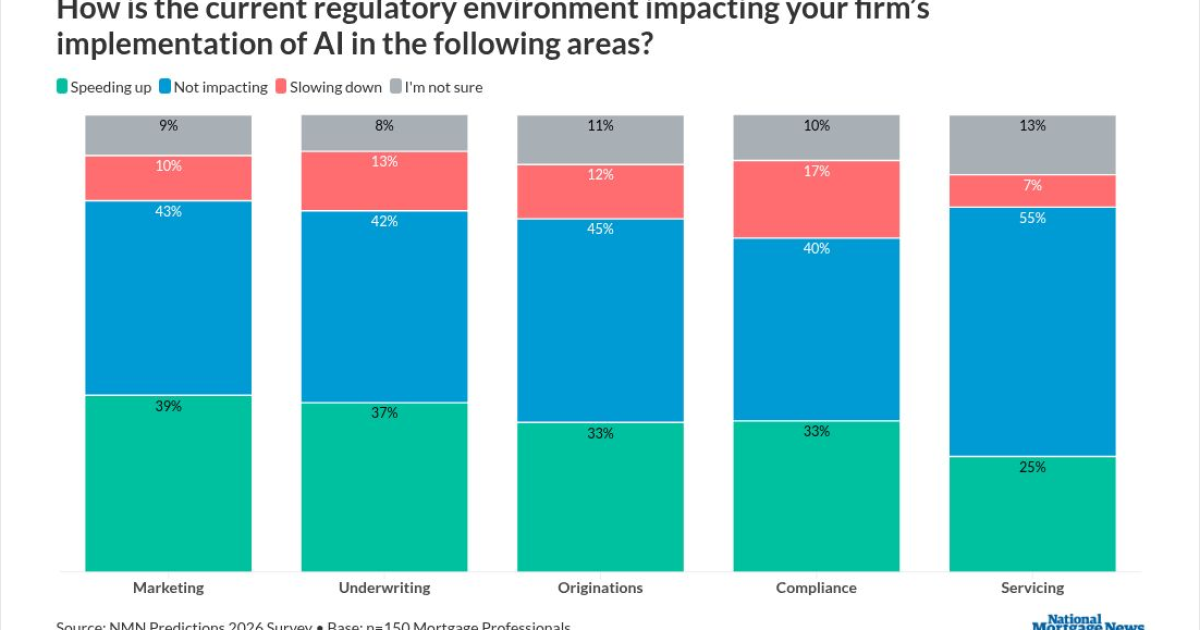
Artificial intelligence is finally stepping into the mortgage underwriting spotlight, with 57% of mortgage professionals predicting it will drive the most transformative industry shift in 2026. Thanks to major advancements in language models and workflow automation, AI is now capable of navigating the messy, document-heavy realities that have long slowed underwriting. From faster preapprovals to improved credit analysis and real‑time income verification, AI is streamlining processes while allowing underwriters to focus on true risk management. As regulatory winds shift and grassroots pressure builds within lending teams, the industry is entering a pivotal era where AI‑powered underwriting becomes not just an advantage — but an expectation.

Portland’s Commercial Market Suffers a Historic $2 Billion Collapse

Portland’s top 20 office towers have lost an unprecedented 70% of their value since 2019—plunging from $3 billion to under $1 billion—triggering tax revenue shortfalls, budget crises, and a surge in appeals as the city grapples with its biggest commercial real estate reset in modern history.

When Virtual Reality Becomes the New Penthouse Tour: Miami Students Step Inside a $1M Tech-Driven Luxury Tower Experience

South Florida’s luxury real estate market just raised the bar again — this time with a $1 million virtual reality system that lets buyers walk through Dolce & Gabbana’s upcoming Miami tower long before construction wraps. Real estate master’s students were given an immersive look inside the project, discovering how VR is transforming high‑end development, influencing buyer psychology, and shaping the future skills today’s professionals need.

Long Island’s Latest Commercial Moves: From Pizza Huts to Auto Parts Warehouses

Long Island’s commercial real estate scene is kicking off 2026 with a surge of activity—industrial leases in Medford, neighborhood retail trades in Bohemia, Pizza Hut’s new DELCO expansion in Centereach, mixed‑use acquisitions in Melville, and major investor interest in bank‑leased and franchise-backed properties. From warehouses to restaurant rebrands, these deals highlight a region evolving fast and offering fresh opportunities for agents, investors, and professionals looking to stay ahead in the market.