How a Supreme Court Decision Just Shook Up the Global Trade Order

Global economic visualization

Every week, Deloitte’s economists sift through the noise to spotlight the global economic trends shaping business and investment. This week delivered a rare trifecta: a groundbreaking US Supreme Court ruling on tariffs, slowing GDP growth, and an unexpected rise in inflation. Under normal conditions, weaker growth and hotter inflation would spark market turbulence—yet equities rose. Why? Because the tariff ruling changed everything.

A Supreme Court Ruling That Reverberates Worldwide

In a major decision, the US Supreme Court struck down the Trump Administration’s use of the International Emergency Economic Powers Act (IEEPA) to impose sweeping tariffs. The initial report from the Financial Times explains how this move invalidates tariffs placed on nearly every major trading partner.

IEEPA was never intended to authorize tariffs—only to regulate economic activity during true national emergencies. The administration argued the long-standing US trade deficit constituted an emergency. The Court firmly rejected this interpretation.

Businesses largely welcomed the ruling, and some hope tariff refunds may follow. Whether these refunds will materialize remains uncertain, and ongoing legal challenges could extend the timeline.

What Tariff Tools Are Left?

While Congress holds primary tariff authority, several older statutes still empower the President to impose targeted measures:

• Section 122 of the Trade Act—related to balance‑of‑payments deficits • Section 338 of the Tariff Act of 1930—retaliation for foreign discrimination • Section 232 of the Trade Expansion Act—national security threats • Section 301 of the Trade Act—addressing unfair trade practices

According to AP News, the administration already plans to revive Section 301 investigations.

Why These Tariffs Mattered More Than Expected

Although IEEPA tariffs didn’t raise prices as dramatically as predicted—many importers absorbed the blow—they created a climate of uncertainty. Businesses hesitated to invest, restructure supply chains, or negotiate contracts amid constant tariff changes.

Data from the Bureau of Economic Analysis confirms that traded‑goods inflation rose unevenly while imports from China, Japan, and the EU declined sharply.

Meanwhile, other nations diversified away from the US. China, in particular, pushed aggressively into non‑US markets with competitive pricing.

Winners, Losers, and What Comes Next

China and Brazil—two nations hit hard by IEEPA tariffs—stand to see the biggest export shifts following the ruling. As the US rewrites its tariff playbook, global trade routes may shift again.

For American consumers, the tariff rollback may bring lower inflation and stronger purchasing power—unless new targeted tariffs quickly replace them.

Markets React Calmly—for Now

According to Trading Economics, markets responded with:

• Modest equity gains • A slight increase in bond yields • A small decline in the US dollar

Investors appear to expect a temporary easing in tariff pressure—not a permanent shift toward lower tariff environments.

Why This Matters to Professionals Across Industries

Shifting tariffs influence everything from consumer purchasing power to mortgage rates, supply chain costs, and real estate investment sentiment. Staying informed empowers professionals to make smarter, faster, more strategic decisions in a volatile economy.

At Cameron Academy, we equip Florida real estate agents, mortgage specialists, insurance producers, and licensed professionals across the nation with the education needed to thrive in fast‑changing economic environments. In a world where policy shifts can reshape entire industries overnight, staying informed is staying competitive.

Want the Full Weekly Report?

Explore the full Deloitte analysis here: Deloitte Weekly Global Economic Update

More Articles

Getting licensed or staying ahead in your career can be a journey—but it doesn’t have to be overwhelming. Grab your favorite coffee or tea, take a moment to relax, and browse through our articles. Whether you’re just starting out or renewing your expertise, we’ve got tips, insights, and advice to keep you moving forward. Here’s to your success—one sip and one step at a time!

A New Blueprint for True Florida Affordability: Jayden D’Onofrio Pushes for Real Relief in 2026

Florida families are feeling the squeeze as everyday costs, insurance premiums, and homeownership barriers continue to climb. House District 102 candidate Jayden D’Onofrio is calling for a broader, more unified affordability strategy—one that tackles the state’s insurance crisis, supports first‑time homebuyers, and restores real competition in the market. His message centers on transparency, practical solutions, and keeping Florida livable for the professionals, workers, and families who power its economy.

Health Insurance Shake‑Up: America’s Coverage Markets Enter a New Era

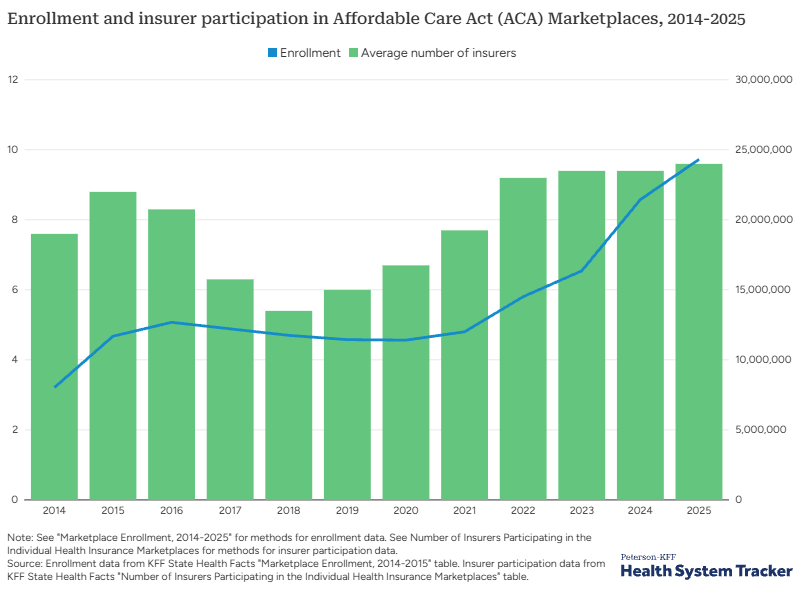
A decade of dramatic change is reshaping America’s health insurance markets. Employer group plans are becoming increasingly dominated by a few powerful insurers, while the ACA individual marketplace is experiencing record‑breaking competition and enrollment. Self‑funded plans are surging, small‑group premiums are driving employers to new coverage models, and major policy shifts in 2025 could redefine affordability for millions. This data‑driven Peterson‑KFF analysis breaks down the trends every insurance, finance, and business professional needs to understand as the industry enters a transformative new era.

Florida’s Next Mega‑Development: Winchester Ranch Set to Transform North Port

Sarasota County is inching closer to approving Winchester Ranch, a massive 8,999‑home community planned for more than 3,100 acres in North Port. With a 7‑1 vote from the Planning Commission and a final decision expected in early 2026, the project could become one of Southwest Florida’s largest developments in decades—bringing new housing, commercial space, and industry while raising fresh questions about growth, the environment, and the region’s rapidly evolving real estate market.

Lument Finance Trust Closes $664 Million CRE CLO, Signaling Strength in 2025 Markets

Lument Finance Trust has closed a major $663.8 million commercial real estate CLO, marking one of the standout CRE finance deals of 2025. The transaction, LMNT 2025-FL3, features a strong reinvestment period, non‑recourse and non‑mark‑to‑market financing, and a diversified pool of 32 loans tied to 49 properties nationwide. With J.P. Morgan leading the structuring and more than $585 million placed in investment‑grade securities, the deal highlights renewed stability in transitional CRE debt—making it a development real estate and finance professionals will want to watch closely.

Walmart Launches America’s Largest 3D‑Printed Commercial Building Initiative

Walmart has partnered with Alquist 3D to roll out the nation’s first large‑scale wave of 3D‑printed commercial buildings, signaling a major shift in how future retail and industrial spaces will be constructed. After completing an 8,000‑square‑foot 3D‑printed expansion in Tennessee—the largest of its kind—the company is moving forward with over a dozen new projects nationwide, accelerating a tech‑driven transformation in commercial real estate.

Citizens Insurance Proposes 2026 Rate Cuts, Signaling Relief for Florida’s Property Market

Citizens Property Insurance Corp. is recommending statewide rate reductions for 2026—the first proposed decrease in more than a decade. Most Citizens policyholders could see an average 11.5% drop, reflecting recent insurance‑market reforms that have stabilized Florida’s turbulent property sector. With hundreds of thousands of policies moving back to private insurers and state‑backed Citizens shrinking to record‑low enrollment, real estate and insurance professionals should prepare for how lower premiums may influence affordability, buyer confidence, and market activity heading into 2026.