Talking to Your Photos: The Chat AI Revolution Transforming Real Estate Listings
In real estate, first impressions don’t just matter—they determine whether a potential buyer or renter keeps scrolling or books a showing. A room that appears dark, cluttered, or outdated in photos can stay vacant far longer than it should. But capturing the perfect image at the perfect moment has always been a challenge. Now, thanks to conversational AI, that challenge is quickly dissolving.
A new wave of chat-based AI tools is letting real estate professionals edit listing photos simply by describing what they want. Brighten the kitchen. Remove the clutter. Change the wall color. Replace the furniture. Once the territory of professional editors, these adjustments can now be done with simple text prompts—making property marketing faster, cleaner, and more transparent than ever.
“We all have an anchoring bias,” said Brian Mitchell, VP of Business Operations and Strategy at Bounti.ai. “My brain tells me I don’t like a property based on the photos even if we know the ugly furniture will be gone or the unit will be repainted.”
This bias is measurable—and costly. Poor lighting, clutter, or outdated décor can cause a prospective renter to skip a listing instantly.
Chat-based AI eliminates these friction points by letting agents refine visuals without learning complex software. It’s one of the most practical real-world uses of generative AI today—helping listings shine while keeping expectations honest.
Property Managers Move Faster—and Smarter
For property managers, these tools aren’t just convenient—they’re transformative. Traditional staging makes sense for high-end listings, but rental properties rarely justify the expense. As Mitchell puts it, “Property managers laugh when they hear the word staging.”
AI-driven virtual staging allows managers to declutter or enhance rental photos instantly. In large multifamily portfolios, one beautifully staged set can represent dozens of upcoming units—letting managers advertise faster, even when a unit is mid-renovation.
Some platforms, like TCS Management, now allow renters and buyers to digitally redesign rooms directly on their websites. From paint colors to furniture layouts, prospects can visualize a home in their own style—turning casual browsing into meaningful engagement.
This personalization leads to fewer unqualified leads and more serious, emotionally connected prospects.
Transparency Still Matters
With any powerful tool comes responsibility. Mitchell emphasizes avoiding structural or misleading edits. Bounti.ai combats this by automatically tagging modified images and offering before/after sliders—maintaining trust while embracing innovation.
The Future of Real Estate Marketing Starts with Conversation
As AI continues reshaping real estate, chat-based photo editing stands out for enhancing the human experience rather than replacing it. It gives agents clarity, speed, and confidence in their marketing.
For professionals expanding their skills—or future agents preparing for licensure—understanding these tools is becoming essential. Cameron Academy sees this shift firsthand across our real estate, mortgage, insurance, and professional development programs. Agents who embrace these technologies elevate both their listings and their careers.
The industry is becoming more visual, more interactive, and more conversational. And with chat-powered AI, the future of real estate marketing is already here.
More Articles
Getting licensed or staying ahead in your career can be a journey—but it doesn’t have to be overwhelming. Grab your favorite coffee or tea, take a moment to relax, and browse through our articles. Whether you’re just starting out or renewing your expertise, we’ve got tips, insights, and advice to keep you moving forward. Here’s to your success—one sip and one step at a time!
The financial landscape in South Korea is poised for a seismic shift as KBank, a major digital bank, grapples with a legislative curveball. The bank, which is heavily reliant on deposits from Upbit, Korea’s dominant cryptocurrency exchange, is facing a potential profit squeeze. The new Virtual Asset User Protection Act, set to take effect on July 19, 2024, mandates that banks must pay interest on crypto exchange deposits, a move that could severely impact KBank's bottom line.
AI's ability to analyze vast amounts of data is paving the way for a profound change in medical diagnostics. Khosla predicted that AI could take over up to 80% of standard medical tasks, reducing errors and biases in human diagnosis. This is particularly evident in fields like radiology and pathology, where AI's proficiency in analyzing medical imaging allows for the early detection of diseases such as cancer, significantly improving treatment outcomes.
The COVID-19 pandemic has dramatically reshaped the housing market landscape, resulting in an unprecedented surge in home prices throughout the United States.
In a world where technology is rapidly evolving, artificial intelligence (AI) is proving to be a game-changer in the healthcare sector. AI-powered tools are improving patient outcomes, enhancing operational efficiency, and reducing costs, reshaping the very fabric of healthcare delivery.
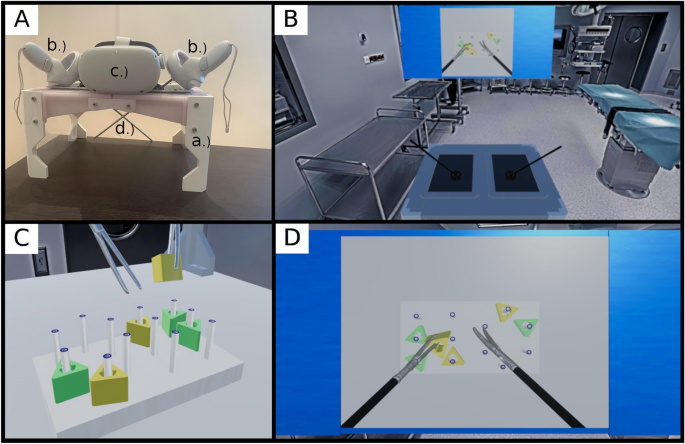
In a groundbreaking study published by Nature, researchers have unveiled a novel approach to surgical training using a low-fidelity virtual reality (VR) simulator enhanced with artificial intelligence (AI) for objective assessment. This pioneering method is poised to transform how medical students acquire laparoscopic skills, offering a cost-effective and efficient alternative to traditional training models.
AI in healthcare is projected to grow into a $188 billion industry worldwide by 2030, promising to revolutionize the field. From drug development to improved diagnostics, AI is already making significant strides, transforming medical practices and enhancing patient care efficiency.