Tampa Bay’s Office Market Closes 2025 with Power Moves and Rising Demand
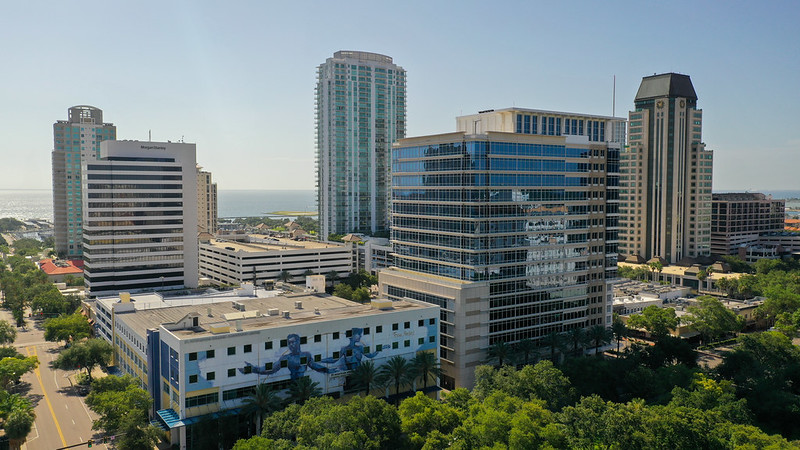
If you’ve been wondering whether the Tampa Bay office market still has momentum after the last few years of national uncertainty, JLL’s newest Q4 2025 analysis has a clear answer: absolutely. Tampa Bay just wrapped its strongest performance since before the pandemic, marking one of the most impressive post‑recovery surges in the country.
The report — published by global real estate leader JLL and highlighted by the St. Pete Catalyst — reveals a powerful combination of rising demand, shrinking inventory, and firming rents. While many U.S. cities continue battling stubborn vacancies, Tampa Bay appears to be accelerating.
Record Absorption, Falling Vacancy & a Tightening Market
The headline number is stunning: Tampa Bay recorded 600,400 square feet of positive net absorption in 2025 — the highest total since 2016. This pushed the overall vacancy rate down 130 basis points to 15.7%.
Momentum snowballed throughout the year, with more than 150,000 square feet absorbed in each of the final three quarters. This performance places Tampa Bay among the top U.S. office markets for year‑end absorption.
The Plot Twist: Inventory Is Shrinking
Even though developers delivered 176,400 square feet of new office product, the region’s total inventory actually declined by more than 750,000 square feet in 2025. Older buildings were demolished or converted, tightening the pipeline and boosting competition for modern space.
By year’s end, total available space had dipped below 8.6 million square feet, reflecting a significant year‑over‑year contraction.
Big Leases Set the Stage for 2026
Two major commitments dominated headlines: Fisher Investments leased 322,000 square feet at Renaissance Office Park, while GEICO claimed 189,000 square feet at Corporate Oaks Office Park.
Neither tenant has fully occupied their space yet — meaning early 2026 could show even stronger absorption numbers.
Flight to Quality Reshapes the Region
Across Tampa CBD, Westshore, and downtown St. Pete, tenants continue gravitating toward modern, amenity‑rich offices. Trophy and Class A vacancy fell to 14.7% — the strongest since 2022 — with six of seven submarkets posting year‑over‑year improvements.
Absorption in top‑tier buildings reached roughly 368,000 square feet, driving vacancy down to just 12.9%. Rents followed, rising 7.1% to an average of $45.46 per square foot.
What It Means for Tenants, Investors & Professionals
Tenants are increasingly willing to pay premium rates for newer buildings, better amenities, and stronger locations. With downtown St. Pete offering limited inventory, competition is expected to sharpen.
For investors and landlords, rising rents and shrinking supply signal a long‑awaited swing toward leverage.
Looking Ahead: Rising Confidence in 2026
JLL’s outlook for 2026 is cautiously optimistic. With economic diversity, strong employers, and limited new construction, Tampa Bay’s office market seems poised for continued strength — and potentially higher rents.
Put simply, Tampa Bay isn’t just recovering — it’s redefining its trajectory.
If this momentum inspires you to elevate your real estate career, consider sharpening your skills with Cameron Academy — Florida’s trusted hub for professional licensing education.
More Articles
Getting licensed or staying ahead in your career can be a journey—but it doesn’t have to be overwhelming. Grab your favorite coffee or tea, take a moment to relax, and browse through our articles. Whether you’re just starting out or renewing your expertise, we’ve got tips, insights, and advice to keep you moving forward. Here’s to your success—one sip and one step at a time!
Investors worldwide are redeploying capital, embracing more active deal structures, and expanding into new regions as the 2026 market takes shape. Data centers, revived office demand, and global diversification are driving a major shift—creating fresh opportunities for real estate, mortgage, and finance professionals who understand where capital is heading next.
Florida homeowners now pay an average of $5,838 per year for insurance—about $3,000 more than the national average—pushing many families to the financial brink. Residents report premiums tripling, claims being severely underpaid, and insurers dropping policies at one of the highest rates in the country. As frustration mounts, lawmakers and industry experts are calling for sweeping reforms to curb rising costs, increase accountability, and stabilize a market that’s reshaping real estate decisions across the state.
Florida’s insurance market has hit a major turning point. Citizens Property Insurance—once the state’s largest insurer with 1.4 million policies—has shed more than 900,000 policies as private insurers return in force. Driven by Florida’s depopulation program and the arrival of 17 new companies, nearly 200,000 policies shifted to private carriers in October alone, with about 40 percent offering lower premiums. The shift signals rising competition, stabilizing rates, and new opportunities for homeowners and industry professionals navigating Florida’s evolving insurance landscape.
The National Association of REALTORS® has approved 18 major updates to modernize its MLS policies—the largest overhaul in two decades. Announced at NAR NXT in Houston and set to take effect in January 2026, the changes aim to streamline MLS operations, improve enforcement clarity, and better align policies with how today’s real estate professionals actually work.
Inhabit has rolled out a powerful lineup of AI-driven leasing, marketing, fraud prevention, and compliance tools designed to streamline operations and protect property teams from growing risks. From hybrid AI leasing assistants to instant income verification and upcoming portfolio-wide lease audits, these innovations aim to cut costs, eliminate inefficiencies, and strengthen regulatory confidence across the multifamily industry.
Florida’s latest round of insurance reforms was meant to calm a volatile market, yet many experts warn the same deep structural problems remain. Homeowners are being pushed from Citizens into higher‑priced, lightly capitalized private insurers, ratings agencies face scrutiny for inflated grades, and political influence clouds oversight. For real estate and insurance professionals, these trends signal ongoing risk, rising costs, and a market in need of a complete rebuild.