
Tampa Defies National Real Estate Slowdown With Nearly 20% Stronger Returns

Tampa multifamily market image

Tampa continues to demonstrate why it stands as one of America’s most resilient and investment-ready real estate markets. According to a new report highlighted by Tampa Bay Business & Wealth (TBBW), the region’s multifamily sector is outperforming the national real estate slowdown by nearly 20%.

This insight stems from the latest Newmark Capital Markets Report, which highlights Tampa’s impressive 6.5% annualized return—a level many U.S. metros fail to reach due to oversupply challenges or regulatory pressures.

Tampa isn’t just keeping pace—it’s outperforming, outlasting, and outmaneuvering national headwinds.

National Snapshot: Multifamily Still Leading the Pack

Newmark’s Q3 data shows that multifamily properties remain leaders in commercial real estate returns, delivering 5.48% annually versus the broader index’s 4.65%. But disparities across metros reveal a fragmented landscape.

  • West Coast hubs like San Jose, Orange County, and San Diego topped 7% returns.
  • Miami and Houston were the only Sun Belt cities in the national top ten.
  • Oversupplied metros—Austin, Raleigh, Phoenix—posted notably weaker performance.
  • Regulation-heavy cities such as New York and Portland continued to trail behind.

This uneven distribution underscores the importance of controlled development pipelines—an area where Tampa excels.

Why Tampa’s Outperformance Matters

While many Sun Belt markets cool off due to construction surges and shifting rent growth, Tampa stands out. A 6.5% multifamily return signals an ecosystem defined by investor confidence, stable demand, and population growth.

  • Long-term stability attracts investors.
  • Vacancy rates remain healthier than competing metros.
  • Rent growth is moderating but still demand-driven.
  • Tampa maintains balance—unlike metros saturated by rapid development.

Key Factors Shaping Tampa’s Outlook

Several dynamics will guide Tampa’s multifamily evolution:

  • Sustained population and employment growth.
  • Federal rate decisions impacting cap rates and transactions.
  • New developments in Channelside, Midtown, Tampa Heights, and Westshore.
  • Investor preference for Florida’s stable and growth-oriented metros.

The future isn’t about extremes—it’s about Tampa’s consistent, disciplined trajectory toward 2026.

What This Means for Real Estate Professionals

For agents, brokers, developers, and investors, Tampa’s resilience equates to opportunity. If you’re seeking to launch or elevate your Florida real estate career, this moment is ideal to refine your expertise.

Institutions like Cameron Academy are essential partners for professionals aiming to stay competitive with industry-leading licensing, post-licensing, and continuing education programs.

The Takeaway

Tampa continues to outpace the national multifamily slowdown, reinforcing its role as one of the Southeast’s premier investment markets. Steady demand, healthy fundamentals, and balanced development offer the city a strategic advantage heading into 2026.

Full story available at TBBW: Tampa beating national real estate slowdown by nearly 20%.

Stay Connected

More Articles

Getting licensed or staying ahead in your career can be a journey—but it doesn’t have to be overwhelming. Grab your favorite coffee or tea, take a moment to relax, and browse through our articles. Whether you’re just starting out or renewing your expertise, we’ve got tips, insights, and advice to keep you moving forward. Here’s to your success—one sip and one step at a time!

Free Money in 2026? The Truth About the DOGE Dividend Stimulus Check

The DOGE Dividend: What You Need to Know About the Proposed 2026 Stimulus Check Hey there! If you’ve been wondering #ReadMore

Navigating Seller’s Market: Twin Cities Housing Trends and Predictions for 2024

The Minneapolis housing market is currently navigating a complex terrain, marked by a curious blend of optimism and caution. In 2024, home sales in the Twin Cities area experienced a modest uptick of 1.8%.

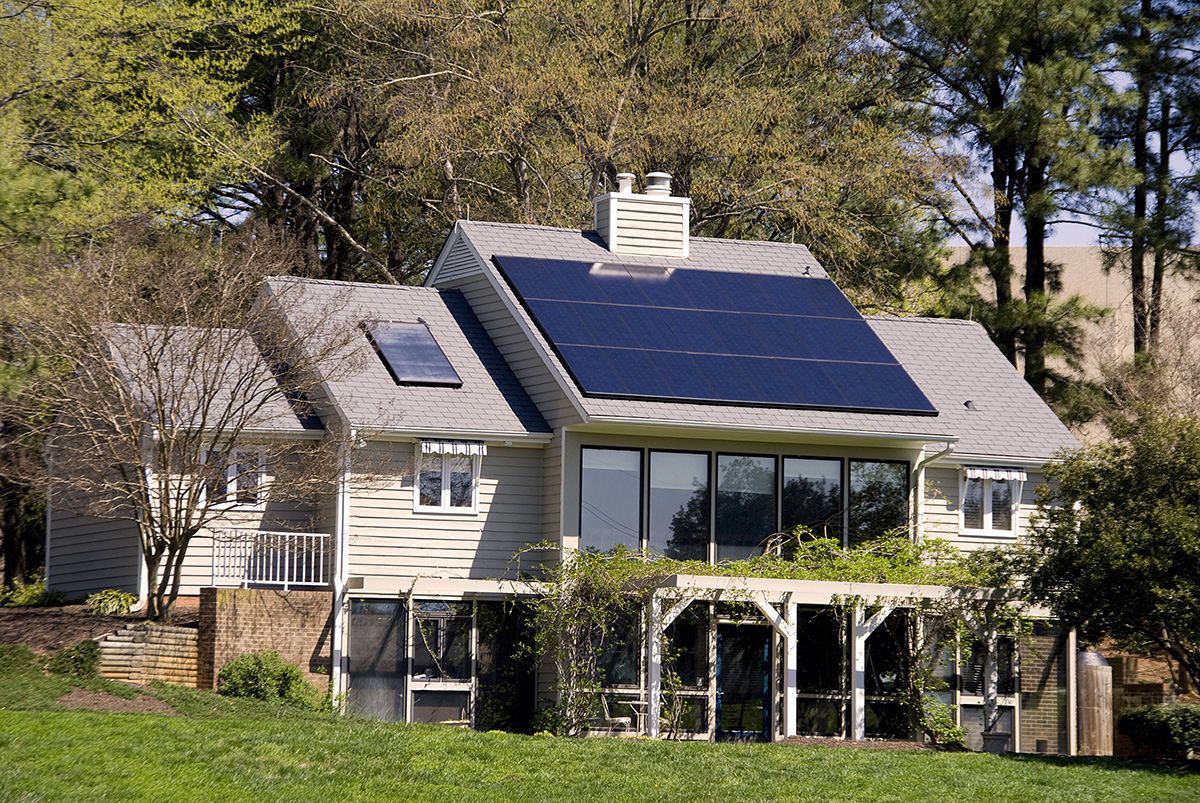
Future Homes: Sustainability and Smart Technology Shaping Real Estate

In the ever-evolving landscape of real estate, two groundbreaking trends are shaping the homes of tomorrow: sustainability and smart home technology. As consumers become increasingly aware of their environmental impact and as technology continues to advance at lightning speed, these trends are significantly influencing buying decisions in the residential real estate market.

By |February 25, 2025|Categories: Article, Real Estate, Technology|Tags: , |0 Comments

Harvard Study Projects Dramatic Slowdown in U.S. Household Growth

In a comprehensive analysis by Harvard's Joint Center for Housing Studies, there is a projected increase of 8.6 million households in the United States from 2025 to 2035. This equates to approximately 860,000 new households per year, marking a significant deceleration compared to the post-Great Recession era, which saw a sluggish yet larger gain of 10.1 million households.

By |February 24, 2025|Categories: Article, Demographics, Housing|Tags: , |0 Comments

AI Revolutionizing Real Estate: Predicting Trends and Values

The real estate industry, often seen as conservative, is gradually embracing technological advancements with AI leading the charge. Generative AI is already revolutionizing real estate marketing by enhancing customer experiences and optimizing content creation.

By |February 24, 2025|Categories: Article, Real Estate, Technology/AI|Tags: , |0 Comments

In-Person Work Policies: A Beacon of Hope for Commercial Real Estate

With office occupancy plummeting by 90% from February to March 2020, the impact of remote work was palpable. However, the researchers found that hybrid mandates and adding more in-office days could mitigate some of these challenges.