Tampa Defies National Real Estate Slowdown With Nearly 20% Stronger Returns
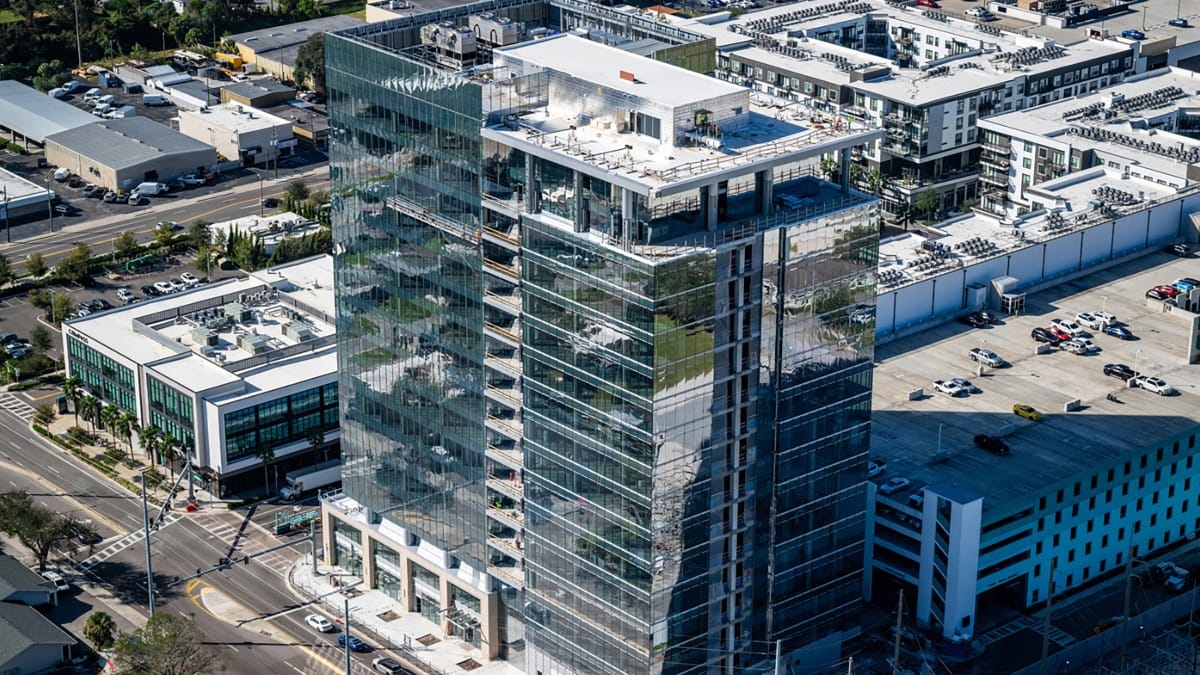
Tampa multifamily market image

Tampa continues to demonstrate why it stands as one of America’s most resilient and investment-ready real estate markets. According to a new report highlighted by Tampa Bay Business & Wealth (TBBW), the region’s multifamily sector is outperforming the national real estate slowdown by nearly 20%.

This insight stems from the latest Newmark Capital Markets Report, which highlights Tampa’s impressive 6.5% annualized return—a level many U.S. metros fail to reach due to oversupply challenges or regulatory pressures.

Tampa isn’t just keeping pace—it’s outperforming, outlasting, and outmaneuvering national headwinds.

National Snapshot: Multifamily Still Leading the Pack

Newmark’s Q3 data shows that multifamily properties remain leaders in commercial real estate returns, delivering 5.48% annually versus the broader index’s 4.65%. But disparities across metros reveal a fragmented landscape.

  • West Coast hubs like San Jose, Orange County, and San Diego topped 7% returns.
  • Miami and Houston were the only Sun Belt cities in the national top ten.
  • Oversupplied metros—Austin, Raleigh, Phoenix—posted notably weaker performance.
  • Regulation-heavy cities such as New York and Portland continued to trail behind.

This uneven distribution underscores the importance of controlled development pipelines—an area where Tampa excels.

Why Tampa’s Outperformance Matters

While many Sun Belt markets cool off due to construction surges and shifting rent growth, Tampa stands out. A 6.5% multifamily return signals an ecosystem defined by investor confidence, stable demand, and population growth.

  • Long-term stability attracts investors.
  • Vacancy rates remain healthier than competing metros.
  • Rent growth is moderating but still demand-driven.
  • Tampa maintains balance—unlike metros saturated by rapid development.

Key Factors Shaping Tampa’s Outlook

Several dynamics will guide Tampa’s multifamily evolution:

  • Sustained population and employment growth.
  • Federal rate decisions impacting cap rates and transactions.
  • New developments in Channelside, Midtown, Tampa Heights, and Westshore.
  • Investor preference for Florida’s stable and growth-oriented metros.

The future isn’t about extremes—it’s about Tampa’s consistent, disciplined trajectory toward 2026.

What This Means for Real Estate Professionals

For agents, brokers, developers, and investors, Tampa’s resilience equates to opportunity. If you’re seeking to launch or elevate your Florida real estate career, this moment is ideal to refine your expertise.

Institutions like Cameron Academy are essential partners for professionals aiming to stay competitive with industry-leading licensing, post-licensing, and continuing education programs.

The Takeaway

Tampa continues to outpace the national multifamily slowdown, reinforcing its role as one of the Southeast’s premier investment markets. Steady demand, healthy fundamentals, and balanced development offer the city a strategic advantage heading into 2026.

Full story available at TBBW: Tampa beating national real estate slowdown by nearly 20%.

Stay Connected

More Articles

Getting licensed or staying ahead in your career can be a journey—but it doesn’t have to be overwhelming. Grab your favorite coffee or tea, take a moment to relax, and browse through our articles. Whether you’re just starting out or renewing your expertise, we’ve got tips, insights, and advice to keep you moving forward. Here’s to your success—one sip and one step at a time!

The Rise of Agentic AI: Lofty Launches a Revolutionary Operating System for Real Estate

Lofty has unveiled Lofty AOS, an autonomous AI operating system built to transform how real estate brokerages manage daily operations. Unlike traditional AI tools that wait for prompts, Lofty AOS uses coordinated AI agents to proactively run workflows—from lead management to social media posting—allowing agents to focus on revenue‑producing activities. Designed for control, compliance and seamless integration, this new system signals a major shift in how real estate professionals scale productivity in an increasingly tech‑driven market.

Financial Advisors Are Now the First Stop for Estate Planning — Here’s What the New Data Reveals

A national survey shows a major shift in how Americans approach estate planning, with 41% now turning to financial advisors before attorneys. Consumers increasingly expect advisors to guide not only wealth transfer, but also values, family communication, and preparing the next generation — creating a powerful opportunity for professionals across real estate, mortgage, insurance, and finance.

Investors Prepare for a Commercial Real Estate Rebound in 2026

A new CBRE survey shows a strong surge in investor optimism as the commercial real estate market begins to stabilize after two turbulent years. Nearly all investors expect to buy the same or more property in 2026, with over half planning to increase their capital allocations. Dallas remains the nation’s top investment market, multifamily leads all asset classes, and moderate‑risk value‑add strategies dominate as confidence and capital return to the sector.

Talking to Your Photos: How Chat AI Is Transforming Real Estate Listings

Conversational AI is changing the way real estate professionals create and market listing photos. Instead of waiting for perfect conditions or hiring photo editors, agents and property managers can now brighten rooms, remove clutter, change wall colors, or even virtually stage a space using simple text prompts. The technology helps listings hit the market faster, gives renters and buyers clearer first impressions, and supports more honest, transparent marketing through features like before‑and‑after sliders and edit labels. As AI becomes an essential skill in real estate and related industries, tools like these are redefining how professionals communicate a property’s true potential.

AI’s Growing Grip on Des Moines Finance: Opportunity, Disruption, and the Future of Professional Talent

Artificial intelligence is transforming Des Moines’ finance and insurance sectors—home to giants like Wells Fargo, Principal, Nationwide, and Athene. With AI taking over routine quantitative work, the metro faces both economic disruption and new possibilities. While entry‑level roles may shrink, experts say human talent will shift toward strategy, client guidance, and innovation. The ripple effects extend far beyond office walls, raising questions about community vitality, future leadership pipelines, and how today’s professionals can stay competitive through upskilling and ongoing education.

Property Management Market Set to Surge to $33.93 Billion by 2030 as AI and Smart Tech Reshape the Industry

The property management sector is undergoing rapid transformation driven by AI, IoT building systems, automation, and digital platforms. A new report from The Business Research Company projects the market will hit $33.93 billion by 2030, highlighting major shifts such as remote oversight tools, predictive maintenance, and cloud‑based solutions. Industry giants like IBM, Yardi, AppFolio, and JLL are leading the charge, while consolidation moves—such as MCB Real Estate’s acquisition of Pinkard Properties—signal continued expansion. Vacation rental tech is also accelerating, with unified platforms like Streamline One redefining short‑term rental operations. This evolving landscape underscores the growing need for skilled, tech‑savvy real estate professionals.