Tampa Defies National Real Estate Slowdown With Nearly 20% Stronger Returns
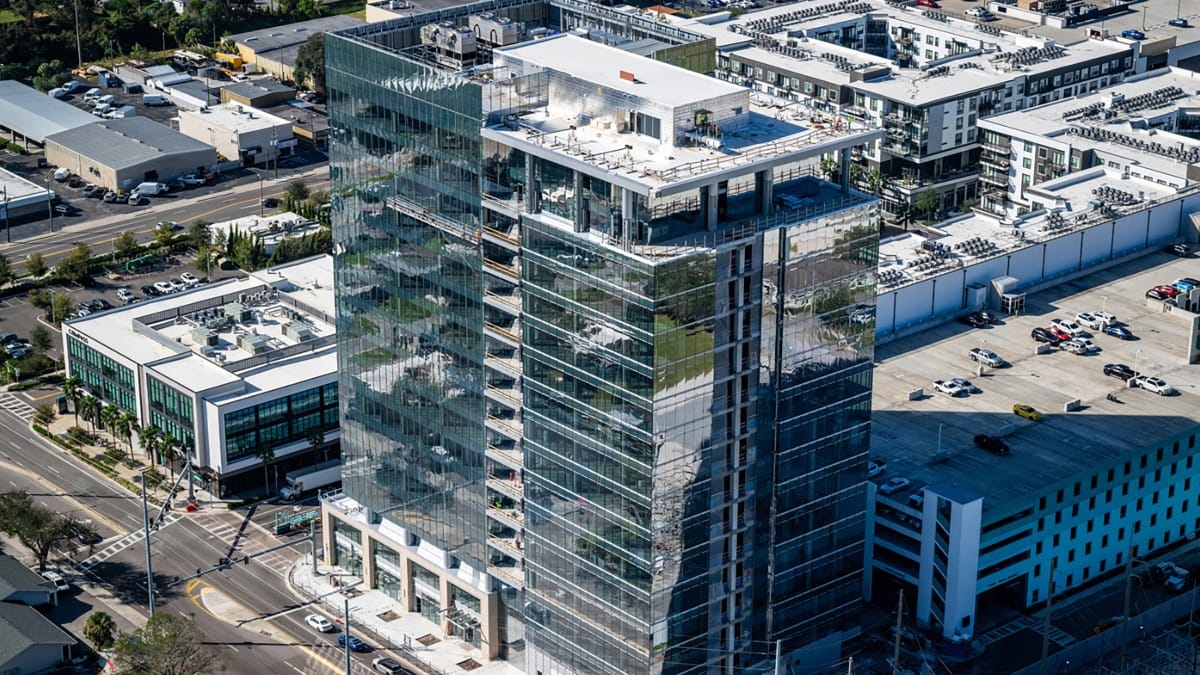
Tampa continues to demonstrate why it stands as one of America’s most resilient and investment-ready real estate markets.
According to a new report highlighted by Tampa Bay Business & Wealth (TBBW), the region’s multifamily sector is outperforming the national real estate slowdown by nearly 20%.
This insight stems from the latest Newmark Capital Markets Report, which highlights Tampa’s impressive 6.5% annualized return—a level many U.S. metros fail to reach due to oversupply challenges or regulatory pressures.
Tampa isn’t just keeping pace—it’s outperforming, outlasting, and outmaneuvering national headwinds.
National Snapshot: Multifamily Still Leading the Pack
Newmark’s Q3 data shows that multifamily properties remain leaders in commercial real estate returns, delivering 5.48% annually versus the broader index’s 4.65%.
But disparities across metros reveal a fragmented landscape.
- West Coast hubs like San Jose, Orange County, and San Diego topped 7% returns.
- Miami and Houston were the only Sun Belt cities in the national top ten.
- Oversupplied metros—Austin, Raleigh, Phoenix—posted notably weaker performance.
- Regulation-heavy cities such as New York and Portland continued to trail behind.
This uneven distribution underscores the importance of controlled development pipelines—an area where Tampa excels.
Why Tampa’s Outperformance Matters
While many Sun Belt markets cool off due to construction surges and shifting rent growth, Tampa stands out.
A 6.5% multifamily return signals an ecosystem defined by investor confidence, stable demand, and population growth.
- Long-term stability attracts investors.
- Vacancy rates remain healthier than competing metros.
- Rent growth is moderating but still demand-driven.
- Tampa maintains balance—unlike metros saturated by rapid development.
Key Factors Shaping Tampa’s Outlook
Several dynamics will guide Tampa’s multifamily evolution:
- Sustained population and employment growth.
- Federal rate decisions impacting cap rates and transactions.
- New developments in Channelside, Midtown, Tampa Heights, and Westshore.
- Investor preference for Florida’s stable and growth-oriented metros.
The future isn’t about extremes—it’s about Tampa’s consistent, disciplined trajectory toward 2026.
What This Means for Real Estate Professionals
For agents, brokers, developers, and investors, Tampa’s resilience equates to opportunity.
If you’re seeking to launch or elevate your Florida real estate career, this moment is ideal to refine your expertise.
Institutions like Cameron Academy are essential partners for professionals aiming to stay competitive with industry-leading licensing, post-licensing, and continuing education programs.
The Takeaway
Tampa continues to outpace the national multifamily slowdown, reinforcing its role as one of the Southeast’s premier investment markets.
Steady demand, healthy fundamentals, and balanced development offer the city a strategic advantage heading into 2026.
Full story available at TBBW:
Tampa beating national real estate slowdown by nearly 20%.
Stay Connected