Tampa Defies National Real Estate Slowdown With Nearly 20% Stronger Returns

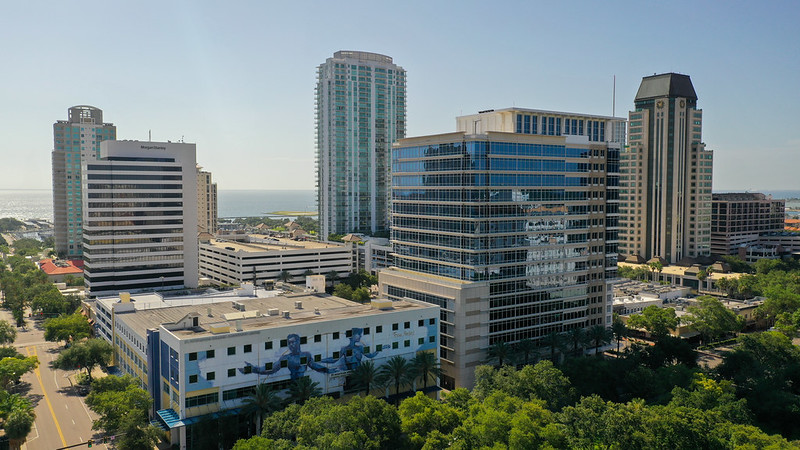
Tampa multifamily market image

Tampa continues to demonstrate why it stands as one of America’s most resilient and investment-ready real estate markets. According to a new report highlighted by Tampa Bay Business & Wealth (TBBW), the region’s multifamily sector is outperforming the national real estate slowdown by nearly 20%.

This insight stems from the latest Newmark Capital Markets Report, which highlights Tampa’s impressive 6.5% annualized return—a level many U.S. metros fail to reach due to oversupply challenges or regulatory pressures.

Tampa isn’t just keeping pace—it’s outperforming, outlasting, and outmaneuvering national headwinds.

National Snapshot: Multifamily Still Leading the Pack

Newmark’s Q3 data shows that multifamily properties remain leaders in commercial real estate returns, delivering 5.48% annually versus the broader index’s 4.65%. But disparities across metros reveal a fragmented landscape.

  • West Coast hubs like San Jose, Orange County, and San Diego topped 7% returns.
  • Miami and Houston were the only Sun Belt cities in the national top ten.
  • Oversupplied metros—Austin, Raleigh, Phoenix—posted notably weaker performance.
  • Regulation-heavy cities such as New York and Portland continued to trail behind.

This uneven distribution underscores the importance of controlled development pipelines—an area where Tampa excels.

Why Tampa’s Outperformance Matters

While many Sun Belt markets cool off due to construction surges and shifting rent growth, Tampa stands out. A 6.5% multifamily return signals an ecosystem defined by investor confidence, stable demand, and population growth.

  • Long-term stability attracts investors.
  • Vacancy rates remain healthier than competing metros.
  • Rent growth is moderating but still demand-driven.
  • Tampa maintains balance—unlike metros saturated by rapid development.

Key Factors Shaping Tampa’s Outlook

Several dynamics will guide Tampa’s multifamily evolution:

  • Sustained population and employment growth.
  • Federal rate decisions impacting cap rates and transactions.
  • New developments in Channelside, Midtown, Tampa Heights, and Westshore.
  • Investor preference for Florida’s stable and growth-oriented metros.

The future isn’t about extremes—it’s about Tampa’s consistent, disciplined trajectory toward 2026.

What This Means for Real Estate Professionals

For agents, brokers, developers, and investors, Tampa’s resilience equates to opportunity. If you’re seeking to launch or elevate your Florida real estate career, this moment is ideal to refine your expertise.

Institutions like Cameron Academy are essential partners for professionals aiming to stay competitive with industry-leading licensing, post-licensing, and continuing education programs.

The Takeaway

Tampa continues to outpace the national multifamily slowdown, reinforcing its role as one of the Southeast’s premier investment markets. Steady demand, healthy fundamentals, and balanced development offer the city a strategic advantage heading into 2026.

Full story available at TBBW: Tampa beating national real estate slowdown by nearly 20%.

Stay Connected

More Articles

Getting licensed or staying ahead in your career can be a journey—but it doesn’t have to be overwhelming. Grab your favorite coffee or tea, take a moment to relax, and browse through our articles. Whether you’re just starting out or renewing your expertise, we’ve got tips, insights, and advice to keep you moving forward. Here’s to your success—one sip and one step at a time!

Nevada Becomes First State to Allow Homeowners Insurance Without Wildfire Coverage

Nevada has enacted a first‑in‑the‑nation law permitting insurers to sell homeowners policies that exclude wildfire coverage, a move supporters say could help stabilize premiums but critics warn may leave homeowners financially devastated. The policy shift positions Nevada as a testing ground for potential nationwide changes, raising major implications for real estate, mortgage, and insurance professionals as lenders, high‑risk communities, and regulators navigate the evolving landscape.

Tampa Bay Office Market Ends 2025 with Its Strongest Performance Since 2016

Tampa Bay’s office sector just delivered its most powerful year in nearly a decade, according to JLL’s Q4 2025 report. With more than 600,000 square feet of positive net absorption, falling vacancies, shrinking inventory, and major tenants like Fisher Investments and GEICO locking in massive leases, the region is emerging as one of the nation’s strongest post‑recovery office markets. The surge in demand for high‑quality space is driving rents up, tightening supply, and setting the stage for continued momentum into 2026.

CFPB Unveils Key Updates to Mortgage Registry Data Rules

The Consumer Financial Protection Bureau has proposed new updates to the Nationwide Mortgage Licensing System and Registry, expanding data collection, tightening verification standards, and refreshing record‑retention rules. These changes aim to strengthen background checks, enhance regulatory oversight, and align the system with federal requirements—impacting both current and aspiring mortgage loan originators nationwide.

Nevada Breaks New Ground With Controversial Wildfire‑Excluded Insurance Policies

Nevada has become the first state to let insurers sell homeowners policies that exclude wildfire coverage — a dramatic shift that could reshape insurance pricing across the West. Supporters say the move may lower premiums and spark innovation, while critics warn it could leave homeowners exposed to devastating losses. As regulators and insurers nationwide watch closely, the experiment could have major implications for real estate, mortgages, and insurance markets.

Florida’s Insurance Crisis Finally Eases as New Bills Target Lower Premiums and Greater Transparency

After years of soaring premiums and insurer failures, Florida lawmakers are rolling out a new slate of reforms aimed at finally delivering relief to homeowners. From cracking down on profit‑sharing affiliates to unveiling hidden rate factors and rewarding claim‑free residents, these proposals could reshape the state’s insurance landscape — and bring real savings to property owners and real estate professionals alike.

C‑PACE Financing Hits New Record as Developers Turn to Alternative Capital

With traditional CRE lending slowing nationwide, C‑PACE financing is surging to all‑time highs — including a record‑setting $465 million loan for a major D.C. redevelopment. Backed by long repayment terms, fixed rates, and tax‑assessment security, C‑PACE is rapidly becoming a preferred tool for funding energy efficiency, resiliency upgrades, and even large‑scale project recapitalizations. Major players like Nuveen Green Capital and Peachtree Group are driving billions in new volume as 40 states adopt the program, signaling a major shift in how commercial real estate projects are financed.