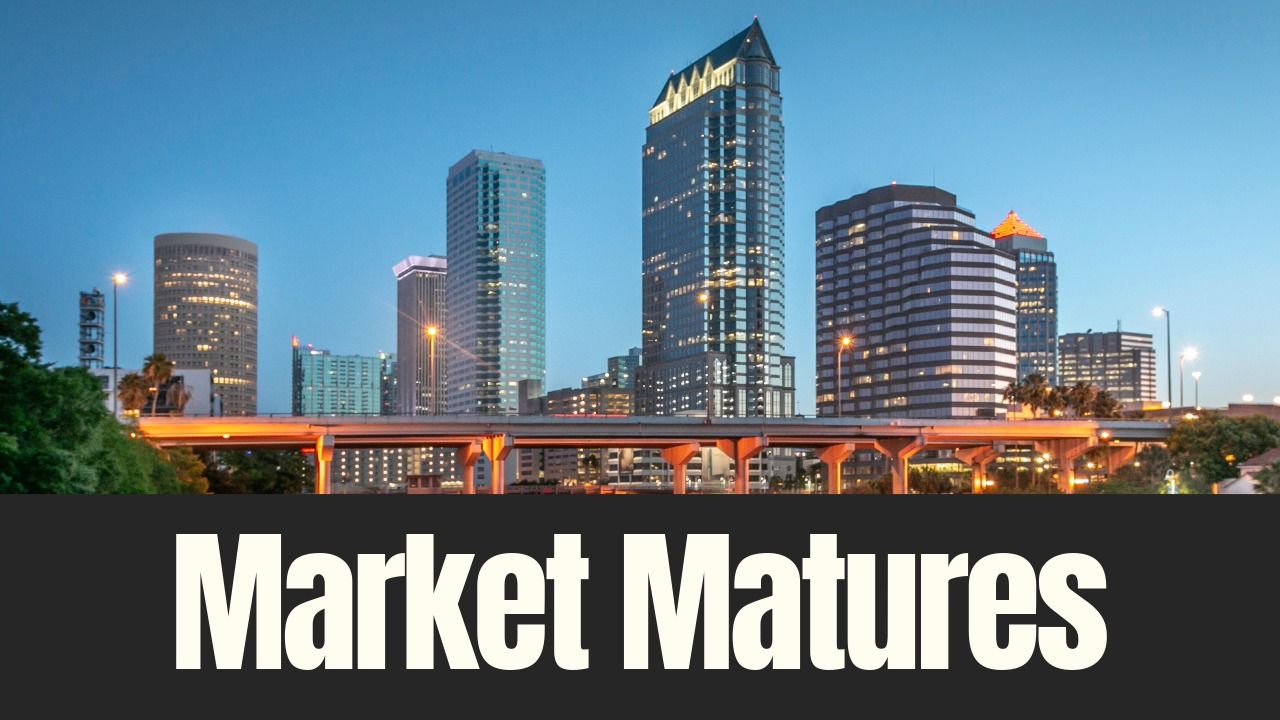
Tampa’s Real Estate Market Shifts Into a Smarter, More Selective Phase
Tampa’s commercial real estate landscape is still expanding, but the era of rapid-fire, instinct-driven decision making is transitioning into a more thoughtful, selective strategy. According to Lisa Jesmer, Florida Market Leader for Avison Young, investors are now honing in on long‑term value as the market matures.
“Tampa continues to attract people and businesses,” Jesmer said in an interview with TBBW. “What’s different now is how carefully deals are being evaluated.”
Overseeing Avison Young’s operations across Tampa, Orlando, Fort Lauderdale and Miami, Jesmer emphasizes that Tampa remains one of Florida’s most dynamic environments—even as investors slow down to scrutinize pricing, risk and performance.
Population Growth Still Drives Demand
With a projected 400,000 new residents expected in the Tampa region by 2030, demand for office, industrial, retail and health-care real estate remains elevated. Tampa is also one of the few Florida markets where office leasing continues to grow, defying national trends.
“Tampa checks a lot of boxes,” she said. “A diverse job base, lifestyle appeal, and continued in‑migration.”
For real estate professionals—new or seasoned—understanding these demographic insights is essential. Students at Cameron Academy often learn this on day one: population growth creates opportunity.
Industrial Activity Normalizes
Industrial real estate, which surged during the post‑Covid era, is returning to a more predictable pace. Jesmer notes this is not a slowdown—simply a return to normalcy.
Deals are still active, but underwriting has tightened and pricing is more precise.
Retail Foot Traffic Makes a Comeback
Retail is emerging stronger than many expected. Institutional investors are showing renewed interest as Tampa’s growing population increases retail demand and foot traffic.
Stabilized centers bring longer leasing terms, stronger credit tenants, and improved financing—making retail a rising favorite again.
Capital Takes a Cautious Approach
Although transaction volume is climbing, investors are performing deeper due diligence than ever before. Off‑market opportunities are rare, and on‑market deals undergo intense analysis, especially regarding insurance exposure and deferred maintenance.
“Buyers want to know exactly what they’re walking into,” Jesmer said. “Surprises are expensive right now.”
More court‑appointed and specialty sales are surfacing as loans mature—prime opportunities for well-prepared buyers.
Health Care Real Estate Takes Center Stage
Health care is expected to be one of Florida’s hottest commercial sectors in 2026. With both a growing and aging population, demand is rising for medical office buildings, outpatient facilities and hybrid retail‑health care spaces.
Tampa’s strong hospital networks make it a natural hub for this expansion.
“There’s a lot of land being acquired and repositioned for health-care use,” Jesmer explained. “That trend is just beginning.”
What This Means for Tampa
The next chapter for Tampa real estate focuses on precision over speed. Growth and opportunity remain abundant—but those who win will be the professionals who analyze the details and plan for long‑term performance.
“Tampa is moving from expansion to execution,” Jesmer said. “That’s a healthy place for a market to be.”
Stay Connected and Stay Informed
For more insights, analysis, and regional business intelligence, explore Tampa Bay Business & Wealth below:
Getting licensed or staying ahead in your career can be a journey—but it doesn’t have to be overwhelming. Grab your favorite coffee or tea, take a moment to relax, and browse through our articles. Whether you’re just starting out or renewing your expertise, we’ve got tips, insights, and advice to keep you moving forward. Here’s to your success—one sip and one step at a time!
The recent settlement agreements between Anywhere Real Estate and RE/MAX have brought significant changes to the real estate industry. These agreements mark a turning point in buyer broker compensation and have far-reaching implications for agents and brokers alike. With the removal of the National Association of Realtors (NAR) membership requirement and the Code of Ethics, agents now have more flexibility in conducting their business. This shift has sparked both optimism and concerns within the industry. Join us as we navigate through the changes brought about by these settlement agreements and uncover their potential effects on professionalism, competition, and the overall landscape of the real estate market.
The mortgage market is currently facing significant challenges, with mortgage rates nearing 8%, low housing inventory, and rising home prices. In this article, we explore the strategies employed by wholesale lenders and brokers to navigate these conditions and adapt to the changing market landscape. One key strategy is the implementation of down-payment assistance programs, providing financial support to potential homebuyers. Another is the option to buy down mortgage rates, offering more affordable monthly payments. With limited housing inventory, many potential homebuyers are turning to fixer-upper properties, and lenders are capitalizing on this trend by offering renovation loans. Brokerage firm owners are also diligently managing their cost structures to remain profitable. Looking ahead, industry professionals are closely monitoring the potential impact of the Federal Reserve's tightening monetary policy and political instability on the mortgage market.
Two innovative startups in Texas, Hive3D and Icon, are leveraging 3D printing technology to combat housing inventory shortages and climate change. They're constructing eco-friendly homes, offering a groundbreaking approach to sustainable housing. Houston-based Hive3D uses "green cement," reducing waste and contributing positively to the environment. Icon's efficient construction methods enable them to construct an entire subdivision of homes in less time, meeting the growing demand for housing and reducing resource consumption. These 3D-printed homes are more cost-effective due to reduced labor costs and minimized material waste, offering more affordable housing options.
In the midst of the continued climb of 30-year fixed mortgage rates, the Mortgage Bankers Association (MBA) has issued a call to the Federal Reserve (Fed) to bring much-needed certainty to the financial markets. The MBA believes that the Fed must make clear statements regarding the end of its rate hikes and its intentions with its mortgage-backed securities (MBS) holdings. The MBA, represented by its president and CEO, Bob Broeksmit, has emphasized the urgency of the Fed's communication. Broeksmit asserts that the Fed needs to clearly state that it has reached the end of its rate hikes and that it will refrain from selling its MBS holdings until the housing finance market stabilizes and mortgage-to-Treasury spreads normalize.
Despite a decline in mortgage application fraud, New York and Florida continue to face the highest mortgage fraud risks in the nation. The primary drivers of fraud risk in these states are fraudulent income misrepresentation and undisclosed real estate liabilities. High-risk metropolitan areas include New York City, Miami, Tampa, and Orlando. To combat mortgage fraud risks, it is crucial to maintain vigilance and take proactive actions. Stay ahead of the game and protect yourself from mortgage fraud risks in New York and Florida. Sign up for our mortgage fraud prevention course today.
Significant changes may be on the horizon for the United States housing market if new legislation is passed. Bills introduced in both the U.S. Senate and the House of Representatives propose the requirement of title insurance on mortgages purchased by government-sponsored enterprises (GSEs). Known collectively as The Protecting America's Property Rights Act, these bills are currently under consideration and have not yet been voted on. If passed, the proposed amendments to the charters of Fannie Mae and Freddie Mac would make primary-lien title insurance mandatory for conventional mortgages on one- to four-unit properties. Title insurance plays a critical role in the mortgage industry by protecting lenders and homeowners. It offers financial loss protection in the event of property title defects, ensuring that property ownership is free from any legal disputes or claims. Lawmakers aim to enhance the integrity of the mortgage market and provide additional safeguards for lenders and borrowers by requiring title insurance on GSE-backed loans.