As the dust settles from the pandemic, Texas’ high-tech sector is shaking off its post-pandemic slump and gearing up for a new growth trajectory. The state, already a significant player in the U.S. economy, is poised for further expansion as it attracts business relocations from other tech hubs like Silicon Valley and rides the wave of increased demand for emerging AI technologies.
High tech contributes nearly 5% to Texas’ GDP and over 9% to employment, making it an essential driver of innovation and technological development. This sector, characterized by rapid growth and high wages, is crucial for productivity and is positioned to benefit from ongoing business relocations and new investments in high-tech manufacturing capacity. For more insights into the sector’s impact, visit the Federal Reserve Bank of Dallas.
High-Tech Hiring Dynamics
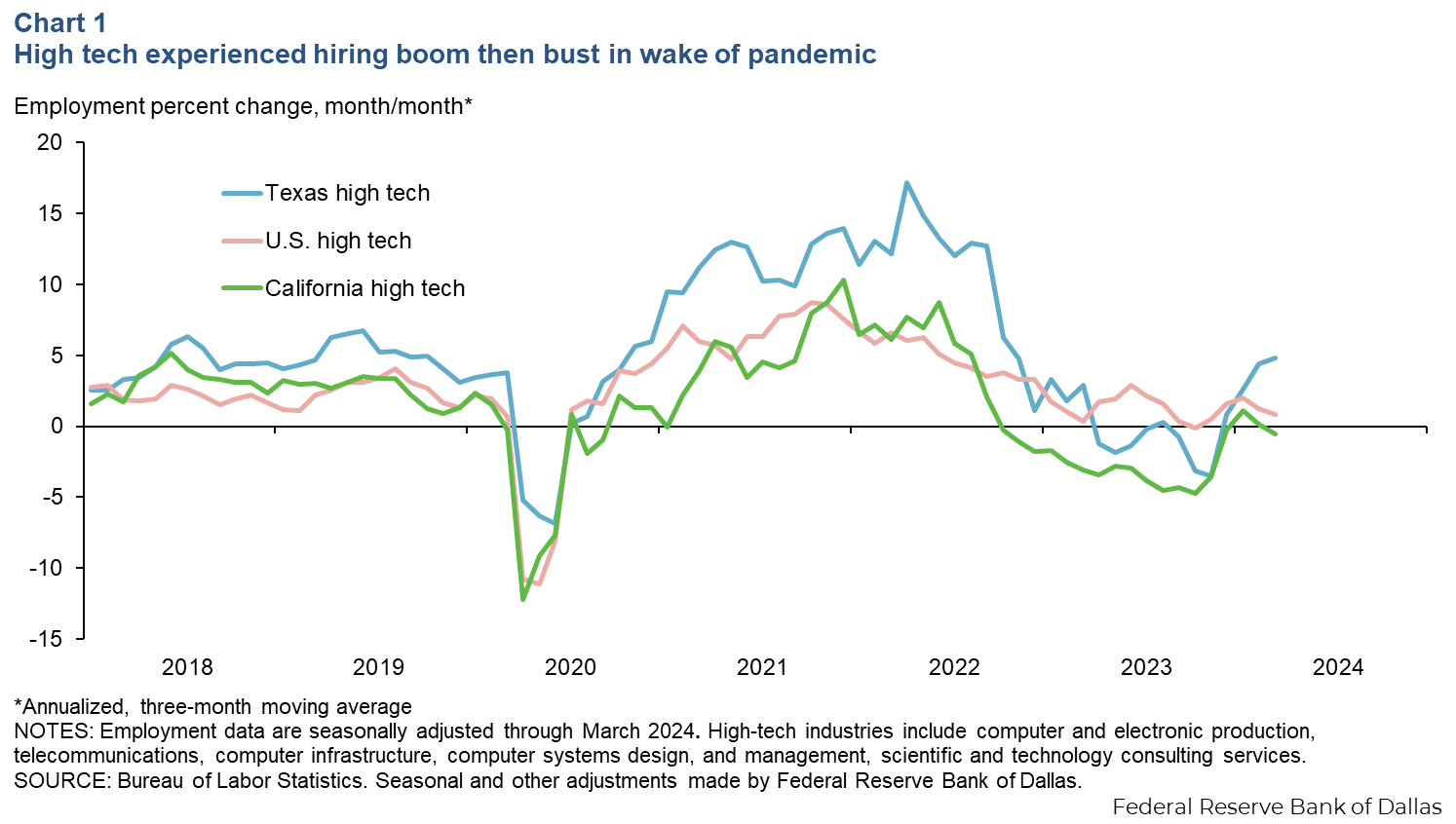
The high-tech industry experienced a hiring boom post-pandemic, driven by the surge in demand for technology products and services. However, this rapid expansion led to overhiring, and companies soon faced cost pressures, resulting in layoffs. Despite these challenges, Texas managed to avoid the severe job losses seen in California, thanks in part to the reallocation of tech activity to other parts of the country.
Layoff announcements in Texas spiked during early 2023 but have since moderated, suggesting stabilization in the local tech labor market. The state’s resilience is attributed to gains in computer manufacturing and tech consulting services, which offset losses in other tech industries.
Legislative Support and Future Outlook
The federal CHIPS and Science Act, along with the Texas CHIPS Act, provides significant support to the high-tech sector. These initiatives encourage semiconductor manufacturing, helping stabilize supply chains and aiming for technological self-sufficiency. Investments include Texas Instruments’ $30 billion semiconductor manufacturing plant and Samsung’s $44 billion investment in semiconductor facilities.
Corporate relocations and population migrations have also fueled high-tech growth in Texas. Major companies like Hewlett Packard and Apple have moved to Texas, bringing along a highly skilled workforce from states like California and New York. This influx of talent has bolstered the state’s high-tech sector, making it a pillar of Austin’s economy. For more on corporate relocations, see the Dallas Fed’s report.
Skilled Labor and Remote Work
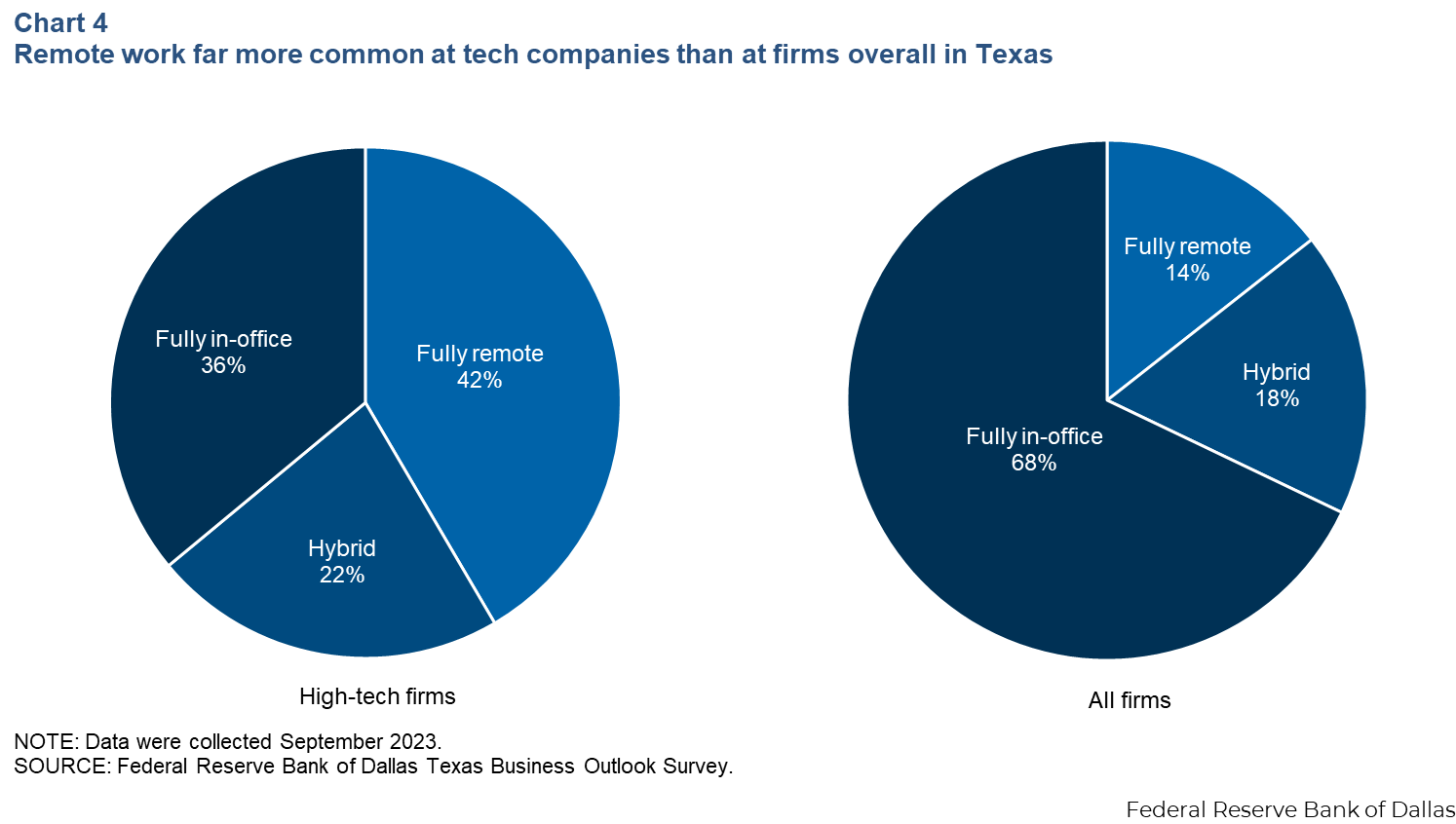
High-tech wages in Texas are significantly higher than the state average, with 2022 hourly wages averaging $43.51 compared to $29.26 for workers overall. The sector employs a larger share of highly skilled workers, supporting elevated pay. The prevalence of remote work in high tech is notable, with 36% of employees working fully remote, compared to 14% in other sectors. For trends in remote work, refer to the Harvard Business Review.
Looking ahead, high-tech firms in Texas are optimistic about future growth, buoyed by continued investments and policy support for emerging technologies like AI and semiconductor production. This optimism could be a precursor to further expansion in the sector.
More Articles
Getting licensed or staying ahead in your career can be a journey—but it doesn’t have to be overwhelming. Grab your favorite coffee or tea, take a moment to relax, and browse through our articles. Whether you’re just starting out or renewing your expertise, we’ve got tips, insights, and advice to keep you moving forward. Here’s to your success—one sip and one step at a time!
Fintech has evolved from simple digital banking tools into a global force transforming how we pay, borrow, invest, and manage financial data. With AI, blockchain, and open banking leading the way, fintech is opening new opportunities for consumers, businesses, and professionals across real estate, mortgage, insurance, and finance.
After months of hesitation, the commercial real estate market showed a major resurgence in Q3 2025. Large single‑asset transactions over $10 million jumped to $76 billion — the strongest level since 2022 — signaling renewed liquidity and growing confidence among institutional buyers. While overall volumes remain below peak highs, rising deal counts, stabilizing prices, and increased activity across industrial, multifamily, office, and retail sectors point toward a market steadily moving back toward normalization.
California’s property insurance market didn’t collapse overnight—it unraveled over years of political delays, soaring wildfire losses, and mounting pressure on insurers and reinsurers. As major carriers pulled out and rate approvals stalled, millions of homeowners were left scrambling for coverage under an overwhelmed FAIR Plan. At the center of the controversy stands Insurance Commissioner Ricardo Lara, whose decisions, industry ties, and behind‑the‑scenes negotiations have drawn sharp criticism. The result is a destabilized market affecting homeowners, real estate professionals, lenders, and entire communities—and the question of whether current reforms can truly fix what’s broken.
After a slow start to the year, commercial real estate showed a major resurgence in Q3 2025 as large single‑asset deals over $10 million surged past $76 billion in volume. With 1,826 major trades and the strongest growth rate in more than a decade, investor confidence appears to be returning across U.S. markets. While overall volumes still trail the record highs of 2021–2022, the renewed momentum in big‑ticket transactions points to improving liquidity, clearer pricing, and a potentially pivotal turning point for brokers, investors, and industry professionals.
California’s property insurance market has unraveled into one of the most expensive and consequential crises in U.S. history. Major carriers pulled back, wildfire risks soared, regulators stalled, and the state’s FAIR Plan exploded in size — leaving hundreds of thousands of homeowners without affordable coverage. Now, with victims underinsured, premiums surging, and a billion‑dollar bailout looming, the fallout is spilling beyond California. For real estate, mortgage, finance, and insurance professionals across the country, this is a warning of what happens when rising climate risks collide with outdated regulatory systems.
Sarasota County is on the brink of one of its largest modern expansions as the Winchester Ranch project moves closer to approval. Spanning more than 3,100 acres near North Port, the planned mega-development could bring up to 8,999 homes plus major commercial and industrial space. With construction projected to begin in 2027–2028, the community has sparked both excitement over new housing opportunities and concerns about environmental impact, placing it at the center of Florida’s ongoing growth debate.