The 2025–2026 Insurance Risk Agenda: What Every Professional Needs to Know
The insurance world didn’t ease up in 2025 — and for 2026, the pressure only intensifies. Today’s insurers are being pulled in two very different directions: innovate faster than ever while simultaneously tightening controls under rising regulatory, geopolitical and economic turbulence. For professionals across insurance, finance, mortgage, and compliance, this dual reality defines the year ahead.
InsuranceNewsNet recently highlighted the key forces shaping the coming cycle, and the picture is clear: growth and innovation now require smarter, more disciplined risk management than at any point in the past decade.
1. AI Acceleration and the Governance Crunch
Artificial intelligence is no longer experimental — it’s operational. In 2025, insurers shifted rapidly to AI-supported underwriting, dynamic pricing, and real-time risk selection. The result? Massive opportunity paired with new forms of exposure.
Key risks include:
• Model drift and explainability issues
• Heightened fairness and discrimination scrutiny
• Deepened board expectations for oversight
Digital transformation demands speed, but cyber resilience and governance demand discipline. Insurers that master both will hold the competitive edge in 2026.
2. Stricter Oversight of Third-Party Vendors
Regulators increasingly view third-party vendors as extensions of the insurer itself. In 2025, the NAIC intensified scrutiny of PBMs, data providers, modeling vendors and third-party administrators.
For PBMs, the regulatory shift is especially sharp, with new examination frameworks and robust data gathering protocols. For insurers, this means documented oversight is now non-negotiable.
Other high-focus areas include:
• Predictive model vendors
• Annuity suitability partners (no more “we outsourced it”)
• Third-party administrators and standardized licensing
Vendor governance now requires the same rigor as capital management: structured, evidence-driven, and continuously updated.
3. Volatile Markets, Rates and Global Pressures
Rate volatility remained stubborn in 2025, impacting capital strategies, policyholder behavior, reinsurance structures and solvency metrics. With global tensions rising, insurers face pressure on catastrophic losses, offshore reinsurance scrutiny and earnings stability.
Property and casualty carriers continue to face elevated catastrophe losses — about $107 billion last year alone — fueled by events like the California Palisades Fire.
Health insurers grappled with premium deficiencies, while life insurers benefitted from attractive long-term spreads but struggled with legacy guarantees.
4. The Growing Talent Gap
The industry’s talent shortage is no longer looming — it’s here. Retirements are accelerating, and fewer young professionals are entering the field. Highly technical roles, from actuarial to compliance analytics, face particularly significant shortages.
This creates both a challenge and an enormous opportunity for professionals investing in upskilling and licensure.
What 2026 Demands from Insurance Leaders
Across all risk categories, four priorities stand out:
• Bring risk and compliance into strategic decision-making
• Industrialize vendor and model governance
• Invest in talent, technology and professional education
• Build pricing and capital structures that can flex with volatility
2025 was a stress test — 2026 is the proving ground.
Where Cameron Academy Fits In
With the industry evolving at record speed, staying licensed, certified and professionally competitive is more important than ever. Cameron Academy’s insurance, finance and compliance programs help both new and seasoned professionals build the expertise regulators now demand. Whether you’re upskilling, reskilling or stepping into the field for the first time, Cameron Academy keeps you ahead of the curve — in all 50 states.
For full context and deeper insights, explore the original feature at InsuranceNewsNet, a trusted source in professional insurance reporting.
More Articles
Getting licensed or staying ahead in your career can be a journey—but it doesn’t have to be overwhelming. Grab your favorite coffee or tea, take a moment to relax, and browse through our articles. Whether you’re just starting out or renewing your expertise, we’ve got tips, insights, and advice to keep you moving forward. Here’s to your success—one sip and one step at a time!
In 2026, financial advisors are no longer just experimenting with AI — they’re relying on it. Once confined to back-office duties, AI now supports meeting prep, portfolio analysis, and even early-stage financial planning. Advisors say the tech is strengthening client relationships by freeing them from administrative overload, though entry-level roles like paraplanners may feel the squeeze as automation accelerates.
Cybercriminals are weaponizing AI to launch highly convincing email scams and system breaches across the mortgage industry, overwhelming lenders and servicers whose cybersecurity measures can’t keep up. With major companies already hit and regulation lagging behind, experts warn the sector—now considered critical infrastructure—must rapidly upgrade protections, collaborate on threat intelligence, and improve AI governance before the risks escalate further.
Escrow payments are quietly surging across the country as property taxes and insurance premiums spike—pushing many homeowners toward delinquencies and even foreclosure. New data from Cotality shows the sharpest increases hitting the South and Midwest, with Florida among the hardest‑hit states. Even with fixed mortgage rates, rising escrow requirements are driving monthly payments higher and threatening affordability heading into 2026.
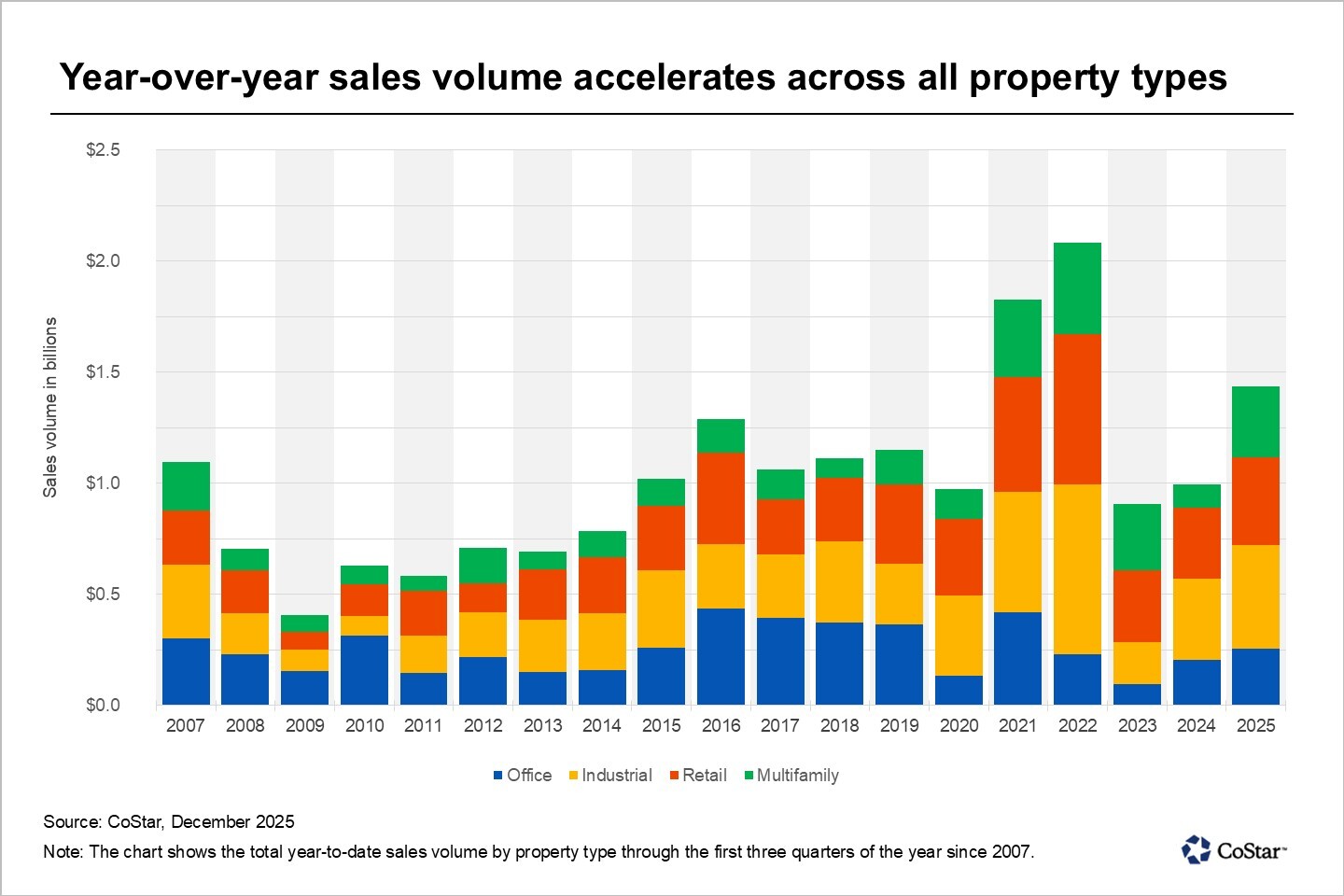
Milwaukee entered 2025 with renewed momentum, posting its strongest commercial real estate sales volume in three years. After a period of uncertainty and high capital costs, investors are returning with a sharper focus on quality assets, realistic pricing, and reliable cash flow. Activity is increasing across industrial, office, multifamily, and retail sectors, signaling a broad-based recovery fueled by stabilizing interest rates and improved market confidence.
As 2026 approaches, the title insurance industry is navigating a complex mix of market recovery, rising fraud threats, and sweeping regulatory changes. Industry leaders say the path forward centers on smarter technology, leaner operations, and stronger support for title agents. With AI-driven workflows, enhanced fraud prevention, and new compliance demands—including FinCEN’s expanded Geographic Targeting Orders—companies like Stewart and First American are reshaping how title work gets done. For real estate and mortgage professionals, the year ahead promises more automation, heightened standards, and major opportunities for those who stay ahead of the curve.
The real estate industry is undergoing a major transformation in 2025 as advancements in AI, proptech, blockchain, and data intelligence redefine how properties are marketed, valued, financed, and experienced. From instant digital valuations and immersive virtual tours to tokenized investments and predictive analytics, technology is reshaping every stage of the real estate lifecycle. Professionals who embrace these innovations—while maintaining the human expertise clients still rely on—will lead the next era of the industry.