The 2025 Commercial Real Estate Landscape: A Prime Moment for Private Investors to Move

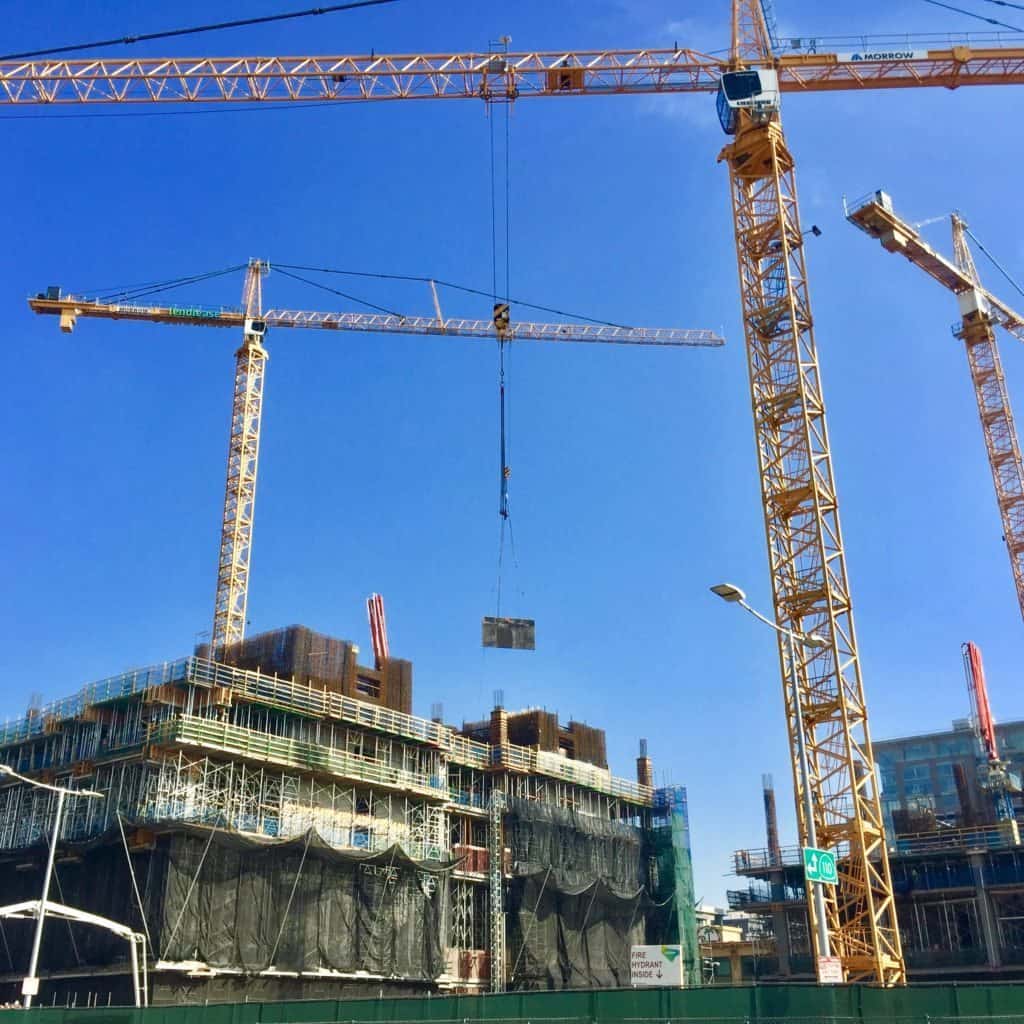
Commercial real estate construction site

Commercial real estate is shifting again — and this time, in ways that may heavily favor private investors. According to JLL’s newly released 2025 Guide: The State of Commercial Real Estate – Private Investor, opportunities are emerging across multiple asset classes as liquidity returns and market confidence stabilizes.

The commercial real estate (CRE) market saw global transaction volumes for properties valued between $5–30 million climb to $218.6 billion in 2024 — up from $207 billion the previous year. This rebound signals a healthier, more strategic investment climate where smaller, targeted acquisitions are outperforming institutional megadeals.

Where Private Investors Are Finding Value

Assets priced under $50 million are showing particular resilience. Multifamily properties, industrial warehouses, medical offices, undeveloped land, self‑storage, and even select retail spaces continue to draw significant interest. Offices remain the most nuanced category, though specific high‑quality, amenity-rich properties are emerging as winners.

Looking ahead, liquidity is expected to improve substantially through 2025 as lenders re‑enter the commercial mortgage arena with more confidence. While high interest rates kept some institutions on the sidelines in 2024, private investors were able to seize attractive discounts — and those who act early in 2025 may lock in first‑mover advantages before competition intensifies.

The Supply Crunch That’s Fueling Demand

New development delays and elevated construction costs are limiting available inventory. This mismatch is creating heightened competition for well‑located, top‑tier assets. Meanwhile, interest rate stability is helping to strengthen debt performance and boost buyer demand.

CRE Still Outperforms Globally

One of the standout insights from JLL’s analysis: U.S. private real estate delivered 11.19% annualized returns from 2013–2023 — outperforming Europe (9.40%) and Asia-Pacific (7.98%). CRE continues to serve as a proven inflation hedge, offering investors predictable income streams and dependable long‑term appreciation.

Sector-by-Sector: What’s Heating Up

Multifamily remains dominant thanks to ongoing urbanization and population growth. Global multifamily sales jumped from $162.9 billion in 2023 to $188.1 billion in 2024, with the U.S. accounting for a massive $132 billion.

Retail is experiencing a surprising resurgence. Grocery‑anchored centers and major high‑street locations are seeing rent growth and stronger foot traffic. Private investors drove 71% of all U.S. retail CRE deals in 2024 — especially in Sun Belt markets such as Texas and Florida.

Industrial & warehouse properties face pressures from inflation and tariffs, yet liquidity remains strong. Global industrial sales climbed to $166 billion in 2024, supported by long‑term demands tied to e‑commerce, nearshoring, and greener, energy‑efficient facilities.

Office continues to be the most complex asset class. While U.S. sales for mid‑tier office buildings dropped to $17 billion in 2024, global volumes rose 13% to $147.9 billion. Japan and Australia are seeing powerful leasing activity, and tenants worldwide are prioritizing amenities, prime locations, and workspace quality.

What Smart Investors Should Do Next

JLL’s report emphasizes swift, informed action. As liquidity improves and institutional players return, private investors who move early can potentially secure better pricing and stronger long‑term positions. Strategic diversification and careful risk assessment remain essential — and working directly with experts can help investors navigate uncertainties and capitalize on the most promising segments of the 2025 and 2026 market cycle.

For those looking to sharpen their understanding of commercial markets or pursue new professional opportunities in real estate, mortgage, insurance, or related fields, Cameron Academy provides accessible licensing courses and advanced education designed for both rising and seasoned professionals. In a rapidly shifting CRE environment, staying educated isn’t just beneficial — it’s a competitive advantage.

To explore the original report, visit Crowdfund Insider or view JLL’s full publication via their official release.

More Articles

Getting licensed or staying ahead in your career can be a journey—but it doesn’t have to be overwhelming. Grab your favorite coffee or tea, take a moment to relax, and browse through our articles. Whether you’re just starting out or renewing your expertise, we’ve got tips, insights, and advice to keep you moving forward. Here’s to your success—one sip and one step at a time!

A Time of Reckoning for Commercial Real Estate: What Professionals Need to Know in 2026

The commercial real estate industry is finally confronting years of delayed financial reality as banks begin calling in billions in troubled loans, pushing office loan delinquencies to record highs. With more than 12 percent of office loans now delinquent and nearly a trillion dollars in commercial and multifamily debt maturing this year, lenders are tightening standards and forcing borrowers to present real data, stronger strategies, and actionable plans. Regional banks face the most risk, while real estate professionals who master data literacy and investment analysis will be best positioned to thrive in this new era.

12 States Leading the Surge in CFP Growth for 2026

CFP professionals are in higher demand than ever, and new data from SmartAsset and the CFP Board shows that some states are becoming hotspots for this booming field. California leads the nation, now home to nearly one in every ten Certified Financial Planners. As Americans seek deeper financial guidance, states with strong economies and growing populations are seeing the fastest rise in licensed advisors—signaling major opportunity for both new and seasoned professionals.

Commercial Real Estate Poised for a Full Recovery in 2026 as Investment Activity Surges

After years of market disruption, commercial real estate is finally showing strong signs of a comeback, with major investment firms projecting 2026 as the year the sector fully stabilizes. New reports from Hines, CBRE, and Colliers point to rising leasing activity, renewed buyer appetite, and a rebound toward pre‑pandemic investment levels. Manhattan is leading the recovery, premium office spaces are dominating demand, and suburban markets are gaining traction—setting the stage for significant opportunities for real estate professionals, investors, and brokers preparing for the next market cycle.

The 2026 Job Market Freeze: Why Hiring Is Stuck and Where the Real Opportunities Are

The 2026 labor market is entering a “low‑hire, low‑fire” freeze—job openings remain above pre‑pandemic levels, yet companies are delaying hiring decisions as they navigate economic uncertainty, tariffs, and shifting immigration policies. Despite the slowdown, major pockets of growth remain, especially in healthcare, construction, civil engineering, and Sunbelt regions. AI is reshaping some industries but replacing very few jobs, with less than 1% of skills at high risk of automation. For professionals willing to adapt, upskill, or shift industries, 2026 offers strategic opportunities—particularly in licensed fields like real estate, mortgage, insurance, and finance, where education and credentials can unlock stability and upward mobility.

Mortgage Rates Hit Three‑Year Low at 6.09%, Opening a Rare Window for Buyers

Mortgage rates slipped to 6.09% this week, marking their lowest point in three years and surprising analysts after strong job numbers. The drop improves affordability for many families and signals a pivotal moment for buyers, investors, and real estate professionals as market conditions cool and stabilization continues into 2026.

AI Proptech Unicorns: How $1B+ Startups Are Transforming Commercial Real Estate in 2026

Artificial intelligence is now the driving force behind the fastest‑growing proptech companies, with AI-native startups claiming the majority of the $16.7 billion invested in real estate technology last year. From tenant communication automation to self‑navigating construction vehicles and AI-powered investor management systems, four new unicorns—EliseAI, Bedrock Robotics, Juniper Square, and Vantaca—are leading a sweeping shift across commercial real estate. Their rise signals a new era where professionals must embrace automation, data skills, and continuous education to stay competitive in an industry evolving at record speed.