The 2025 Corporate Layoff Wave: What It Means for Today’s Professionals

Passengers boarding airplane

Across every major industry in the United States, layoffs are reshaping the professional landscape of 2025. From Big Tech to aviation, energy, education, and retail, companies are recalibrating their teams in response to rising costs, new technologies, volatile global markets, and the rapid acceleration of artificial intelligence.

This year’s job reductions touch industry giants such as Amazon, Verizon, Meta, Starbucks, UPS, and ConocoPhillips, marking one of the most widespread restructuring waves since the early 2020s. According to Business Insider, which has closely documented these changes, thousands of positions—from executives to engineers—are being reshaped, relocated, or eliminated entirely.

Why It’s Happening: Technology, Cost Cutting, and the AI Acceleration

Many companies point to a shared catalyst: rapid technological evolution. Artificial intelligence has become a dominant force enabling unprecedented efficiency—while simultaneously creating redundancy in traditional roles. A World Economic Forum survey reveals that 41% of companies expect workforce reductions in the next five years as automation and generative AI continue to expand.

Here’s the positive twist: roles in AI, cybersecurity, data science, fintech, and advanced manufacturing are projected to grow—some even doubling—by 2030. The job market isn’t shrinking. It’s transforming.

Industries Feeling the Impact

Unsurprisingly, the tech world remains the most visible epicenter. Companies like Meta, Microsoft, Amazon, Oracle, and Salesforce have undergone significant team reductions. Meanwhile, the energy sector—including BP, Chevron, Exxon, and others—continues restructuring as markets fluctuate and mergers reshape organizational needs.

Retail giants such as Nike, Burberry, Best Buy, Carter’s, and Kohl’s are also optimizing operations, while aviation staples like American Airlines and Southwest, along with aerospace leaders like Boeing and Blue Origin, adjust staffing to maintain competitiveness.

Even education and nonprofit institutions are affected. Johns Hopkins University, for instance, faces one of its largest layoff rounds in history after major cuts to federal program funding.

What This Means for Your Career

Though the headlines can feel daunting, they carry an important message: flexibility is becoming a superpower in today’s career landscape. Professionals who stay proactive—upgrading skills, adding licensure, and pursuing specialized training—will stay competitive in this new economy.

Considering a pivot into real estate, insurance, mortgage, medical administration, or other licensed fields? Cameron Academy provides flexible, career-focused programs designed to help professionals not just survive but thrive in a shifting job market.

Navigating an Uncertain Market With Confidence

While layoffs dominate national headlines, they do not define your professional trajectory. Economic shifts often inspire career pivots, credential upgrades, and transitions into more stable or lucrative fields. Licensed professions—such as real estate, insurance, and financial services—continue attracting individuals seeking independence, growth potential, and long-term resilience.

To explore the full list of companies affected in 2025 and access deeper reporting, check out the original Business Insider coverage that inspired this article.

As the workforce evolves, your greatest strengths remain adaptability and knowledge. And whether you’re stepping into a new industry or elevating your current one, Cameron Academy is here to support your next move.


More Articles

Getting licensed or staying ahead in your career can be a journey—but it doesn’t have to be overwhelming. Grab your favorite coffee or tea, take a moment to relax, and browse through our articles. Whether you’re just starting out or renewing your expertise, we’ve got tips, insights, and advice to keep you moving forward. Here’s to your success—one sip and one step at a time!

How AI Is Transforming Financial Advisors’ Daily Routines in 2026

In 2026, financial advisors are no longer just experimenting with AI — they’re relying on it. Once confined to back-office duties, AI now supports meeting prep, portfolio analysis, and even early-stage financial planning. Advisors say the tech is strengthening client relationships by freeing them from administrative overload, though entry-level roles like paraplanners may feel the squeeze as automation accelerates.

AI Is Outpacing the Mortgage Industry’s Cyber Defenses as Attacks Surge

Cybercriminals are weaponizing AI to launch highly convincing email scams and system breaches across the mortgage industry, overwhelming lenders and servicers whose cybersecurity measures can’t keep up. With major companies already hit and regulation lagging behind, experts warn the sector—now considered critical infrastructure—must rapidly upgrade protections, collaborate on threat intelligence, and improve AI governance before the risks escalate further.

Hidden Housing Costs May Become 2026’s Most Dangerous Budget Buster

Escrow payments are quietly surging across the country as property taxes and insurance premiums spike—pushing many homeowners toward delinquencies and even foreclosure. New data from Cotality shows the sharpest increases hitting the South and Midwest, with Florida among the hardest‑hit states. Even with fixed mortgage rates, rising escrow requirements are driving monthly payments higher and threatening affordability heading into 2026.

Milwaukee’s Commercial Real Estate Market Is Turning the Corner

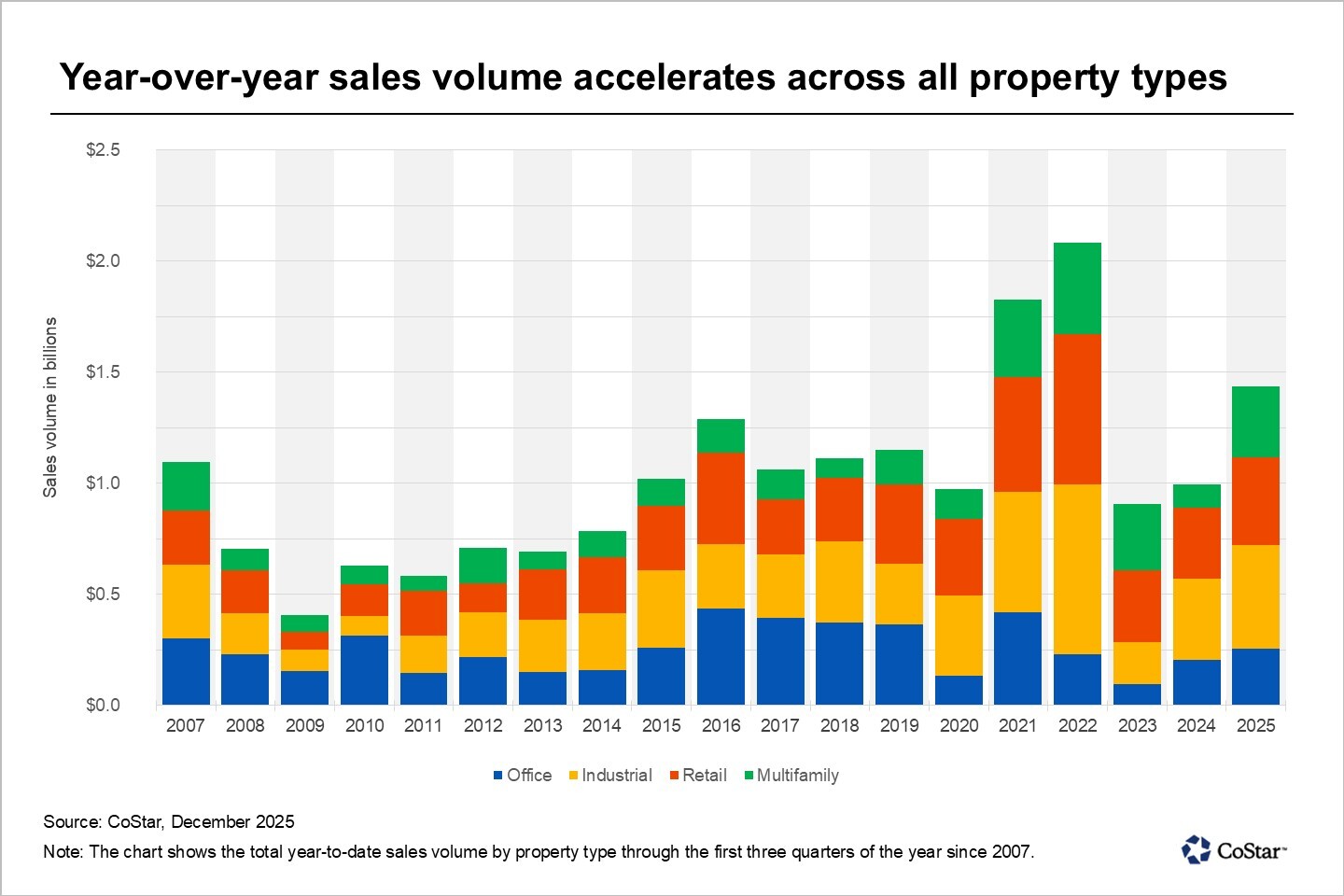
Milwaukee entered 2025 with renewed momentum, posting its strongest commercial real estate sales volume in three years. After a period of uncertainty and high capital costs, investors are returning with a sharper focus on quality assets, realistic pricing, and reliable cash flow. Activity is increasing across industrial, office, multifamily, and retail sectors, signaling a broad-based recovery fueled by stabilizing interest rates and improved market confidence.

Title Insurance Leaders Lean Into Tech, Efficiency, and Resilience for 2026

As 2026 approaches, the title insurance industry is navigating a complex mix of market recovery, rising fraud threats, and sweeping regulatory changes. Industry leaders say the path forward centers on smarter technology, leaner operations, and stronger support for title agents. With AI-driven workflows, enhanced fraud prevention, and new compliance demands—including FinCEN’s expanded Geographic Targeting Orders—companies like Stewart and First American are reshaping how title work gets done. For real estate and mortgage professionals, the year ahead promises more automation, heightened standards, and major opportunities for those who stay ahead of the curve.

Technology and the Future of Real Estate: Innovation Reshaping 2025

The real estate industry is undergoing a major transformation in 2025 as advancements in AI, proptech, blockchain, and data intelligence redefine how properties are marketed, valued, financed, and experienced. From instant digital valuations and immersive virtual tours to tokenized investments and predictive analytics, technology is reshaping every stage of the real estate lifecycle. Professionals who embrace these innovations—while maintaining the human expertise clients still rely on—will lead the next era of the industry.