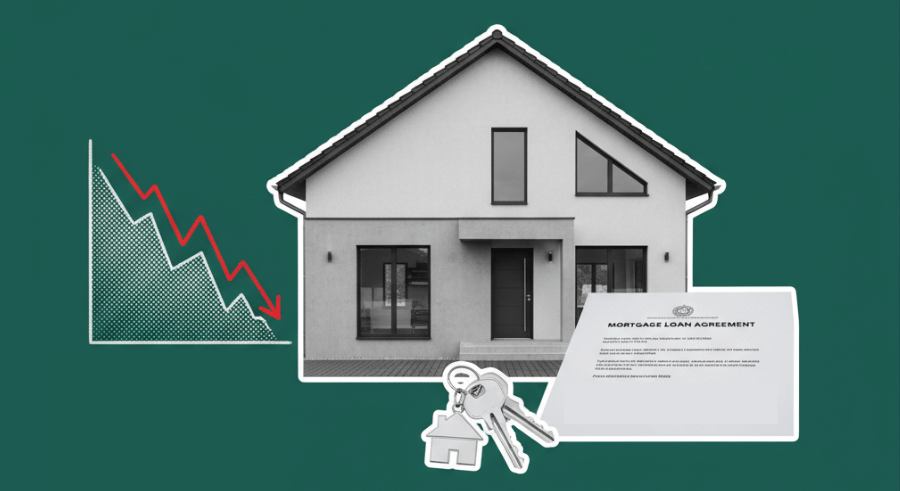
The 2026 Housing Market Slows, Stabilizes and Starts Looking… Normal?
After years of extreme ups, downs and everything in between, the U.S. housing market is entering 2026 with something many professionals barely recognize anymore: balance. Inventory growth has cooled to 10% year over year, a sharp deceleration from the 33% surge seen in mid‑2025. According to fresh analysis from HousingWire, the long-running supply shortage era is giving way to a housing landscape where real demand strength and interest rates—not scarcity—set the tone.
“Year-over-year housing inventory growth has slowed to single digits… 2026 is off and running.” — Logan Mohtashami, HousingWire Lead Analyst
The result? A market that feels less frantic, more seasonal and surprisingly teachable for agents, students and professionals seeking mastery of market behavior. (If you’re studying real estate or expanding your professional license, this is the kind of shift that makes education more valuable than ever—something we’re proud to support at Cameron Academy.)
Demand Takes the Wheel as Scarcity Fades
As 2026 begins, pricing power is increasingly tied to real‑time demand patterns. Buyers are more rate‑sensitive, transaction volumes are thinner and negotiations are back in style. With seasonal predictability returning, the market rewards those who understand timing, strategy and localized decision‑making.
Inventory Growth Slows, Normalcy Strengthens
Inventory is up—but not nearly as explosive as last year. And for the first time since the chaos of 2021, we’re seeing a stable winter bottom forming. Between Jan. 2–9, inventory actually declined, signaling a return to familiar seasonal rhythms.
“We would want the seasonal bottom to happen in February to help affordability and price growth moderation.” — Mohtashami
A February trough would give agents, lenders and builders a predictable runway to plan spring activity—exactly the kind of structural normalcy professionals have been craving.
New Listings: The Real Bottleneck
Despite improving inventory totals, new listings remain stubbornly low. Only 39,007 hit the market the week ending Jan. 9, a 12.6% decline from the previous year. Until new listing activity rebounds to 80,000+ during peak season, true expansion will remain limited.
Goodbye Urgent Bidding, Hello Price Discovery
The median days on market now sits at 91. Nearly 35% of homes have cut their price, while just 2.4% have raised theirs. Negotiation—not bidding wars—is officially the name of the game.
Pending sales—39,841 for the week—are down modestly from 2025, underscoring a calmer, more stable level of market activity.
Rates Shift Psychology and Unlock Demand
With rates hovering closer to 6% than 7%, buyer psychology is shifting. Lower payments and improved move‑up math are coaxing both buyers and sellers back into the market. According to Mohtashami, the Trump administration’s push for housing momentum is also beginning to influence confidence.
What This Means for Industry Pros
Agents & Brokerages
Use returning seasonality to time listings strategically.
Guide buyers through negotiation‑first price dynamics.
Lenders & Mortgage Operators
Frame rate messaging around demand sensitivity.
Use pending sales trends to anticipate volume.
Builders & Developers
Prepare for increased competition from resale supply.
Offer incentives highlighting the new‑vs‑existing value gap.
Investors & Portfolios
Interpret price cuts as normal discovery—not market distress.
Incorporate policy volatility into investment models.
A Moderated Market—Finally
For the first time in years, spreads are normalizing and expected rate cuts are already priced in. After an era defined by extremes, 2026 is shaping into a market where informed professionals thrive—and real estate behaves like real estate again.
If this kind of market insight motivates you to build or advance a real estate career, Cameron Academy offers flexible, affordable programs designed for today’s evolving industry.
Explore local data and the full report at HousingWire:
Getting licensed or staying ahead in your career can be a journey—but it doesn’t have to be overwhelming. Grab your favorite coffee or tea, take a moment to relax, and browse through our articles. Whether you’re just starting out or renewing your expertise, we’ve got tips, insights, and advice to keep you moving forward. Here’s to your success—one sip and one step at a time!
Artificial intelligence is speeding ahead, but real estate is discovering a hard truth: AI can’t work well on messy, inconsistent, and siloed data. Unlike finance or e‑commerce, the industry has never agreed on shared definitions or standardized frameworks, making it difficult for AI tools to interpret information at scale. Now, leaders across real estate are realizing that the real breakthrough won’t come from smarter algorithms—it will come from finally unifying the industry’s fragmented data so AI can deliver its full value.
Manhattan’s iconic Waldorf Astoria is hitting the market again—and its billion‑dollar price tag may reveal whether commercial real estate is finally recovering. After years of inflation, shutdowns, and stalled investment, new forecasts from major firms show growing optimism, making this sale a critical test for the 2026 market.
Homeowners across Florida are facing sharp increases in their escrow payments as insurance premiums continue to rise. With insurers leaving the state, rates climbing, and replacement policies costing far more, many residents are experiencing sudden spikes in their monthly mortgage bills. These escalating insurance-driven escrow costs are reshaping affordability, influencing buyer qualifications, and redefining financial stability for Floridians and the broader real estate market.
The modern MLS marketplace is one of real estate’s greatest success stories: transparent, efficient, and designed to help buyers and sellers win. But its very effectiveness has sparked a new risk — professionals looking to “stand out” by limiting exposure and restricting information. Research shows that full MLS visibility can boost a seller’s price by $50,000 to $75,000, yet off‑market tactics threaten to chip away at the system that delivers those gains. The MLS doesn’t need replacing; it needs thoughtful upgrades and well‑trained professionals who know how to protect and leverage its power.
Florida homeowners are being hit with a new kind of sticker shock as rising insurance premiums push escrow payments sharply higher, adding hundreds of dollars to monthly mortgage bills. The surge is reshaping budgets, impacting buyer qualification, and redefining affordability across the state. With insurers pulling back and premiums climbing faster than wages, both current owners and hopeful buyers must now navigate a market where insurance risk—not just home price—plays a major role in the true cost of living in the Sunshine State.
Florida’s mobile and manufactured homes are surging in popularity, but insuring them requires specialized HO-7 coverage designed for structures built off-site and more vulnerable to wind and weather. With rising premiums, unique risks, and new 2026 market shifts, homeowners and industry professionals need to understand what these policies cover, what they don’t, which insurers are leading the pack, and how to save without sacrificing protection.