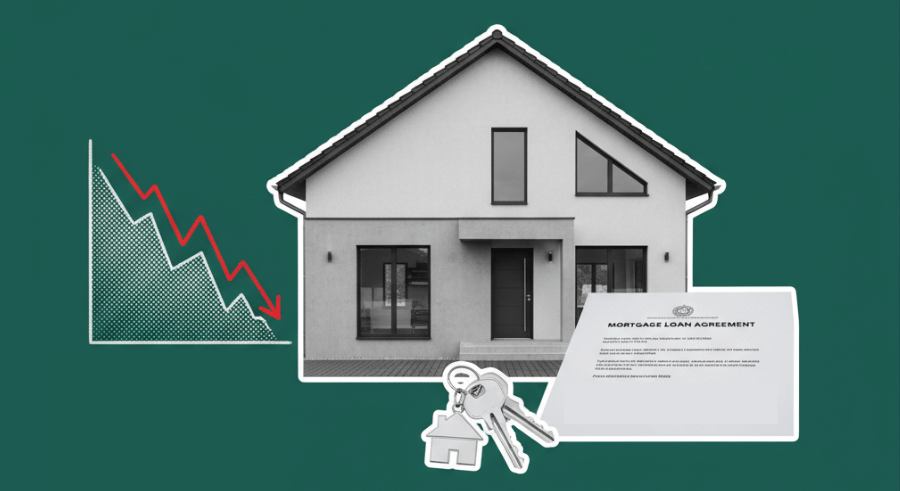
The 2026 Housing Market Slows, Stabilizes and Starts Looking… Normal?
After years of extreme ups, downs and everything in between, the U.S. housing market is entering 2026 with something many professionals barely recognize anymore: balance. Inventory growth has cooled to 10% year over year, a sharp deceleration from the 33% surge seen in mid‑2025. According to fresh analysis from HousingWire, the long-running supply shortage era is giving way to a housing landscape where real demand strength and interest rates—not scarcity—set the tone.
“Year-over-year housing inventory growth has slowed to single digits… 2026 is off and running.” — Logan Mohtashami, HousingWire Lead Analyst
The result? A market that feels less frantic, more seasonal and surprisingly teachable for agents, students and professionals seeking mastery of market behavior. (If you’re studying real estate or expanding your professional license, this is the kind of shift that makes education more valuable than ever—something we’re proud to support at Cameron Academy.)
Demand Takes the Wheel as Scarcity Fades
As 2026 begins, pricing power is increasingly tied to real‑time demand patterns. Buyers are more rate‑sensitive, transaction volumes are thinner and negotiations are back in style. With seasonal predictability returning, the market rewards those who understand timing, strategy and localized decision‑making.
Inventory Growth Slows, Normalcy Strengthens
Inventory is up—but not nearly as explosive as last year. And for the first time since the chaos of 2021, we’re seeing a stable winter bottom forming. Between Jan. 2–9, inventory actually declined, signaling a return to familiar seasonal rhythms.
“We would want the seasonal bottom to happen in February to help affordability and price growth moderation.” — Mohtashami
A February trough would give agents, lenders and builders a predictable runway to plan spring activity—exactly the kind of structural normalcy professionals have been craving.
New Listings: The Real Bottleneck
Despite improving inventory totals, new listings remain stubbornly low. Only 39,007 hit the market the week ending Jan. 9, a 12.6% decline from the previous year. Until new listing activity rebounds to 80,000+ during peak season, true expansion will remain limited.
Goodbye Urgent Bidding, Hello Price Discovery
The median days on market now sits at 91. Nearly 35% of homes have cut their price, while just 2.4% have raised theirs. Negotiation—not bidding wars—is officially the name of the game.
Pending sales—39,841 for the week—are down modestly from 2025, underscoring a calmer, more stable level of market activity.
Rates Shift Psychology and Unlock Demand
With rates hovering closer to 6% than 7%, buyer psychology is shifting. Lower payments and improved move‑up math are coaxing both buyers and sellers back into the market. According to Mohtashami, the Trump administration’s push for housing momentum is also beginning to influence confidence.
What This Means for Industry Pros
Agents & Brokerages
Use returning seasonality to time listings strategically.
Guide buyers through negotiation‑first price dynamics.
Lenders & Mortgage Operators
Frame rate messaging around demand sensitivity.
Use pending sales trends to anticipate volume.
Builders & Developers
Prepare for increased competition from resale supply.
Offer incentives highlighting the new‑vs‑existing value gap.
Investors & Portfolios
Interpret price cuts as normal discovery—not market distress.
Incorporate policy volatility into investment models.
A Moderated Market—Finally
For the first time in years, spreads are normalizing and expected rate cuts are already priced in. After an era defined by extremes, 2026 is shaping into a market where informed professionals thrive—and real estate behaves like real estate again.
If this kind of market insight motivates you to build or advance a real estate career, Cameron Academy offers flexible, affordable programs designed for today’s evolving industry.
Explore local data and the full report at HousingWire:
Getting licensed or staying ahead in your career can be a journey—but it doesn’t have to be overwhelming. Grab your favorite coffee or tea, take a moment to relax, and browse through our articles. Whether you’re just starting out or renewing your expertise, we’ve got tips, insights, and advice to keep you moving forward. Here’s to your success—one sip and one step at a time!
The Real Estate Board of New York (REBNY) has announced a new policy requiring sellers to directly pay the buyer's agent, effective from January 1. This significant shift aims to enhance transparency and address potential conflicts of interest in real estate transactions. The policy comes amidst ongoing lawsuits related to commission sharing and allegations of unethical practices. The implementation of this policy is expected to impact the real estate industry significantly, with sellers needing to factor in the cost of the buyer's agent commission when pricing their properties.
In a significant development, the U.S. Senate has voted to block the implementation of the Consumer Financial Protection Bureau's (CFPB) small business lending rule. This decision has sparked a heated debate over the impact it may have on small businesses across the country. President Biden, in response, has threatened to veto the Senate's decision, emphasizing his commitment to fair lending practices and supporting small businesses. The CFPB's rule, implemented in October 2020, requires lenders to collect and report data on small business lending. This includes information on the race, sex, and ethnicity of borrowers, with the aim of identifying and addressing potential disparities in access to credit for minority-owned and women-owned small businesses. The Senate's decision to block the CFPB's rule has been celebrated by small business advocates and industry groups critical of the CFPB's regulatory approach. However, the implications of this decision remain uncertain, as President Biden's threatened veto looms large.
The world of real estate has recently been shaken by a wave of class-action commission lawsuits, sparking a contentious debate. These lawsuits demand scrutiny to understand their implications and validity. A primary counter-argument is the freedom of consumer choice. In today's digital age, potential buyers and sellers have access to a wealth of online resources, enabling them to undertake real estate transactions independently. Another critical factor is the negotiability of commissions in the real estate sector. Commission rates are not fixed, they are subject to negotiation between the agent and the client. This flexibility allows for open discussions, leading to mutually agreeable terms. Despite the emergence of discount brokerage firms, consumers continue to place their trust in traditional real estate agents. This preference stems not only from cost considerations but also from the value of expertise, guidance, and personalized service that agents offer. Real estate transactions are complex and often involve significant financial investments. Trusted agents provide invaluable insights, market knowledge, and negotiation skills, helping clients make informed decisions and navigate potential challenges confidently.
In the last two years, the housing market has seen a dramatic shift. Soaring mortgage rates and rising home prices have led to the fastest erosion in housing market affordability in modern history, with first-time homebuyers feeling the impact the most. The housing market has undergone significant changes over the past two years, leading to a substantial increase in the income required to purchase a median-priced home. According to recent data from Redfin, a homebuyer must now earn $114,627 to afford the typical U.S. home. This is a 15% increase from the previous year and more than 50% higher than pre-pandemic levels.
The housing market has shown remarkable resilience in the face of rising mortgage rates. Despite rates reaching 8%, new listings data remains steady, indicating a healthy supply of homes for sale. This stability is a positive sign for both buyers and sellers, demonstrating the strength of the housing market. Despite the increase in mortgage rates, sellers in the housing market have maintained their confidence. This confidence is reflected in the steady new listing data, as sellers continue to list their properties without hesitation. It indicates that sellers believe there is still strong demand from buyers and that the potential financial impact of higher mortgage rates does not outweigh the benefits of selling their homes.
The Real Estate Board of New York (REBNY) has introduced a groundbreaking requirement for sellers to directly compensate buyers' agents. This significant change has the potential to transform the real estate industry, eliminating conflicts of interest and promoting a more client-centric approach. This shift in the compensation landscape aims to create a more transparent and trustworthy environment for buyers. Moreover, this shift towards a client-centric approach aligns with the mission and values of Cameron Academy. As a leading provider of real estate education, Cameron Academy is committed to empowering professionals to navigate the evolving industry landscape and prioritize the best interests of their clients.