The 3D Printing Construction Market: A Future of Growth and Innovation
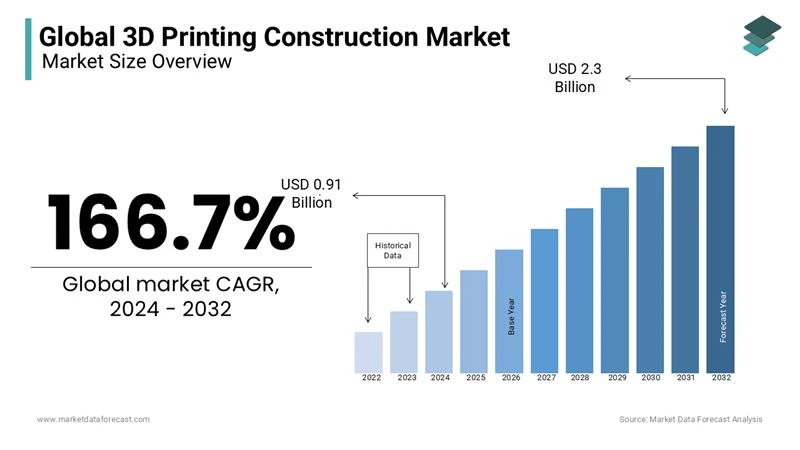
The global 3D printing construction market is on the brink of a remarkable transformation. Currently valued at USD 0.34 billion in 2023, it is projected to surge to USD 910 million by 2024, and ultimately reach USD 2.3 billion by 2032. This rapid expansion is fueled by the sector’s potential to revolutionize traditional building processes through innovative additive manufacturing technologies.
Key Market Trends
The rise of sustainable construction practices is one of the most significant trends driving this market. 3D printing not only reduces material waste but also facilitates the use of eco-friendly materials, a crucial factor as the construction industry seeks to reduce its carbon footprint. Moreover, this technology supports accelerated affordable housing solutions, cutting down both construction times and costs, which is essential in addressing global housing shortages.
Drivers of Market Growth
Labor shortages are a pressing issue in the construction industry, prompting a shift towards 3D printing. With an aging workforce and a scarcity of skilled labor, companies are increasingly turning to automation to reduce labor dependency. Additionally, the growing demand for customized construction projects is encouraging the adoption of 3D printing, allowing for the creation of intricate, tailored designs that cater to urban and cultural needs.
Government support is also playing a pivotal role in market growth. Initiatives like Saudi Arabia’s Vision 2030 and the European Union’s Horizon 2020 program are promoting the use of 3D printing in construction, further bolstering the market’s expansion.
Challenges and Opportunities
Despite its promising advancements, the 3D printing construction market faces challenges such as the high initial capital investment required for equipment and a lack of skilled workforce to operate these technologies. However, opportunities abound, particularly in disaster-relief housing and the integration of 3D printing with smart city initiatives.
Regional Insights
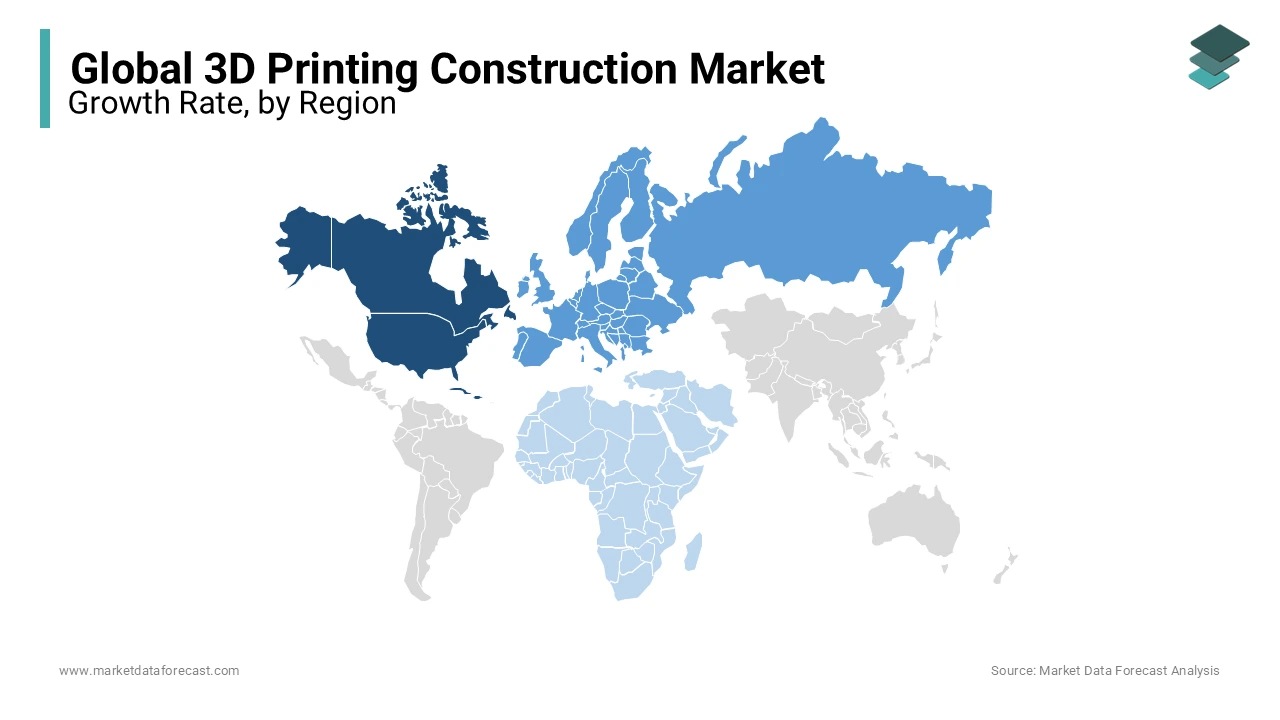
In 2023, North America led the market, holding a 35.8% share, thanks to significant investments and technological advancements. Europe is also experiencing robust growth driven by sustainability initiatives, while Asia-Pacific remains the fastest-growing region due to rapid urbanization and a high demand for affordable housing.
Key Players and Recent Developments
Major companies such as WinSun, Apis Cor, and ICON are at the forefront of exploring new frontiers in 3D construction. Recent advancements include Apis Cor’s development of robotic printers and CyBe Construction’s collaborations in the Middle East for affordable housing projects. The introduction of the BetAbram P1 printer and Sika AG’s innovative concrete mix further highlight the industry’s ongoing efforts towards scalability and sustainability.
Overall, the 3D printing construction market is poised for significant growth, driven by its potential to redefine construction methodologies and effectively meet global demands.
Getting licensed or staying ahead in your career can be a journey—but it doesn’t have to be overwhelming. Grab your favorite coffee or tea, take a moment to relax, and browse through our articles. Whether you’re just starting out or renewing your expertise, we’ve got tips, insights, and advice to keep you moving forward. Here’s to your success—one sip and one step at a time!
Florida homeowners are getting long‑awaited relief this spring as insurance premiums drop across the state, with some counties seeing reductions of up to 14 percent. After years of skyrocketing rates and insurer withdrawals, a series of legislative reforms has attracted new companies, reduced lawsuits, and restored competition—leading to lower costs for more than 330,000 Citizens policyholders and multiple private‑market rate cuts. This shift is boosting not only homeowners, but also Florida’s broader economy and real estate market, offering valuable insights for professionals in real estate, insurance, mortgage, and finance.
Artificial intelligence has transformed real estate marketing by making it easy to generate polished, digitally enhanced listing photos. But as AI tools increasingly replace reality with idealized versions of homes, a new issue has emerged: housefishing. Buyers and renters are showing up to properties that look nothing like the online images, leading regulators to step in and require transparency. With laws like California’s newly enacted Assembly Bill 723, the industry is being pushed toward clearer labeling and ethical use of AI. As trust becomes a growing concern, real estate professionals must balance innovation with accuracy to stay compliant and credible.
Massachusetts has unanimously advanced bill S.2947, a major push to curb housing discrimination by expanding fair housing education requirements for real estate agents. The proposal increases training hours for both current and future licensees and doubles penalties for violations, marking a significant shift toward stronger consumer protections and higher professional standards across the state’s housing market.
Energy costs have moved from a background expense to a major force influencing affordability, property values, and development across the Hudson Valley. Aging housing stock, grid constraints, and rising utility bills are reshaping both residential and commercial real estate decisions—rewarding energy‑efficient properties and pressuring households already struggling to balance essential expenses.
AI is transforming the daily workflow of real estate pros by speeding up marketing, simplifying client communication, and sharpening pricing strategies. As highlighted in an NBC 6 feature, agents are using AI to draft listing descriptions, generate social media content, organize inquiries, and analyze market data in minutes. Whether you're new to the industry or an experienced agent, AI is quickly becoming an essential tool for working smarter and staying competitive.