
The 3D Printing Construction Market: A Future of Growth and Innovation

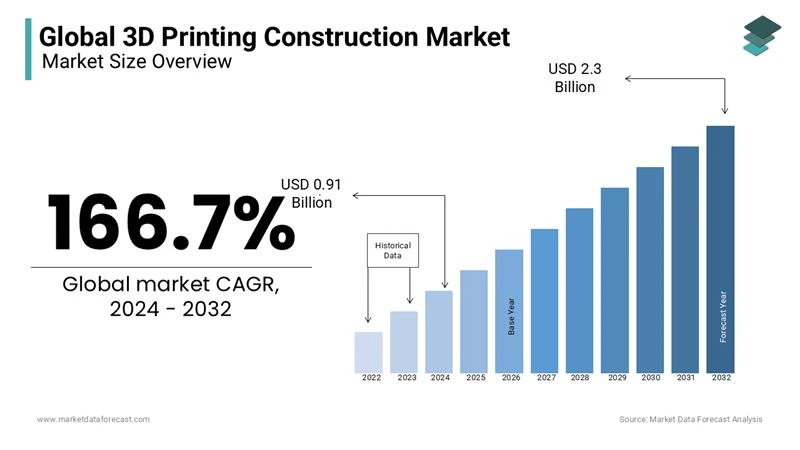
The global 3D printing construction market is on the brink of a remarkable transformation. Currently valued at USD 0.34 billion in 2023, it is projected to surge to USD 910 million by 2024, and ultimately reach USD 2.3 billion by 2032. This rapid expansion is fueled by the sector’s potential to revolutionize traditional building processes through innovative additive manufacturing technologies.
The global 3d printing construction market is predicted to be worth usd 2. 3 bn by 2032.
Key Market Trends The rise of sustainable construction practices is one of the most significant trends driving this market. 3D printing not only reduces material waste but also facilitates the use of eco-friendly materials, a crucial factor as the construction industry seeks to reduce its carbon footprint. Moreover, this technology supports accelerated affordable housing solutions, cutting down both construction times and costs, which is essential in addressing global housing shortages.
Drivers of Market Growth Labor shortages are a pressing issue in the construction industry, prompting a shift towards 3D printing. With an aging workforce and a scarcity of skilled labor, companies are increasingly turning to automation to reduce labor dependency. Additionally, the growing demand for customized construction projects is encouraging the adoption of 3D printing, allowing for the creation of intricate, tailored designs that cater to urban and cultural needs.
Government support is also playing a pivotal role in market growth. Initiatives like Saudi Arabia’s Vision 2030 and the European Union’s Horizon 2020 program are promoting the use of 3D printing in construction, further bolstering the market’s expansion.
Challenges and Opportunities Despite its promising advancements, the 3D printing construction market faces challenges such as the high initial capital investment required for equipment and a lack of skilled workforce to operate these technologies. However, opportunities abound, particularly in disaster-relief housing and the integration of 3D printing with smart city initiatives.
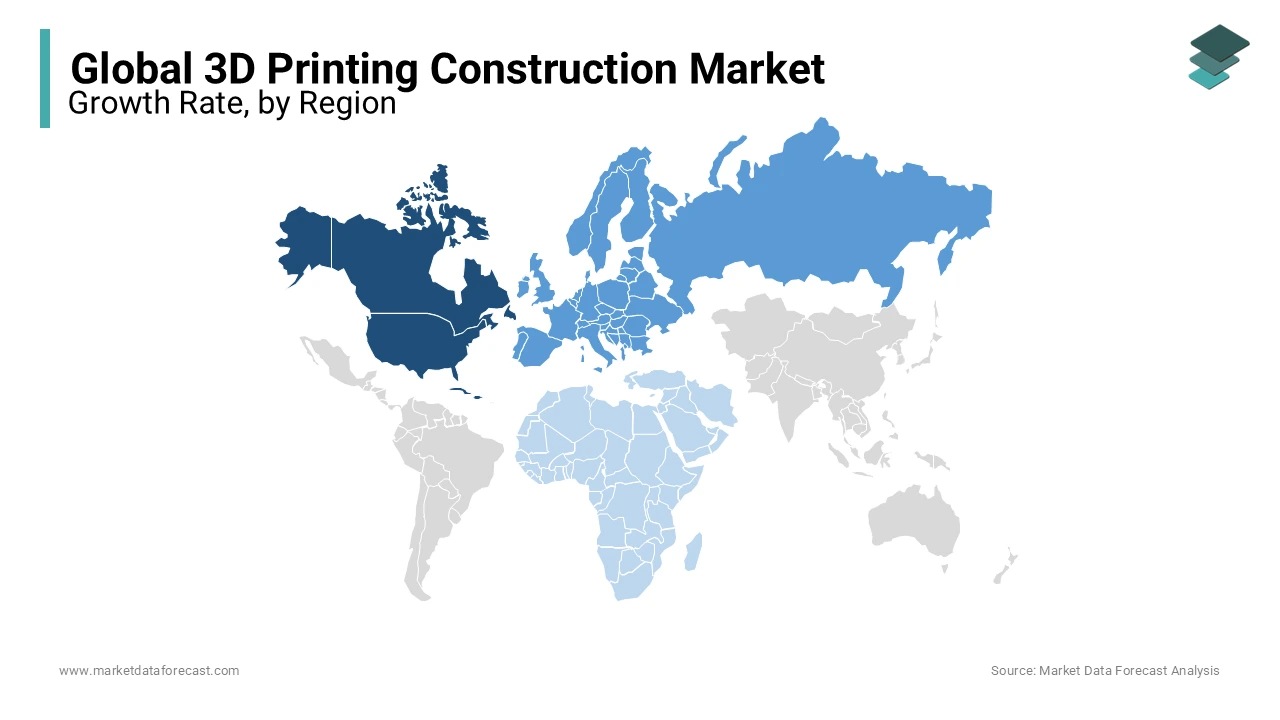
Regional Insights In 2023, North America led the market, holding a 35.8% share, thanks to significant investments and technological advancements. Europe is also experiencing robust growth driven by sustainability initiatives, while Asia-Pacific remains the fastest-growing region due to rapid urbanization and a high demand for affordable housing.
Geographically, north america is the most dominating regional segment in the global market.
Key Players and Recent Developments Major companies such as WinSun, Apis Cor, and ICON are at the forefront of exploring new frontiers in 3D construction. Recent advancements include Apis Cor’s development of robotic printers and CyBe Construction’s collaborations in the Middle East for affordable housing projects. The introduction of the BetAbram P1 printer and Sika AG’s innovative concrete mix further highlight the industry’s ongoing efforts towards scalability and sustainability.
Overall, the 3D printing construction market is poised for significant growth, driven by its potential to redefine construction methodologies and effectively meet global demands.

More Articles

Getting licensed or staying ahead in your career can be a journey—but it doesn’t have to be overwhelming. Grab your favorite coffee or tea, take a moment to relax, and browse through our articles. Whether you’re just starting out or renewing your expertise, we’ve got tips, insights, and advice to keep you moving forward. Here’s to your success—one sip and one step at a time!

Biden Unveils New Student Debt Relief Plan Aiming for Long-term Impact

President Joe Biden has unveiled a comprehensive plan aimed at providing relief to millions of borrowers, seeking to cancel accrued interest for 23 million borrowers, completely eliminate student loan debt for 4 million individuals, and offer at least $5,000 in relief for over 10 million more.

By |October 19, 2024|Categories: Article, Education, Politics|Tags: , |0 Comments

The 2025 Commercial Real Estate Outlook: Navigating Change and Embracing Innovation

The Deloitte report emphasizes the importance of adaptability and innovation. As consumer expectations evolve, real estate leaders are encouraged to leverage technology and sustainable practices to meet these demands.

California’s Housing Crisis: Innovative Solutions and Collaborative Efforts

California's housing crisis is an ongoing challenge, but recent innovations and collaborative efforts offer a glimmer of hope. The Chan Zuckerberg Initiative outlines seven transformative approaches to rebuilding the state's housing system, emphasizing affordability and community inclusion.

By |October 19, 2024|Categories: Affordable Housing, Article, Housing|Tags: , |0 Comments

2024 Dallas Housing Market: Resilience, Trends, and Opportunities

As we delve into 2024, the Dallas housing market remains a hot topic among real estate enthusiasts and potential homeowners. Known for its economic vigor and cultural diversity, Dallas is an attractive hub for new residents, offering diverse job opportunities and a vibrant community life. This year, staying informed about market dynamics is key for anyone looking to buy, sell, or invest in real estate.

Florida’s Legislative Response to Medicaid During COVID-19

In the midst of the COVID-19 pandemic, significant legislative measures have been enacted in Florida to address the challenges faced by Medicaid recipients. Since the onset of the national public health emergency on January 27, 2020, Medicaid eligibility protections have been a focal point, ensuring that recipients do not lose coverage during these trying times.


By |October 18, 2024|Categories: Article, COVID-19 Response, Health Policy|Tags: , |0 Comments