The 3D Printing Construction Market: A Future of Growth and Innovation
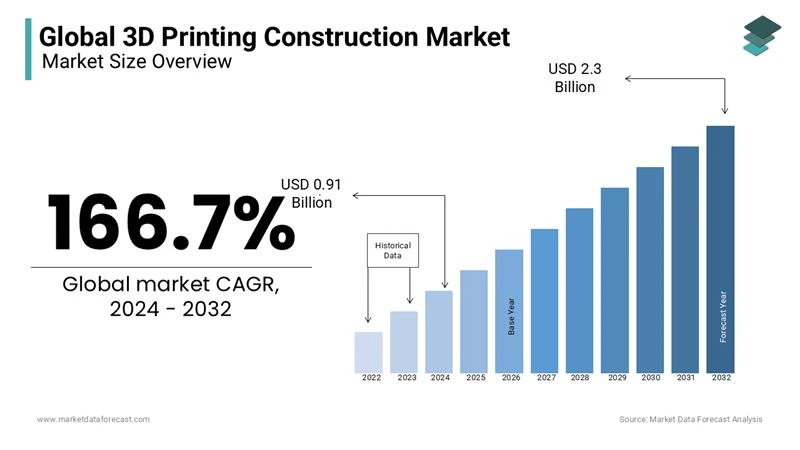
The global 3D printing construction market is on the brink of a remarkable transformation. Currently valued at USD 0.34 billion in 2023, it is projected to surge to USD 910 million by 2024, and ultimately reach USD 2.3 billion by 2032. This rapid expansion is fueled by the sector’s potential to revolutionize traditional building processes through innovative additive manufacturing technologies.
Key Market Trends
The rise of sustainable construction practices is one of the most significant trends driving this market. 3D printing not only reduces material waste but also facilitates the use of eco-friendly materials, a crucial factor as the construction industry seeks to reduce its carbon footprint. Moreover, this technology supports accelerated affordable housing solutions, cutting down both construction times and costs, which is essential in addressing global housing shortages.
Drivers of Market Growth
Labor shortages are a pressing issue in the construction industry, prompting a shift towards 3D printing. With an aging workforce and a scarcity of skilled labor, companies are increasingly turning to automation to reduce labor dependency. Additionally, the growing demand for customized construction projects is encouraging the adoption of 3D printing, allowing for the creation of intricate, tailored designs that cater to urban and cultural needs.
Government support is also playing a pivotal role in market growth. Initiatives like Saudi Arabia’s Vision 2030 and the European Union’s Horizon 2020 program are promoting the use of 3D printing in construction, further bolstering the market’s expansion.
Challenges and Opportunities
Despite its promising advancements, the 3D printing construction market faces challenges such as the high initial capital investment required for equipment and a lack of skilled workforce to operate these technologies. However, opportunities abound, particularly in disaster-relief housing and the integration of 3D printing with smart city initiatives.
Regional Insights
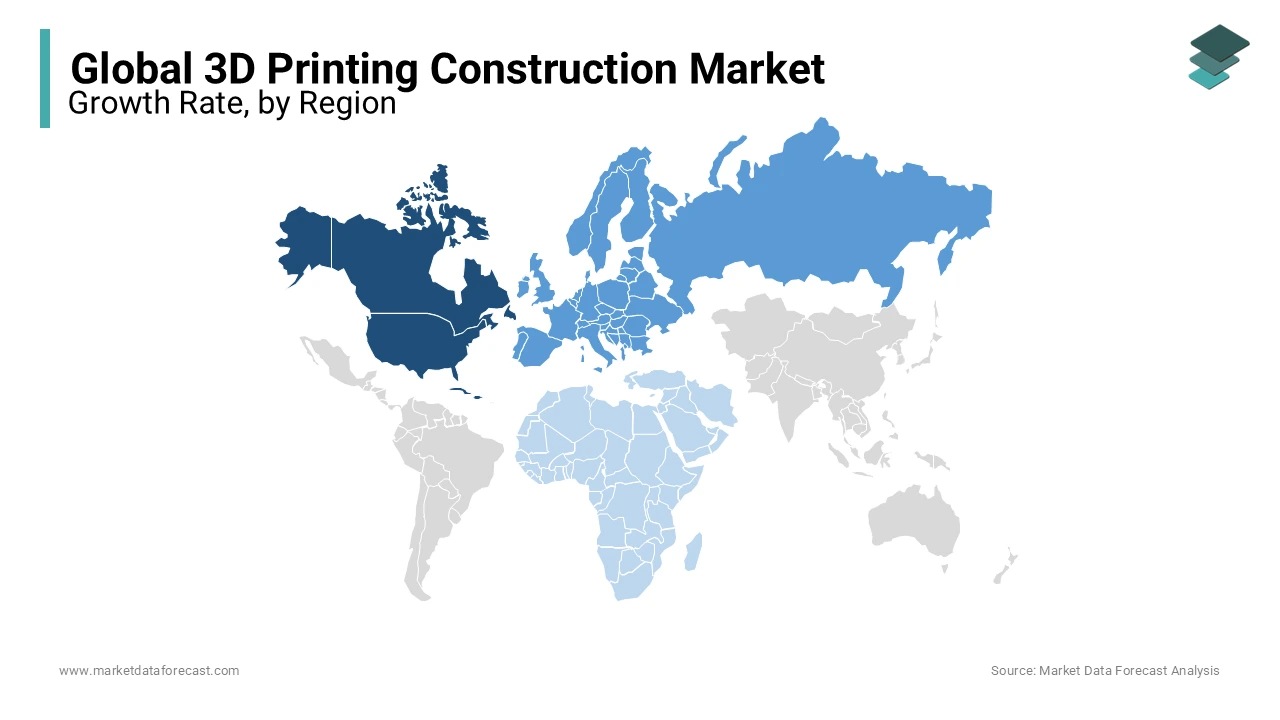
In 2023, North America led the market, holding a 35.8% share, thanks to significant investments and technological advancements. Europe is also experiencing robust growth driven by sustainability initiatives, while Asia-Pacific remains the fastest-growing region due to rapid urbanization and a high demand for affordable housing.
Key Players and Recent Developments
Major companies such as WinSun, Apis Cor, and ICON are at the forefront of exploring new frontiers in 3D construction. Recent advancements include Apis Cor’s development of robotic printers and CyBe Construction’s collaborations in the Middle East for affordable housing projects. The introduction of the BetAbram P1 printer and Sika AG’s innovative concrete mix further highlight the industry’s ongoing efforts towards scalability and sustainability.
Overall, the 3D printing construction market is poised for significant growth, driven by its potential to redefine construction methodologies and effectively meet global demands.
More Articles
Getting licensed or staying ahead in your career can be a journey—but it doesn’t have to be overwhelming. Grab your favorite coffee or tea, take a moment to relax, and browse through our articles. Whether you’re just starting out or renewing your expertise, we’ve got tips, insights, and advice to keep you moving forward. Here’s to your success—one sip and one step at a time!
In a landmark decision, the court has preliminarily approved settlement agreements in the commission lawsuits involving real estate companies RE/MAX and Anywhere Real Estate. The agreements require RE/MAX to pay $55 million and Anywhere Real Estate to pay $83.5 million. As part of the settlements, both companies will implement significant policy and practice changes, including the elimination of the requirement for agents to be members of the National Association of Realtors. This change will provide agents with more flexibility and independence in their business practices. The settlements have far-reaching implications for the real estate industry, fostering a more dynamic and customer-centric real estate market.
The housing market saw a remarkable increase in housing starts and permits in October, pointing to a positive industry trend. This surge suggests a growing demand among Americans for homeownership, prompting builders to respond by ramping up their construction efforts. However, builder confidence has been somewhat dampened by elevated mortgage rates. The housing market's performance varied across different regions in the United States, highlighting the diverse nature of the housing market and the various factors influencing construction trends.
CUSO Home Lending has implemented Dark Matter Technologies' advanced Empower loan origination system, revolutionizing the credit union lending process. The Empower system streamlines loan applications, automates document collection and verification, and facilitates seamless communication between borrowers, loan officers, and underwriters. With robust security measures and full compliance with industry regulations, the system ensures the protection of sensitive information. This move highlights the importance of embracing digital transformation in the lending industry.
United Wholesale Mortgage (UWM), a leading wholesale lender in the mortgage industry, has launched a new initiative offering no-cost appraisals on 1-0 temporary rate buydowns. This strategic move aims to attract more brokers by covering up to $600 of the appraisal cost on all conventional and government-backed home loans. Temporary rate buydowns allow borrowers to pay a lower mortgage rate during the initial period of their loans, making homeownership more affordable. This limited-time opportunity until March 31 provides brokers with a unique value proposition for their clients. Ready to explore the benefits of UWM's temporary rate buydowns and no-cost appraisals? Connect with UWM today.
Mark Willis has made a significant leadership change by returning as the CEO of Keller Williams, a leading player in the real estate industry. This news marks a triumphant comeback for Willis, who previously served as the CEO of Keller Williams from 2005 to 2014. Armed with extensive experience and a proven track record, Willis aims to steer Keller Williams towards continued success and navigate the challenges facing the real estate industry. This article will delve into Willis' career history, the growth of Keller Williams under his leadership, and the current landscape of the real estate market.
A recent lawsuit in Texas has sent shockwaves through the real estate industry, shedding light on alleged collusion among individual brokers, real estate teams, and large corporate brokerages. The lawsuit, filed by the QJ Team and other plaintiffs, accuses these entities of artificially inflating real estate agent commissions. The real estate industry has been rocked by a series of commission lawsuits in recent years, but the QJ Team lawsuit stands out due to its comprehensive list of defendants. The QJ Team lawsuit alleges that the defendants engaged in collusion to artificially inflate real estate agent commissions, thereby restricting competition and harming consumers. The plaintiffs claim that these entities conspired to set and maintain high commission rates, limiting the ability of homebuyers and sellers to negotiate fair prices. If proven true, these allegations could have far-reaching consequences for the real estate industry in Texas.