The 3D Printing Construction Market: A Future of Growth and Innovation
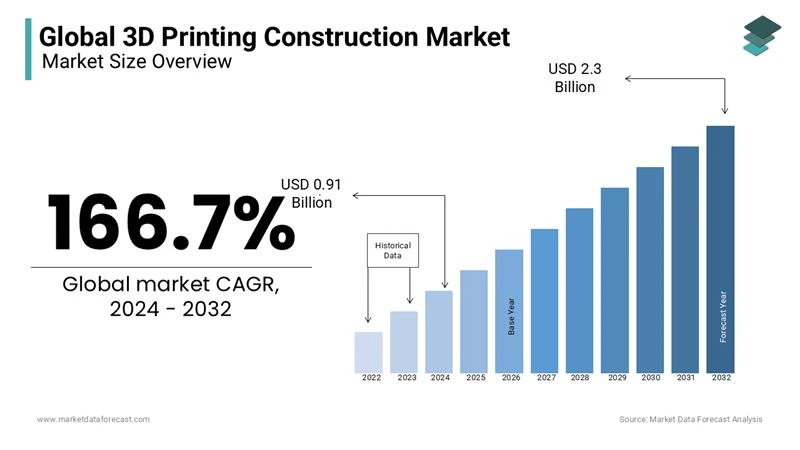
The global 3D printing construction market is on the brink of a remarkable transformation. Currently valued at USD 0.34 billion in 2023, it is projected to surge to USD 910 million by 2024, and ultimately reach USD 2.3 billion by 2032. This rapid expansion is fueled by the sector’s potential to revolutionize traditional building processes through innovative additive manufacturing technologies.
Key Market Trends
The rise of sustainable construction practices is one of the most significant trends driving this market. 3D printing not only reduces material waste but also facilitates the use of eco-friendly materials, a crucial factor as the construction industry seeks to reduce its carbon footprint. Moreover, this technology supports accelerated affordable housing solutions, cutting down both construction times and costs, which is essential in addressing global housing shortages.
Drivers of Market Growth
Labor shortages are a pressing issue in the construction industry, prompting a shift towards 3D printing. With an aging workforce and a scarcity of skilled labor, companies are increasingly turning to automation to reduce labor dependency. Additionally, the growing demand for customized construction projects is encouraging the adoption of 3D printing, allowing for the creation of intricate, tailored designs that cater to urban and cultural needs.
Government support is also playing a pivotal role in market growth. Initiatives like Saudi Arabia’s Vision 2030 and the European Union’s Horizon 2020 program are promoting the use of 3D printing in construction, further bolstering the market’s expansion.
Challenges and Opportunities
Despite its promising advancements, the 3D printing construction market faces challenges such as the high initial capital investment required for equipment and a lack of skilled workforce to operate these technologies. However, opportunities abound, particularly in disaster-relief housing and the integration of 3D printing with smart city initiatives.
Regional Insights
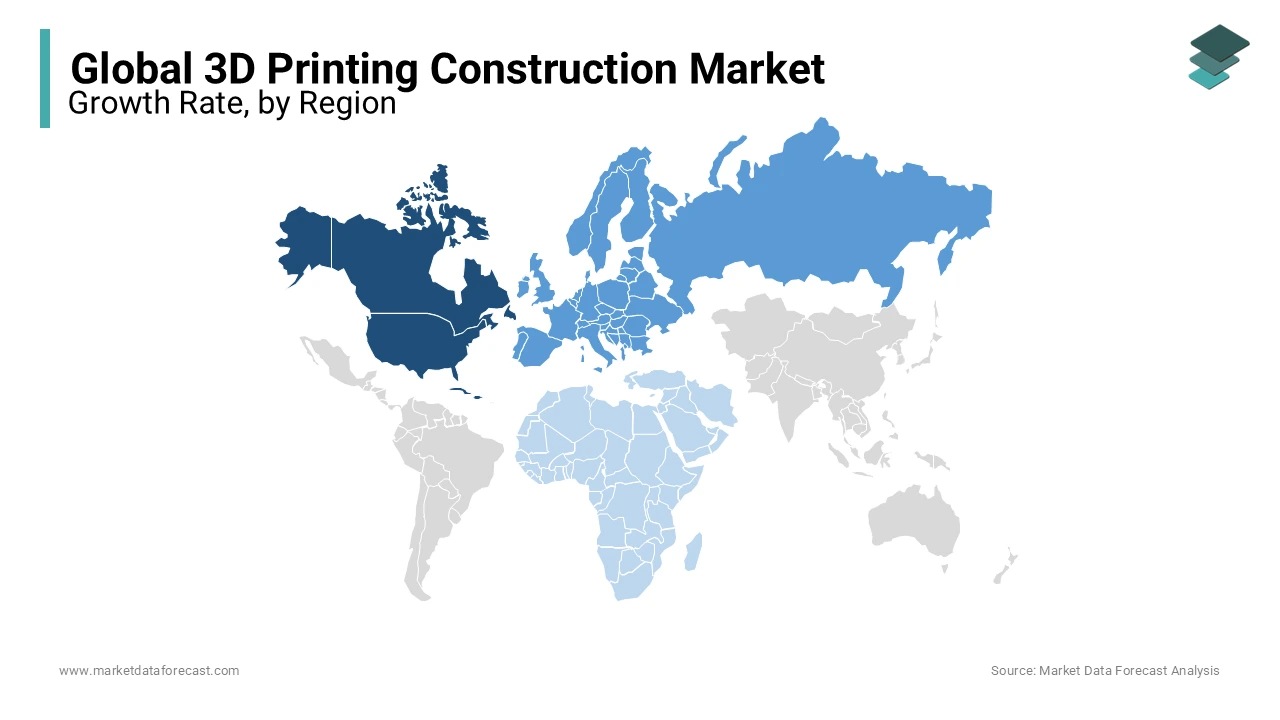
In 2023, North America led the market, holding a 35.8% share, thanks to significant investments and technological advancements. Europe is also experiencing robust growth driven by sustainability initiatives, while Asia-Pacific remains the fastest-growing region due to rapid urbanization and a high demand for affordable housing.
Key Players and Recent Developments
Major companies such as WinSun, Apis Cor, and ICON are at the forefront of exploring new frontiers in 3D construction. Recent advancements include Apis Cor’s development of robotic printers and CyBe Construction’s collaborations in the Middle East for affordable housing projects. The introduction of the BetAbram P1 printer and Sika AG’s innovative concrete mix further highlight the industry’s ongoing efforts towards scalability and sustainability.
Overall, the 3D printing construction market is poised for significant growth, driven by its potential to redefine construction methodologies and effectively meet global demands.
More Articles
Getting licensed or staying ahead in your career can be a journey—but it doesn’t have to be overwhelming. Grab your favorite coffee or tea, take a moment to relax, and browse through our articles. Whether you’re just starting out or renewing your expertise, we’ve got tips, insights, and advice to keep you moving forward. Here’s to your success—one sip and one step at a time!
After years of soaring premiums and insurer instability, Florida’s property insurance market is finally turning a corner. Major carriers have filed 83 requests for rate decreases heading into 2026, with companies like Florida Peninsula and Patriot Select proposing cuts of 8.4% and 11.3%. Some homeowners may see relief as early as next month, signaling a long‑awaited shift toward market stability.
Fix-and-flip investing is gearing up for one of its strongest years in a decade as 2026 approaches. With cheaper capital, more accessible funding, easing interest rates, and long-awaited increases in housing inventory, investors are finding the perfect environment to launch or scale renovation-based real estate businesses. Renovation continues to outpace new construction in cost and speed, and demand for move-in-ready homes remains high, making 2026 a powerful opportunity window for both new and experienced investors.
After a short-lived period of relief in 2025, the U.S. rental market may be headed for a tighter, more expensive 2026. With construction starts dropping nearly 11% and completions plunging 42%, the surge of new apartments that helped lower rents is rapidly drying up. Rising costs, shrinking inventory, and a slowdown in new development point to a potential rental crunch that could leave renters facing heavier competition and higher prices across major markets next year.
The commercial real estate market is entering a rare reset that experts say mirrors the post‑2008 boom, creating a potential window for disciplined investors. With trillions in commercial debt coming due and property values dropping up to 40%, firms like AARE are positioning themselves to acquire assets below replacement cost—an advantage that could set the stage for significant long‑term growth.
Commercial real estate is entering a reinvention phase, with AI‑driven productivity, modernized office demand, experience‑focused retail, expanding industrial logistics, creative housing solutions, and sustainability‑centered design all accelerating nationwide. These six forces are shaping how investors, brokers, and future licensees will operate in a rapidly evolving U.S. market.
After years of economic uncertainty and cautious decision‑making, 2026 is shaping up to be the year professionals finally catch a break. AI is moving from buzzword to essential tool, capital markets are beginning to thaw, and hiring is picking up across real estate, mortgage, insurance, finance, and healthcare. With opportunity returning, many professionals are using this moment to upskill—pursuing new licenses, certifications, and cross‑industry expertise.