The 3D Printing Construction Market: A Future of Growth and Innovation
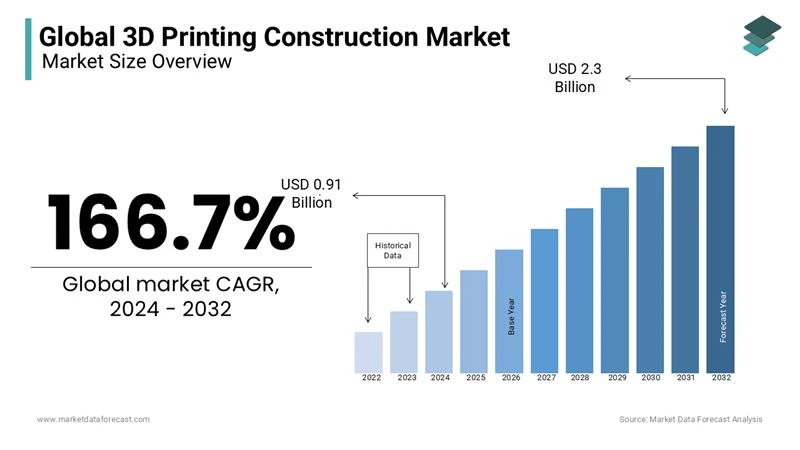
The global 3D printing construction market is on the brink of a remarkable transformation. Currently valued at USD 0.34 billion in 2023, it is projected to surge to USD 910 million by 2024, and ultimately reach USD 2.3 billion by 2032. This rapid expansion is fueled by the sector’s potential to revolutionize traditional building processes through innovative additive manufacturing technologies.
Key Market Trends
The rise of sustainable construction practices is one of the most significant trends driving this market. 3D printing not only reduces material waste but also facilitates the use of eco-friendly materials, a crucial factor as the construction industry seeks to reduce its carbon footprint. Moreover, this technology supports accelerated affordable housing solutions, cutting down both construction times and costs, which is essential in addressing global housing shortages.
Drivers of Market Growth
Labor shortages are a pressing issue in the construction industry, prompting a shift towards 3D printing. With an aging workforce and a scarcity of skilled labor, companies are increasingly turning to automation to reduce labor dependency. Additionally, the growing demand for customized construction projects is encouraging the adoption of 3D printing, allowing for the creation of intricate, tailored designs that cater to urban and cultural needs.
Government support is also playing a pivotal role in market growth. Initiatives like Saudi Arabia’s Vision 2030 and the European Union’s Horizon 2020 program are promoting the use of 3D printing in construction, further bolstering the market’s expansion.
Challenges and Opportunities
Despite its promising advancements, the 3D printing construction market faces challenges such as the high initial capital investment required for equipment and a lack of skilled workforce to operate these technologies. However, opportunities abound, particularly in disaster-relief housing and the integration of 3D printing with smart city initiatives.
Regional Insights
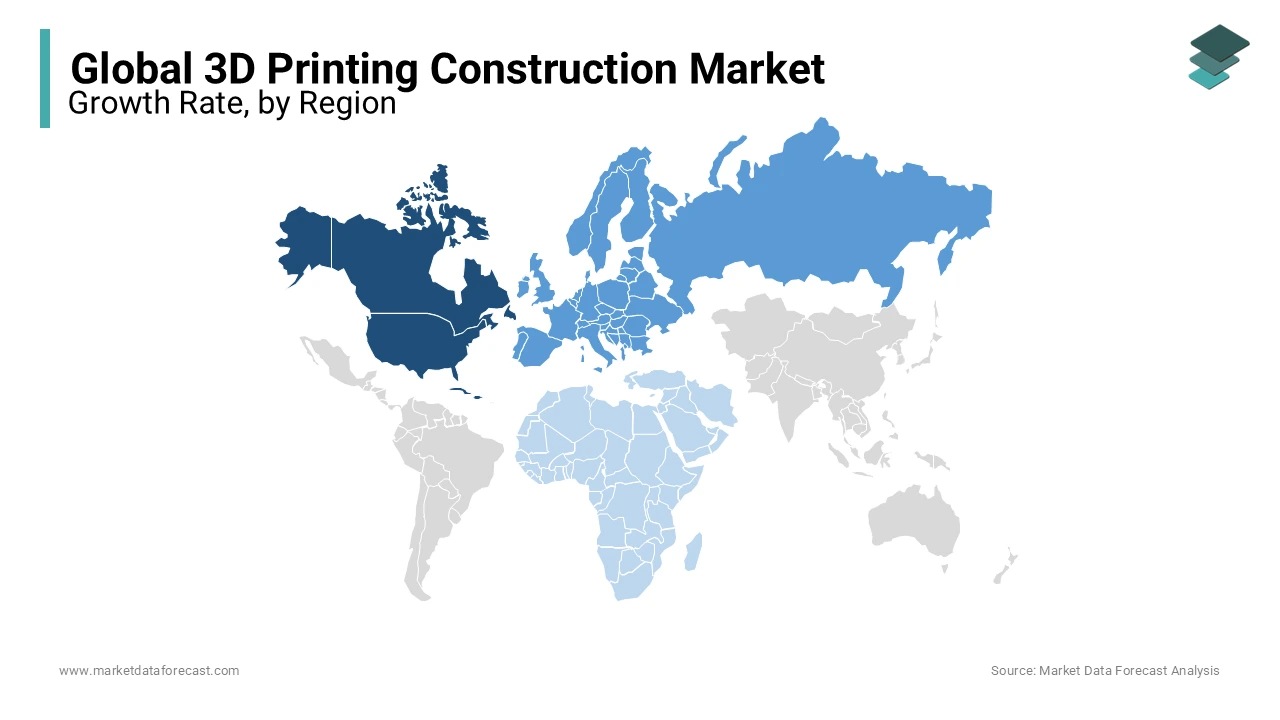
In 2023, North America led the market, holding a 35.8% share, thanks to significant investments and technological advancements. Europe is also experiencing robust growth driven by sustainability initiatives, while Asia-Pacific remains the fastest-growing region due to rapid urbanization and a high demand for affordable housing.
Key Players and Recent Developments
Major companies such as WinSun, Apis Cor, and ICON are at the forefront of exploring new frontiers in 3D construction. Recent advancements include Apis Cor’s development of robotic printers and CyBe Construction’s collaborations in the Middle East for affordable housing projects. The introduction of the BetAbram P1 printer and Sika AG’s innovative concrete mix further highlight the industry’s ongoing efforts towards scalability and sustainability.
Overall, the 3D printing construction market is poised for significant growth, driven by its potential to redefine construction methodologies and effectively meet global demands.
More Articles
Getting licensed or staying ahead in your career can be a journey—but it doesn’t have to be overwhelming. Grab your favorite coffee or tea, take a moment to relax, and browse through our articles. Whether you’re just starting out or renewing your expertise, we’ve got tips, insights, and advice to keep you moving forward. Here’s to your success—one sip and one step at a time!
Commercial real estate deal activity dipped in October for the first time since early 2024, signaling a widening disconnect between buyer and seller pricing expectations in a high‑rate environment. While overall sales remain strong—and even above 2024 levels—the sharp slowdown in momentum highlights rising caution across sectors. Multifamily saw a steep 27% drop in volume, hospitality was the lone sector to grow, and institutional buyers are increasingly targeting discounted office assets. With mortgage originations rebounding but lenders staying selective, 2026 will hinge on how quickly the market aligns on pricing and capital costs.
New Vanguard research reveals that the real impact of financial advisors goes far beyond market performance. Investors say the greatest value comes from peace of mind, personalized planning, emotional reassurance, and the time saved by having a trusted expert manage their financial life. The study highlights a major shift in what clients truly want: confidence, clarity, and guidance that aligns with their personal definition of financial success.
U.S. self‑storage deals surged nearly $1.6 billion in Q3 2025, marking a 62% year‑over‑year jump and the sector’s strongest resurgence in years. REITs paid steep premiums to lock down top‑tier, land‑restricted markets, while states like Florida, California, and Georgia led all sales. New York City dominated with record‑high pricing of $526 per square foot, underscoring the asset class’s resilience and the renewed appetite for specialty commercial investments heading into 2026.
Nearly half a million Florida homeowners are finally seeing relief as Citizens Insurance plans to reduce premiums by up to 11%. After years of rising costs and limited coverage options, the insurer’s shrinking policy load and reduced risk are allowing meaningful savings—averaging about $400 per year for most customers. With several private carriers also lowering rates, experts say this could mark the beginning of a long‑needed stabilization in Florida’s insurance and real estate markets.
Colorado heads into 2026 with steady economic strength despite slowing population growth. The latest forecast from the Leeds School of Business projects 17,500 new jobs, rising incomes, and GDP growth outpacing the national average. Most major industries will expand, even as migration slows and labor shortages persist.
Layoffs across tech, energy, retail, aviation, and education are redefining the 2025 workforce as companies cut costs and accelerate their adoption of AI. Major employers like Amazon, Meta, UPS, and Chevron are restructuring thousands of roles, signaling one of the most significant employment shifts in years. But while traditional positions shrink, demand is rising in fields tied to AI, data, cybersecurity, compliance, and licensed professions. For workers willing to reskill or pivot—especially into areas like real estate, insurance, finance, or other certification‑based careers—new opportunities continue to grow despite the turbulence.