The 3D Printing Construction Market: A Future of Growth and Innovation
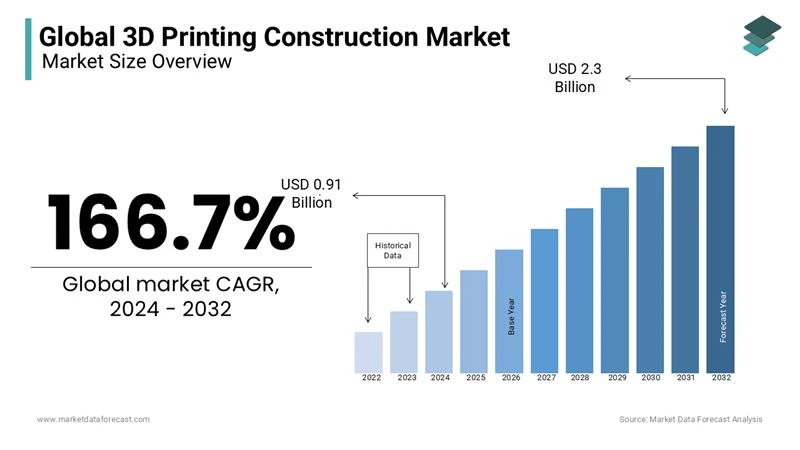
The global 3D printing construction market is on the brink of a remarkable transformation. Currently valued at USD 0.34 billion in 2023, it is projected to surge to USD 910 million by 2024, and ultimately reach USD 2.3 billion by 2032. This rapid expansion is fueled by the sector’s potential to revolutionize traditional building processes through innovative additive manufacturing technologies.
Key Market Trends
The rise of sustainable construction practices is one of the most significant trends driving this market. 3D printing not only reduces material waste but also facilitates the use of eco-friendly materials, a crucial factor as the construction industry seeks to reduce its carbon footprint. Moreover, this technology supports accelerated affordable housing solutions, cutting down both construction times and costs, which is essential in addressing global housing shortages.
Drivers of Market Growth
Labor shortages are a pressing issue in the construction industry, prompting a shift towards 3D printing. With an aging workforce and a scarcity of skilled labor, companies are increasingly turning to automation to reduce labor dependency. Additionally, the growing demand for customized construction projects is encouraging the adoption of 3D printing, allowing for the creation of intricate, tailored designs that cater to urban and cultural needs.
Government support is also playing a pivotal role in market growth. Initiatives like Saudi Arabia’s Vision 2030 and the European Union’s Horizon 2020 program are promoting the use of 3D printing in construction, further bolstering the market’s expansion.
Challenges and Opportunities
Despite its promising advancements, the 3D printing construction market faces challenges such as the high initial capital investment required for equipment and a lack of skilled workforce to operate these technologies. However, opportunities abound, particularly in disaster-relief housing and the integration of 3D printing with smart city initiatives.
Regional Insights
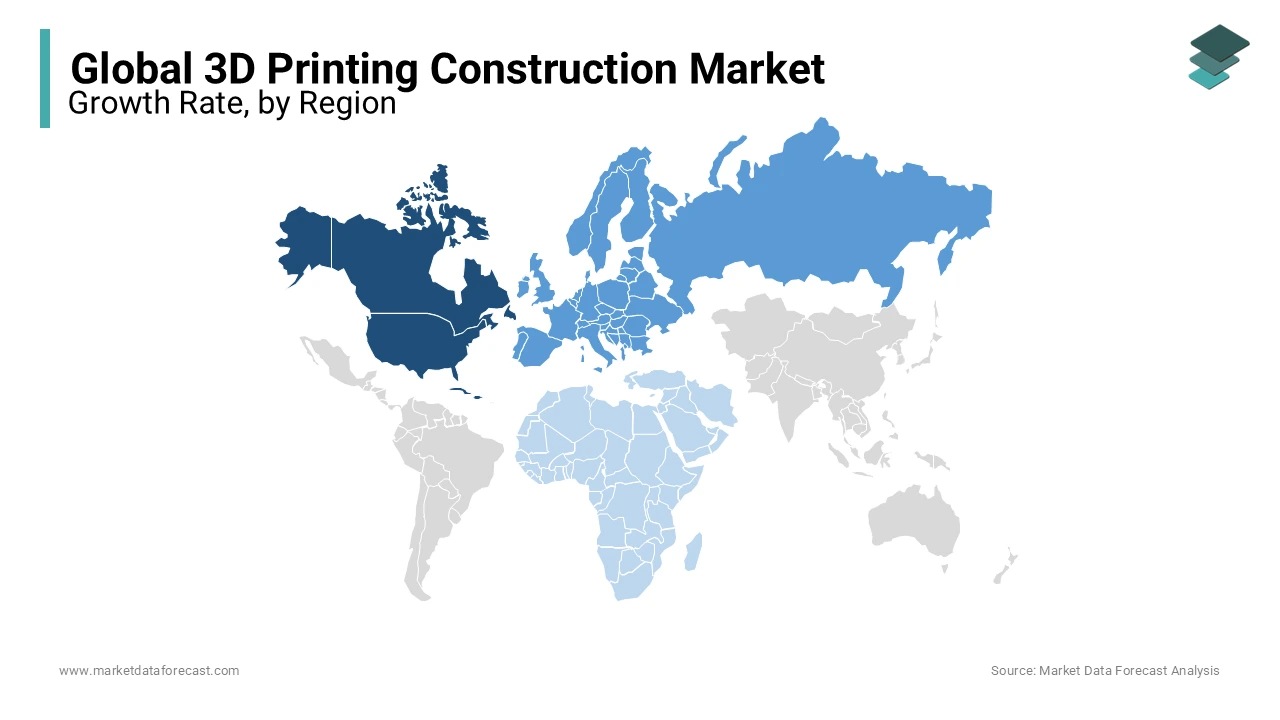
In 2023, North America led the market, holding a 35.8% share, thanks to significant investments and technological advancements. Europe is also experiencing robust growth driven by sustainability initiatives, while Asia-Pacific remains the fastest-growing region due to rapid urbanization and a high demand for affordable housing.
Key Players and Recent Developments
Major companies such as WinSun, Apis Cor, and ICON are at the forefront of exploring new frontiers in 3D construction. Recent advancements include Apis Cor’s development of robotic printers and CyBe Construction’s collaborations in the Middle East for affordable housing projects. The introduction of the BetAbram P1 printer and Sika AG’s innovative concrete mix further highlight the industry’s ongoing efforts towards scalability and sustainability.
Overall, the 3D printing construction market is poised for significant growth, driven by its potential to redefine construction methodologies and effectively meet global demands.
More Articles
Getting licensed or staying ahead in your career can be a journey—but it doesn’t have to be overwhelming. Grab your favorite coffee or tea, take a moment to relax, and browse through our articles. Whether you’re just starting out or renewing your expertise, we’ve got tips, insights, and advice to keep you moving forward. Here’s to your success—one sip and one step at a time!
Artificial intelligence is accelerating across the real estate industry, bringing new productivity platforms, smarter MLS systems, cleaner data tools, and AI‑powered consumer guidance. From United Real Estate’s BullseyeAI assistant to Zillow’s integration with Google NotebookLM and major MLS restructures, technology is rapidly reshaping how agents research properties, communicate with clients, and manage daily workflows. For future and current professionals, understanding these tools isn’t optional—it's becoming the new foundation for a competitive real estate career.
A sweeping Treasury Department rule has activated the first nationwide anti–money laundering requirements for residential real estate, forcing professionals involved in closings and settlements to report certain non‑financed property transfers. The move closes long‑standing loopholes that allowed criminals, corrupt officials, and foreign adversaries to hide illicit funds in U.S. housing. Backed by recent federal court decisions, the rule positions the U.S. as a global leader in financial transparency—and signals that commercial real estate may be next. For today’s real estate professionals, staying compliant is becoming just as essential as understanding the market itself.
United Real Estate has introduced BullseyeAI, a fully integrated AI platform designed to help agents cut overhead, automate daily tasks, and reclaim valuable time. Powered by a proprietary large‑language‑model system, BullseyeAI blends dashboards, navigation, voice commands, and automated assistants into one intelligent workspace. With AI agents like Sofie and Rosie managing client nurturing, recruiting workflows, marketing, data handling, and more, the platform marks a major leap toward faster, smarter productivity for real estate professionals.
Boynton Beach residents are reeling after a new city ordinance began issuing fines to homeowners for parking on their own property—unless the vehicle sits on an official driveway. The rule bans parking on grass or unpaved areas, shocking families who’ve parked the same way for years. With fines starting at 25 dollars per car and rising if unpaid, many residents say the sudden crackdown is unfair and financially burdensome, sparking a heated debate over property rights and local government authority.
From AI assistants like United’s BullseyeAI to MLS upgrades rolling out across the country, real estate professionals are entering a new tech‑driven era. This week’s highlights include smarter productivity tools, unified MLS systems, enhanced data access, and even AI‑powered buyer education through Zillow’s new NotebookLM partnership. Whether you’re a seasoned broker or preparing for your license exam, these innovations show how rapidly the industry is evolving—and why staying informed is becoming essential for success.
Artificial intelligence is rapidly moving from a helpful tool to a central force inside real estate transactions, MLS systems, and agent workflows. As AI reshapes everything from listing photos to data distribution, MLSs, regulators, and brokerages are racing to set clear rules that protect consumers and reduce legal risks. With new laws, updated agreements, and rising debates over who should regulate AI, the industry is confronting a defining moment—one that every current and future real estate professional must understand.