The AI Revolution in Dermatology: A Systematic Review
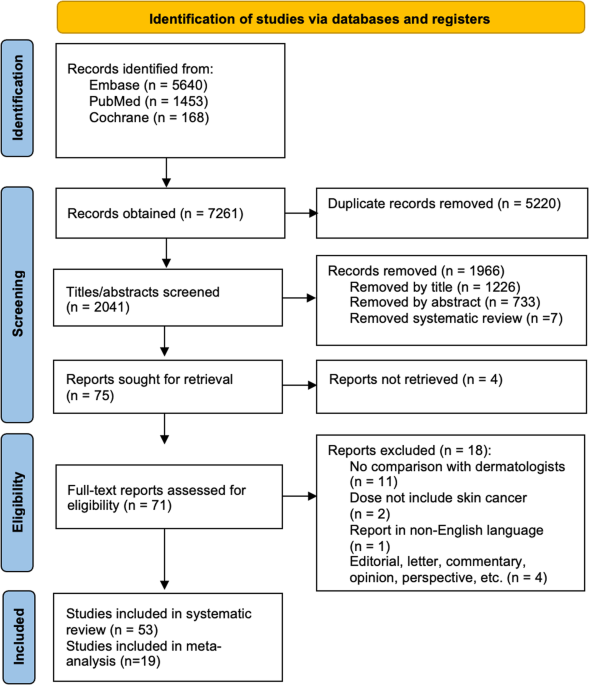
In a groundbreaking study published in Nature, researchers have delved into the burgeoning field of artificial intelligence (AI) in dermatology, specifically examining its role in diagnosing skin cancer. The study, titled “A Systematic Review and Meta-Analysis of Artificial Intelligence Versus Clinicians for Skin Cancer Diagnosis,” offers a comprehensive look at how AI stacks up against human clinicians in this critical area of healthcare.
The research highlights a significant trend: AI is rapidly becoming a valuable tool in dermatology, offering diagnostic capabilities that rival those of experienced dermatologists. The study’s findings are based on a meticulous systematic review and meta-analysis of numerous studies that compare AI algorithms with clinicians in diagnosing skin cancer.
AI’s Diagnostic Performance
The study reveals that AI algorithms demonstrate comparable sensitivity and specificity to dermatologists. This finding is particularly noteworthy as it suggests that AI can serve as an effective diagnostic aid, especially for non-expert clinician groups. In fact, when AI-assisted tools were employed, there were significant improvements in diagnostic accuracy for these groups.
This comprehensive analysis underscores the potential of AI to enhance diagnostic precision, a crucial factor in early skin cancer detection. The implications are profound, suggesting that AI could play a pivotal role in improving healthcare outcomes for patients worldwide.
Implications for Clinical Practice
While the study affirms AI’s effectiveness in clinical settings, it also emphasizes the need for further prospective, real-world evaluations. These evaluations are essential to substantiate AI’s practical application in dermatological diagnostics. The integration of AI into clinical practice could aid less experienced practitioners, providing them with the tools to make more accurate diagnoses and ultimately improve patient care.
For more detailed insights, the full study is accessible here.
Future Prospects
As AI continues to evolve, its role in dermatology is expected to expand. The study’s findings pave the way for further research and development in AI-assisted diagnostic tools, which could revolutionize the field of dermatology. The potential for AI to assist in early detection and treatment of skin cancer is immense, promising a future where technology and healthcare work hand in hand to save lives.
Conclusion
This study marks a significant milestone in the integration of AI into dermatological practice. By demonstrating AI’s potential to match, and in some cases, enhance the diagnostic skills of human clinicians, it sets the stage for a future where AI is an indispensable part of medical diagnostics.
Getting licensed or staying ahead in your career can be a journey—but it doesn’t have to be overwhelming. Grab your favorite coffee or tea, take a moment to relax, and browse through our articles. Whether you’re just starting out or renewing your expertise, we’ve got tips, insights, and advice to keep you moving forward. Here’s to your success—one sip and one step at a time!
December is bringing more than holiday stress—mortgage rates are climbing as the Federal Reserve delivers mixed signals and key economic reports face delays. After sharp swings in November, analysts expect rates to rise through the month, with internal disagreements among Fed members adding to the turbulence. As lenders recalibrate their expectations for early 2026, buyers and industry professionals should brace for rapid, unpredictable rate movements.
Artificial intelligence is rapidly transforming how real estate professionals work, and this week’s updates highlight just how fast the tech is evolving. Rechat’s new integration with Follow Up Boss streamlines CRM, marketing, and communication into one powerful workflow. RealScout has introduced an AI‑driven search tool built specifically for agents, delivering precise results from natural language prompts. Meanwhile, UtahRealEstate.com has launched AI voice search for consumers, offering real‑time conversational home‑finding. Together, these advancements signal a new era of efficiency and opportunity for both new and seasoned real estate professionals.
The Government Accountability Office is urging the FHFA to issue clear, updated guidance for Fannie Mae and Freddie Mac as AI‑driven tools reshape the mortgage industry. With automated valuations, underwriting systems, and algorithmic advertising carrying risks of embedded bias, regulators fear that fast‑moving proptech innovations may unintentionally reinforce past discrimination. The call for action comes as federal oversight shifts and industry professionals face growing pressure to stay compliant in an increasingly digital housing market.
Florida’s real estate and insurance sectors are undergoing major end‑of‑year shifts, from new AI oversight proposals and cooling housing markets to rising insurance premiums and transformative housing legislation. With inventory changes, pricing corrections, and new educational opportunities emerging across the state, professionals and students alike can use these insights to stay ahead in a rapidly evolving 2025–2026 landscape.
New analysis shows that eliminating property taxes in Florida—an idea promoted by Governor Ron DeSantis—could instantly raise home prices by 7 to 9 percent. While current homeowners may welcome the boost, experts warn it would worsen the state’s affordability crisis and shift tax burdens elsewhere, making it harder for future buyers and first‑time homeowners to enter the market.
Cyprus is rolling out sweeping housing and construction reforms, including fast‑track permits, incentives for affordable development, and a push for EU‑wide housing strategy. With single‑ and two‑family home approvals targeted at 40 days and apartment buildings at 80, the nation is tackling delays and boosting supply—offering insights and parallels for U.S. real estate and development professionals watching global trends.