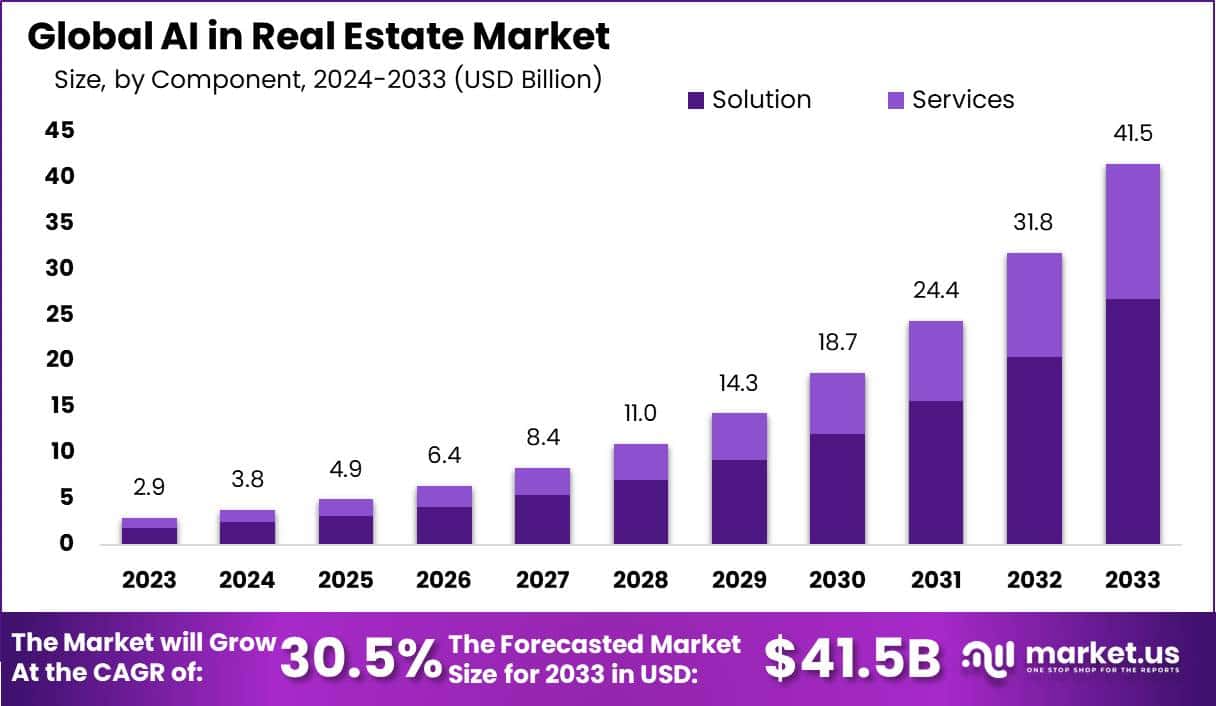
In the ever-evolving world of
real estate,
artificial intelligence (AI) is making waves, fundamentally transforming property acquisition, sales, and management processes. As reported by
Netguru,
AI is not just a tool but a game-changer, bringing a level of precision and efficiency that was previously unimaginable.
AI’s influence is most notable in
predictive analytics, which is reshaping investment decisions. By analyzing extensive datasets, AI can forecast market trends, offering
real estate companies a competitive edge. This technology is also revolutionizing property tours, with
virtual tours becoming the norm, allowing potential buyers to explore properties from the comfort of their homes.
According to
Deloitte’s research, 52% of corporate real estate developers believe AI ensures precise property valuation. This is a testament to AI’s pivotal role in property assessment and pricing accuracy. Furthermore, 48% of property managers plan to enhance revenue through tech-driven efficiency, as noted by
Buildium.
The global
proptech market is on a meteoric rise, projected to reach $94.2 billion by 2030, with a compound annual growth rate (CAGR) of 15.8% from 2022 to 2030. This growth is driven by AI solutions that are central to the proptech sector, as highlighted by
Research and Markets.
In 2021, global investments in proptech reached $24.3 billion, a figure that has shown consistent growth since 2012, except for a dip in 2020. The United States alone recorded 154 proptech funding rounds in 2021, with 2022 not far behind with 109 deals, according to
Statista.
AI’s applications are vast, from streamlining manual property management processes to enhancing customer service through chatbots and virtual assistants. The transition from paper-based management to
digital platforms is reducing errors and inefficiencies. For instance, automated data capture has saved Cushman & Wakefield 550 hours per month, as reported by
Rossum.
Moreover, AI is pivotal in
environmental sustainability. The real estate sector, responsible for 40% of global CO2 emissions, stands to benefit immensely from AI-driven energy optimization solutions. Companies like
Salzburg AG are leading the charge with community-wide energy-sharing platforms, promoting sustainable practices.
In summary, as the
proptech industry continues to innovate, AI is set to revolutionize the real estate landscape, improving accessibility, convenience, and overall experience for all stakeholders. The future of real estate is here, and it’s powered by
AI.