The Quiet AI That’s Reshaping Finance: How Salient Became a $500M Powerhouse in Just Two Years
While the rest of Silicon Valley argued about the future of artificial general intelligence, Ari Malik was busy solving a very real, very messy problem—collecting debt. And he didn’t start in a glass-walled VC office. He started in his bedroom.
Today, Malik is the CEO of Salient, an AI-powered loan servicing startup that’s quietly become one of fintech’s most disruptive forces. What began as an attempt to modernize the world of repo men and auto lenders has now scaled into a business valued at roughly $500 million, with annual recurring revenue recently blasting past $25 million.
Source spotlight: This story originally appeared in Fortune. Dive into their full in-depth feature: Fortune – Salient’s Quiet AI Boom
What Makes Salient Different?
Most AI startups boast big churn-fighting claims, but Salient is one of the few with undeniable numbers. The company hasn’t lost a single customer and has converted 100% of pilots into paid contracts—even though churn for AI fintech tools typically ranges between 22% and 76%.
Their secret? Relentless focus. Malik and cofounder Mukund Tibrewala literally moved desks into Westlake Financial’s office so they could train their AI in real-world, compliance-heavy environments. That on‑site approach built a level of trust rarely seen in financial technology.
Industry Tip: Finance, mortgage, and real estate pros—this is a sign. AI built with compliance at its core is no longer optional. It’s the new baseline.
The Auto Lending Problem No One Talks About
Americans are drowning in debt, and the numbers are staggering. Nearly 80% of households carry some form of debt, while lenders spend $20–30 billion annually just servicing auto loans.
Traditionally, that meant teams of call center agents negotiating payments and updating records manually. Salient replaces that entire workflow using AI agents that are reportedly 30× more compliant than humans—handling calls, processing payments, and maintaining spotless documentation.
From Steve Jobs AI Prank to Fintech Juggernaut
One of Salient’s early breakthroughs came from an unexpected stunt: an AI-generated Steve Jobs making mock negotiation calls. It wasn’t designed to go viral—it was a proof-of-concept to show lenders how authentic and accurate their AI could sound.
The result? Their earliest customer sign‑ups happened right after hearing that demo.
Where Salient Goes Next
The company isn’t stopping at collections. Their future roadmap includes:
• A modern loan management system
• A credit reporting module
• A full charge‑off platform
• Automated DMV integrations
• Additional financial infrastructure tools for lenders
Their long-term vision: becoming the fully autonomous system of record for lenders nationwide—from origination to final payoff.
Professional Insight: For real estate, mortgage, and finance professionals: the AI revolution is not ahead—it’s happening right now. Those who adapt will dominate.
What This Means for Licensed Professionals
Fintech is entering a new era where trust, compliance, and intelligent automation define the biggest winners. For agents, brokers, adjusters, and other licensed professionals, this shift presents massive opportunity—if you’re prepared.
That’s why schools like Cameron Academy continue expanding education across real estate, mortgage, insurance, finance, and more. Staying competitive means staying educated, and Cameron Academy provides the modern training professionals need to thrive in an AI‑driven marketplace.
If Salient’s meteoric rise proves anything, it’s this: the future belongs to professionals who never stop learning.
More Articles
Getting licensed or staying ahead in your career can be a journey—but it doesn’t have to be overwhelming. Grab your favorite coffee or tea, take a moment to relax, and browse through our articles. Whether you’re just starting out or renewing your expertise, we’ve got tips, insights, and advice to keep you moving forward. Here’s to your success—one sip and one step at a time!
A growing share of American homeowners now carry mortgage rates above 5%—a dramatic shift that’s reshaping refinancing, inventory, and buyer behavior nationwide. With more than 30% of borrowers locked into rates over 5% and 20% above 6%, the market is split between owners holding on to low pandemic‑era loans and new buyers taking on higher‑rate mortgages. Federal efforts to push rates down could unlock millions of refinancing opportunities, while buyers see only modest monthly savings. For real estate professionals, understanding these rate dynamics is crucial as they increasingly drive inventory levels, affordability, and market activity.
New Moody’s data shows commercial real estate deal volume slipped 20% in December, marking a second monthly decline. Yet the full year tells a different story: 2025 ended with a 17% gain, signaling a quiet but resilient recovery. The biggest surprise came from the office sector, which posted a 21% jump in activity as return‑to‑office trends and AI‑driven job growth boosted demand. Multifamily, retail, and alternative assets like data centers also saw strong momentum, giving real estate professionals a market full of fresh opportunities heading into 2026.
Florida drivers and industry professionals are heading into 2026 with good news: auto insurance rates are dropping across the state as the market shows strong signs of stabilization. USAA leads the latest wave with a 7% average rate decrease expected in May 2026, saving members more than $125 million annually. They join several major insurers — including State Farm, Progressive, AAA, Allstate, and Florida Farm Bureau — all approving significant reductions. Officials credit recent legislative reforms, especially tort reform, for the improved loss ratios and renewed insurer confidence. With both auto and home insurance markets strengthening, Florida’s real estate, mortgage, and insurance professionals can expect more consumer confidence, smoother transactions, and expanding career opportunities.
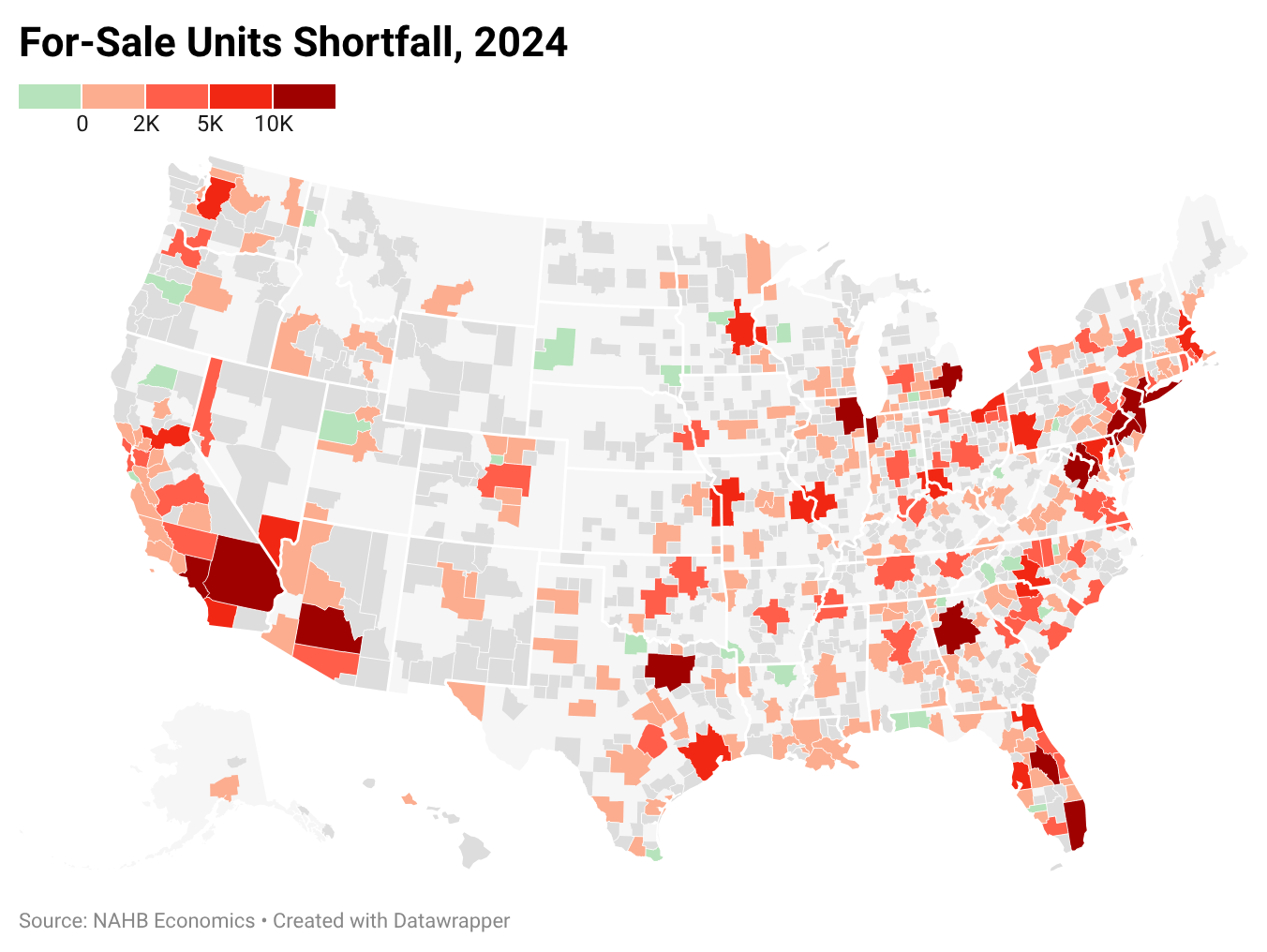
New data from Eye On Housing and the NAHB shows the U.S. remains short more than 1.2 million housing units, keeping pressure on both rents and home prices. Record‑low vacancy rates, slow single‑family construction, and restrictive zoning continue to fuel intense competition in 2024. Major metros like Chicago, New York, and Atlanta face some of the deepest deficits, and the true nationwide shortfall may be even higher when accounting for overcrowding and aging homes. For real estate professionals, the ongoing shortage means sustained demand, tighter inventory, and major opportunities for those who understand the evolving market.
Top real estate coach Jason Pantana says the divide between agents today isn’t about who has “tried” AI — it’s about who is immersed in it. In a new HousingWire interview, he explains why AI isn’t a gimmick but a full business system that amplifies output, improves authenticity, and reshapes how clients search for agents. From prompt mastery to AI‑driven visibility on Google, Pantana reveals how agents who commit even 15 minutes a day to learning AI are already outperforming those who hesitate.
Dallas–Fort Worth’s commercial real estate market closed 2025 with a split personality. Industrial dominated with massive new deliveries and soaring leasing demand, retail held steady with some of the market’s strongest fundamentals in years, and office continued to falter under remote‑work pressures. High vacancies, weak absorption, and rising demand for top‑tier space show the sector’s ongoing reset. Meanwhile, industrial and retail strength position the Metroplex for another powerhouse year heading into 2026.